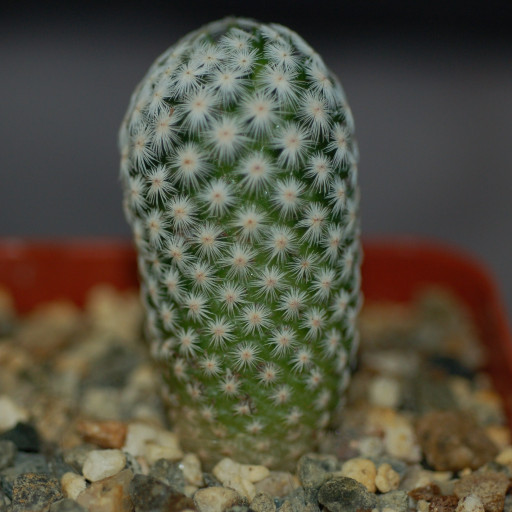
Plant Overview
Often called the "Golf Ball Cactus," this tiny Mexican native is a geometric masterpiece of the desert. It looks like a perfectly woven orb of white lace, making it a highly sought-after specimen for succulent collectors. In its native habitat of Querétaro, it is a rare treasure, but on a sunny windowsill, it acts as a hardy, miniature marvel that looks like it belongs in a gallery of modern art.
🔍 How to Identify
- ⚪ The "Golf Ball" Shape: It features a small, perfectly spherical stem that rarely grows larger than 2 or 3 inches in diameter, maintaining its round form throughout its life.
- 🧶 Lacy Spines: The body is almost entirely obscured by hundreds of tiny, radiating white spines. These spines are so dense that the green flesh of the cactus is barely visible.
- 🌸 The Floral Crown: During the spring, it produces a striking ring of medium-sized, bell-shaped flowers in shades of bright pink or violet that emerge from the top of the globe.
🏡 In Your Garden
- ☀️ Sun-Drenched Texture: This cactus craves intense, bright light. High light levels are actually what keep its white spines growing thick and close together; in low light, the plant will stretch and lose its "golf ball" appearance.
- 🪨 Mineral-Rich Diet: Unlike tropical plants, this species thrives in "poor" soil. It prefers a mix heavy on pumice, grit, or lava rock to ensure water moves past its sensitive taproot as quickly as possible.
- 💧 Drought Discipline: It is highly susceptible to overwatering. It is best to follow a "soak and dry" method, allowing the soil to turn bone-dry before even considering another drink, especially during the humid summer months.
⚠️ Safety & Toxicity
- 🌵 Mechanical Irritant: While Mammillaria herrerae is not chemically toxic to humans or pets, its spines are very fine and can easily prick curious fingers or paws.
- 🐾 Pet Friendly: It is generally considered non-toxic if accidentally nibbled, though the bristly texture usually acts as a natural deterrent for cats and dogs.
✨ Fun Fact
📉 A Protected Rarity: In the wild, this cactus is listed as Critically Endangered. Because it grows so slowly and has such a small natural range, it has been heavily impacted by illegal collecting. Owning a nursery-grown specimen is a great way to appreciate its beauty without harming wild populations!

Detailed Care Instructions
To successfully grow a Mammillaria Herrerae plant, also known as the Silver Arrows Cactus, you can follow these steps:
- Choose the right pot: Use a shallow pot with drainage holes to prevent waterlogging and allow excess water to escape.
- Potting mix: Use a well-draining soil mix formulated specifically for cacti and succulents. You can also make your own by mixing equal parts of potting soil, perlite, and coarse sand.
- Planting: Gently remove the plant from its nursery pot and position it in the center of the new pot. Ensure that the base of the plant is slightly above the soil surface.
- Watering: Mammillaria Herrerae is a desert plant, so it requires minimal watering. Wait for the soil to completely dry out between waterings. During the growing season (spring and summer), water sparingly once every 2-3 weeks. In winter, reduce watering to once every 4-6 weeks.
- Light: Provide bright, indirect sunlight to your Mammillaria Herrerae plant. Place it near a south or west-facing window to receive adequate light. If growing indoors, use grow lights to supplement natural light.
- Temperature and humidity: Mammillaria Herrerae prefers warm temperatures between 70-80°F (21-27°C). It can tolerate slightly cooler temperatures but should be protected from freezing temperatures. The plant prefers low humidity, so avoid placing it in areas with high humidity levels.
- Fertilizer: Apply a balanced cactus or succulent fertilizer during the growing season. Follow the package instructions for dosage and frequency.
- Pests and diseases: Monitor your plant regularly for pests like mealybugs or spider mites. If you notice any pests, use an appropriate insecticidal soap or spray to control them. Avoid overwatering to prevent root rot.
- Repotting: Mammillaria Herrerae generally doesn't require frequent repotting. However, if the plant becomes root-bound or outgrows its current container, you can repot it during spring or early summer. Use a larger pot with fresh well-draining soil.
- Propagation: The most common method of propagating Mammillaria Herrerae is through offsets (pups) that grow around the base of the plant. They can be carefully separated and replanted in a new pot.
Remember to handle these cacti with care as their spines are sharp and can be painful if touched.

Place in a bright room that is sun drenched almost all day. Or directly in a south-facing window.

To properly water this plant, you should first consider the soil. Ensure the soil is well-draining by adding sand or perlite to the potting mix. Water the plant thoroughly, allowing water to fully saturate the soil. Allow the soil to dry out slightly before watering again, as overwatering can lead to root rot. It's important to avoid getting water on the body of the plant, as this can cause damage or rot. In addition, this plant prefers to be watered from below by placing the pot in a dish of water and allowing the soil to absorb the water.
To fertilize this plant, mix a balanced fertilizer with equal parts nitrogen, phosphorus, and potassium. Apply the fertilizer every two weeks during the growing season, which usually spans from spring to early fall. Be sure to dilute the fertilizer to half strength before applying it to the soil. Avoid fertilizing during the winter months when the plant is dormant.
When planting a specific type of cactus belonging to the Mammillaria genus, it is important to consider the soil type that will best suit the plant's needs. This particular species requires well-draining soil that is loose and sandy in texture. The soil should be able to retain some moisture but not become waterlogged, as this can lead to root rot and ultimately death of the plant. Additionally, it is recommended to mix in some perlite or small gravel to improve drainage and aeration. It is also important to use a pot with drainage holes and to avoid placing the plant in low-lying areas where water can accumulate. Finally, adding a layer of topsoil can aid in retaining moisture and providing the necessary nutrients for healthy plant growth.
To propagate this particular plant, you can remove offsets (baby plants) that have grown on the parent plant. It is best to wait until the offsets are about 1/3 the size of the parent plant before removing them. Carefully separate the offset from the parent plant using a sharp, sterile knife or scissors.
Allow the cut end to dry for a day or two before planting it in a well-draining potting mix. Keep the soil slightly moist and place the new plant in a bright, indirect light location. It is best to avoid direct sunlight until the new plant has established roots.
After a few weeks, you should begin to see new growth from the offset. At this point, you can treat it like you would any adult Mammillaria Herrerae plant by watering it sparingly and providing plenty of bright, indirect light.
Common pests of the golf's ball cactus include Scale insect, mealybugs, spider mites, thrips. Make a habit of checking your golf's ball cactus frequently for pests so that any infestations can be caught and managed early.








