Plant Overview
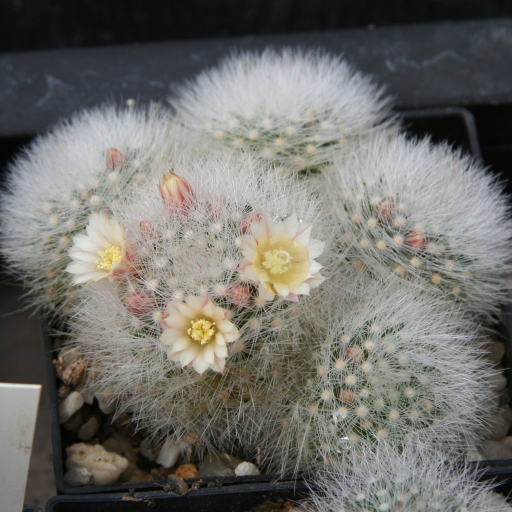
Known as "Schwarz’s Nipple Cactus," this Mexican native looks like a delicate snowball resting in a pot. Its pristine white spines wrap around the plant so densely that the green fleshy body is often completely hidden, giving it a soft, "fuzzy" appearance from a distance. In its natural habitat, it clings to volcanic rocks, making it a rugged survivor that brings a touch of geometric desert beauty to any windowsill collection.
🔍 How to Identify
- 🌵 The Body: Typically grows as a small, solitary globe that may eventually form clusters; the surface is covered in small, rounded bumps called "tubercles" rather than ribs.
- ❄️ The Spines: Each tubercle is tipped with 30-40 radiating, needle-like white spines that create a dense, bristly "wool" which protects the plant from the harsh sun.
- 🌸 The Blooms: In late winter or early spring, it produces a ring of small, star-shaped flowers near the top, ranging in color from white to pale cream with a soft pinkish stripe.
🏡 In Your Garden
- ☀️ Light Intensity: This cactus craves high-intensity light to keep its white spines dense and bright. If kept in the shade, it will "etiolate" (stretch out), causing the white coating to look thin and patchy.
- 💧 Sensitive Roots: It has a relatively weak root system that is highly prone to rot. It hates "wet feet," so the soil must be a gritty, mineral-heavy mix that drains almost instantly. Always err on the side of underwatering, especially during the cold winter months when the plant goes dormant.
⚠️ Safety & Toxicity
- 🌵 Physical Hazard: While the Mammillaria schwarzii is not chemically toxic, it is covered in sharp, glass-like spines. These can easily puncture skin or become lodged in clothing and fur.
- 🐾 Pet & Child Safety: Generally considered non-toxic to cats and dogs if accidentally nibbled. However, its "snowball" look can be deceivingly soft to a curious child or pet, leading to a painful encounter with its defensive bristles.
✨ Fun Fact
This species is named after Fritz Schwarz, a legendary German cactus explorer who moved to Mexico and discovered dozens of rare succulent species during the mid-20th century!

Detailed Care Instructions








