Plant Overview
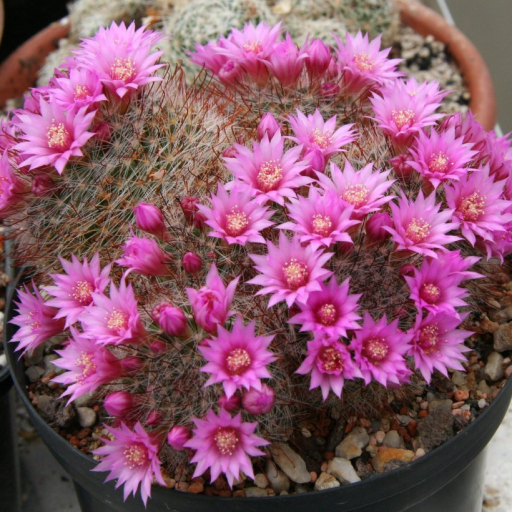
Known affectionately as the "Rose Pincushion Cactus," this Mexican native is a superstar in the succulent world. It is widely considered one of the best "starter cacti" because it matures quickly and produces a stunning display of flowers even when very young. In the wild, it clings to volcanic rock faces, but in the home, it provides a reliable pop of neon color every spring.
🔍 How to Identify
- 🌵 Body Shape: It begins as a solitary, glossy dark green sphere, but as it ages, it elongates into a cylinder and often forms "pups" or clusters at the base.
- 🧶 Spine Texture: Each tubercle (the small bumps on the cactus) is topped with a cluster of white, hair-like radial spines and one or more reddish-brown central spines that are distinctively hooked at the tip.
- 🌸 The Crown: It is famous for its "floral halo," where multiple magenta or deep purple flowers bloom simultaneously in a perfect circle around the top of the plant.
🏡 In Your Garden
- 🏜️ The "Grit" Factor: Because it naturally grows in rocky crevices, this cactus is highly susceptible to root rot. It thrives best in a "soilless" or very gritty mix with plenty of perlite or pumice to ensure water never sits around its neck.
- ☀️ Light & Shade: While it craves bright light to produce its vivid flowers, the Rose Pincushion can actually get "sunburned" (turning a scorched yellow or brown) if hit by intense, direct afternoon sun through a glass window.
- 😴 Winter Nap: To see those iconic flowers in spring, the plant needs a "dry winter." Withholding water and keeping it in a cool (but not freezing) room during the winter months triggers its blooming cycle.
⚠️ Safety & Toxicity
- 🐾 Non-Toxic Status: This plant is generally considered non-toxic to cats, dogs, and humans. It contains no known poisonous alkaloids.
- 🪝 The "Fishhook" Hazard: The real safety concern is mechanical. Those central spines are shaped exactly like fishhooks; if a pet or child brushes against them, the hooks will latch onto skin or fur and are very difficult to remove without causing a puncture or tearing the plant.
✨ Fun Fact
Despite being one of the most common and mass-produced cacti in nurseries and big-box stores around the globe, Mammillaria zeilmanniana is actually classified as Endangered in the wild. It is found naturally in only two small locations in Guanajuato, Mexico!

Detailed Care Instructions
| Soil Ph | Acidic |
| Humidity | Dry |
| Lighting | Full Sun |
| Soil Type | Sandy, Well-Drained |
| Bloom Time | Summer |
| Difficulty | Medium |
| Plant Type | Cactus |
| Hibernation | Cold Period |
| Mature Size | Up To 4-5 In. High |
| Native Area | Mexico |
| Temperature | 16°C - 24°C |
| Sun Exposure | Full Sun |
| Hardiness Zones | 9-11 |
To grow Mammillaria Zeilmanniana, you can follow these steps:
- Choose a suitable pot: Select a small pot with drainage holes. Mammillaria Zeilmanniana requires well-draining soil.
- Soil: Use a cactus or succulent-specific potting mix or create your own by mixing regular potting soil with perlite or coarse sand to improve drainage.
- Planting: Gently place the plant in the pot, making sure not to damage the roots. Fill the pot with the prepared soil mixture around the plant.
- Sunlight: Place the pot in a location that receives bright, indirect sunlight for at least 6 hours a day. Ensure that it is not exposed to direct sunlight, especially during the peak afternoon hours.
- Watering: Mammillaria Zeilmanniana prefers dry conditions. Water the plant only when the soil feels dry to the touch. Avoid overwatering as it can cause root rot. The frequency of watering will depend on the climate and season.
- Temperature and humidity: Mammillaria Zeilmanniana prefers temperatures between 70-80°F (21-27°C). It can tolerate slightly cooler temperatures in winter, but avoid frost. The plant thrives in average humidity levels but can tolerate low humidity.
- Fertilization: Feed your Mammillaria Zeilmanniana with a diluted cactus or succulent fertilizer during the growing season (spring and summer), following the manufacturer's instructions. Avoid fertilizing during the dormant winter period.
- Propagation: Mammillaria Zeilmanniana can be propagated through offsets (small plants that grow around the base of the mother plant) or by seeds. To propagate via offsets, gently separate them from the main plant and plant them in a separate pot following the same planting and care instructions.
- Pruning: Remove any dead or damaged parts of the plant using sterilized pruning shears. This helps maintain the overall health and appearance of the plant.
- Pests and diseases: Monitor for common pests such as mealybugs or scale insects. Treat infestations promptly with organic or chemical insecticides formulated for succulents.
Remember to research specific care requirements for Mammillaria Zeilmanniana as conditions can vary depending on the location and climate.

Place in a bright room that is sun drenched almost all day. Or directly in a south-facing window.

To water this plant, you should wait until the soil is completely dry before watering. When watering, use a watering can or a spray bottle to gently water the soil around the base of the plant. Avoid getting water on the stem or leaves as this can cause damage. Make sure to only water enough to moisten the soil and not overwater as this can lead to root rot. In the winter months, reduce watering to once every 2-3 weeks. It is important to note that this plant prefers well-draining soil and does not tolerate standing water.
To fertilize this plant, you should use a balanced fertilizer with equal amounts of nitrogen, phosphorus, and potassium. During the growing season, which is usually from spring to fall, fertilize the plant every two to four weeks. Dilute the fertilizer in water according to the package instructions and apply it to the soil around the plant, being careful not to get any on the plant itself. During the dormant season, which is usually in the winter, reduce the frequency of fertilizing to once a month or stop fertilizing altogether.
The ideal soil for this particular plant should be well-draining and porous to prevent waterlogging in the roots. A mix that contains sand, perlite, and coarse grit will provide the necessary drainage and aeration. It is important to avoid using soil mixes that are too heavy or contain high levels of organic matter, as this can lead to root rot and other issues. Additionally, the soil should be slightly acidic, with a pH range between 6.0 and 6.5 to ensure proper nutrient uptake.
To propagate this plant, you will need to obtain a healthy and mature specimen from which to take cuttings. Using sterilized pruning shears or a sharp knife, cut a section of stem approximately 2 inches long. Allow the cut end to dry and callus over for a few days before planting.
Prepare a well-draining soil mix of sand and perlite and place the cuttings into the soil, making sure to bury the calloused end about 1/2 inch deep. Water sparingly and place in a bright, indirect light location.
After about 4-6 weeks, the cuttings should start to root and show signs of growth. At this point, you can begin to gradually increase watering and fertilize with a cactus or succulent-specific fertilizer.
Once the new plants have established themselves and are showing signs of growth, you can transplant them into their permanent containers or into a larger garden bed.
Common pests of the rose pincushion cactus include Scale insect, mealybugs, spider mites, thrips. Make a habit of checking your rose pincushion cactus frequently for pests so that any infestations can be caught and managed early.








