Plant Overview
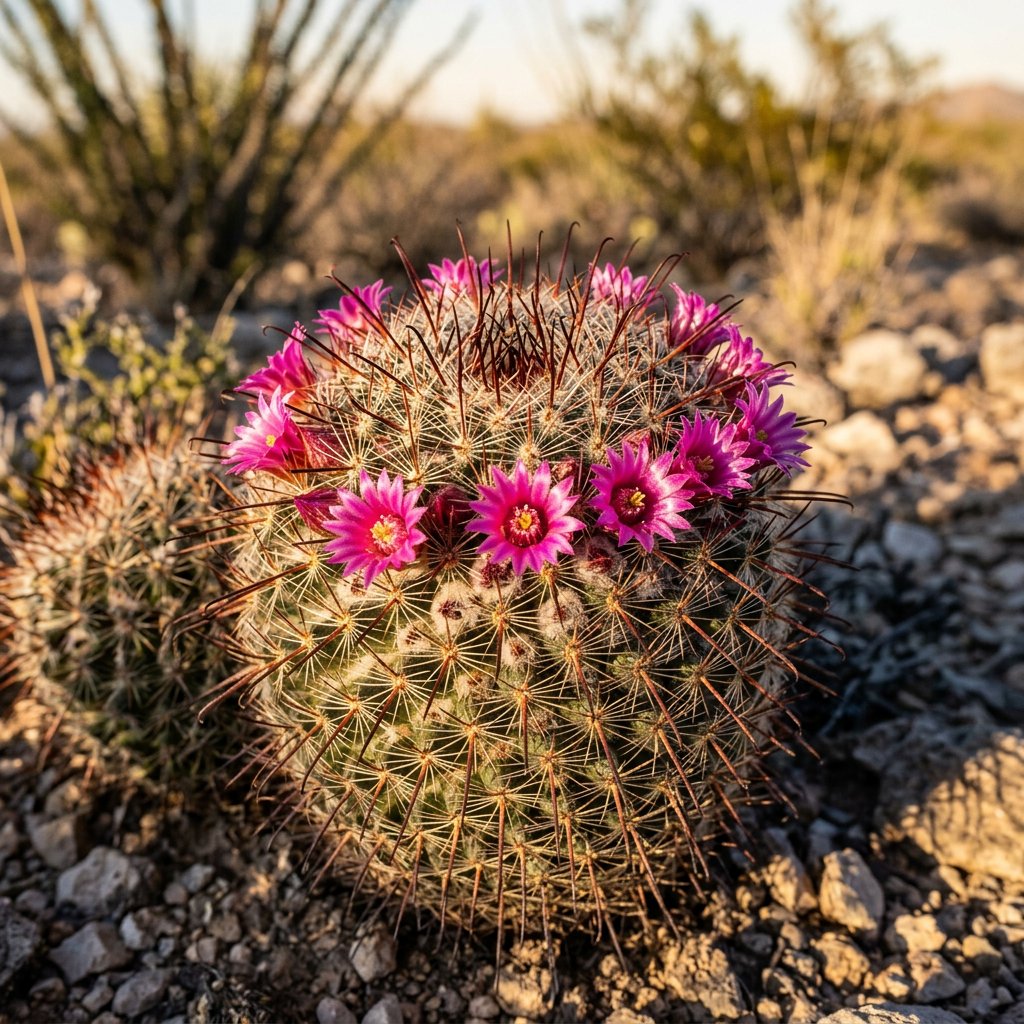
Known affectionately as Pincushion Cacti, members of the Mammillaria genus are the true crown jewels of the desert. These small, globe-shaped succulents are famous for their "flower halos," where vibrant blooms erupt in a perfect circle around the top of the plant. Native mostly to Mexico and the Southwest United States, they are a favorite for collectors due to their geometric patterns and manageable size.
🔍 How to Identify
- 🌵 The "Nipples": Unlike many cacti that have long vertical ridges, Mammillaria are covered in small, bump-like protrusions called tubercles. The name actually comes from the Latin mammilla, meaning "nipple."
- 🌸 Circular Blooms: They are easily recognized by their flowering habit; they produce a ring of small, bell-shaped flowers near the top, resembling a colorful floral wreath.
- 🕸️ Spine Diversity: Their spines can vary wildly between species—some look like delicate white lace or soft hair, while others are stiff, hooked "fishhooks" meant for protection.
🏡 In Your Garden
- ☀️ Light & Geometry: These cacti crave bright, direct light. Without enough sun, they lose their tight, spherical shape and begin to "stretch" (etiolate), which weakens the plant and prevents those iconic flower rings from forming.
- 💧 The "Drought Rule": Their biggest enemy is wet feet. They have shallow root systems that rot quickly in heavy soil. Use a gritty, sandy cactus mix and let the soil go completely dry between waterings—and stop watering almost entirely during the winter.
⚠️ Safety & Toxicity
- 🩹 Low Toxicity: Most Mammillaria species are considered non-toxic to humans, cats, and dogs. They are much safer to have in the home than many other common tropical houseplants.
- 📌 Physical Hazard: While not poisonous, their spines are the primary danger. The species with "hooked" spines are particularly tricky, as they can snag skin or clothing and are difficult to remove without causing small tears.
✨ Fun Fact
Many Mammillaria produce bright red, elongated fruits after flowering that look exactly like tiny chili peppers. In some parts of Mexico, these fruits (called "chilitos") are actually edible and have a pleasant, tart, berry-like flavor!

Detailed Care Instructions
| Humidity | Normal |
| Lighting | Full Sun |
| Difficulty | Easy |
| Hibernation | Cold Period |
| Temperature | 21°C - 25°C |
| Hardiness Zones | 9 - 11 |
To grow a Mammillaria plant, follow these steps:
- Choose a suitable pot or container: Select a container with drainage holes and fill it with cactus/succulent potting mix.
- Planting: Gently remove the Mammillaria from its nursery container and place it in the new pot. Make sure to maintain the plant's orientation and handle it carefully to avoid damaging its spines.
- Light: Mammillaria plants require bright, indirect sunlight. Place your plant near a sunny window or provide it with at least 4-6 hours of direct sunlight per day.
- Watering: Water sparingly as Mammillaria is a desert plant and is adapted to survive in dry conditions. Allow the soil to dry out between waterings and avoid overwatering, as it may lead to root rot. During the winter season, reduce watering to further mimic the plant's natural dormant period.
- Temperature and Humidity: Mammillaria plants prefer temperatures between 60-75°F (15-24°C). They are not cold hardy, so protect them from freezing temperatures. As desert plants, they can tolerate low humidity levels.
- Fertilizer: Feed your Mammillaria plant with a balanced cactus/succulent fertilizer during the growing season (spring and summer) according to recommended instructions. Avoid fertilizing during the dormant period.
- Pruning: You can prune your Mammillaria to remove dead or damaged parts. However, be cautious while handling them due to the presence of spines.
- Propagation: Mammillaria plants can be propagated by offsets or seeds. To propagate through offsets, carefully remove the offsets that have developed at the base of the main plant, allow them to dry for a few days, then plant them in a separate pot with cactus/succulent potting mix. To propagate by seeds, collect and sow them in a well-draining seed-starting mix, following the recommended instructions for germination.
- Pest and Disease Control: Mammillaria plants are generally pest and disease-resistant. However, keep an eye out for common cactus pests such as mealybugs and spider mites. Treat infestations with appropriate insecticidal soaps or neem oil.
- Enjoy and care for your plant: Regularly monitor your Mammillaria plant's growth, water it appropriately, and provide it with sufficient sunlight. With proper care, it should grow and thrive.

Place in a bright room that is sun drenched almost all day. Or directly in a south-facing window.

Mammillaria is a type of flowering cactus that requires minimal watering compared to other types of houseplants. When watering a Mammillaria plant, ensure that the soil is completely dry before proceeding. Water the plant thoroughly, but avoid overwatering, as this can lead to root rot. It's recommended to water the plant from the bottom, using a tray with water for about 30 minutes, to allow the roots to absorb moisture. Alternatively, water the soil directly, ensuring that the water penetrates the soil and reaches the roots. Avoid getting water on the plant's body to prevent rot or fungal infections. During the winter months, reduce watering to once a month to keep the plant healthy.
To fertilize this particular cactus, you should use a specialized fertilizer designed for cacti and succulents. The fertilizer should be low in nitrogen and high in phosphorus and potassium. During the growing season, which typically lasts from spring to early fall, you should fertilize your cactus every two to four weeks. During the dormant season, which lasts from late fall to early spring, you should reduce or completely stop fertilizing your cactus. Always make sure to follow the instructions on the fertilizer label and be mindful not to over-fertilize, as this can cause damage to your plant.
Mammillaria plants grow well in sandy soil that is well-draining. The soil should have good drainage properties to prevent the plant's roots from sitting in stagnant water, which can cause root rot. A mix of sand, perlite, and peat moss can be a good choice of soil for this plant, giving it a loose and porous environment. The soil must be rich in nutrients, but they should not be overly rich, as this can harm the plant. A good ratio of nutrients and minerals is essential, and adding some organic material to the soil can provide a good balance. It is also important to note that Mammillaria plants prefer slightly acidic soil. Adding small amounts of sulfur or lime to the soil is beneficial to achieve the pH level that is ideal for this plant. Overall, the soil for a Mammillaria plant should have good drainage, be slightly acidic, and contain adequate nutrients with little to no organic matter.
To propagate this plant, you will need to carefully remove offsets that have formed around the base of the parent plant. These offsets can sometimes be removed by gently pulling them away from the parent plant. If they are stubborn, you may need to use a sharp, sterile knife or scissors to cut them free.
Once you have a few offsets, allow the cut edges to callus over for a couple of days. Then, plant the offsets in a well-draining soil mix and place them in bright, indirect light. Water the new plants sparingly until they have established roots.
You can also propagate this plant from seeds. To do this, sow the seeds in a well-draining soil mix and keep the soil moist but not soggy. Provide plenty of bright, indirect light and wait for the seeds to germinate. It may take several weeks or even months for the seeds to sprout, so be patient.
No matter which propagation method you use, keep an eye out for pests and diseases and take action early to prevent them from spreading to your new plants. With a little bit of care and patience, you can have a thriving collection of these beautiful plants in no time.
Common pests of the pincushion cactuses include Scale insect, mealybugs, spider mites, thrips. Make a habit of checking your pincushion cactuses frequently for pests so that any infestations can be caught and managed early.







