Plant Overview
Known as the "Shining Mandevilla," Mandevilla splendens is a tropical masterpiece originally hailing from the lush Organ Mountains of Brazil. Often referred to by its nickname "Pink Allamanda," this vigorous climber is a favorite for vertical gardening, prized for its ability to turn a simple trellis into a cascading waterfall of rose-colored blooms. Its lustrous, leathery leaves reflect sunlight so brilliantly that the plant truly appears to glow in a well-lit garden.
🔍 How to Identify
- 🌸 Trumpet Blooms: The flowers are large, five-petaled, and trumpet-shaped, typically featuring a deep rose-pink hue with a contrasting yellow "throat" at the center.
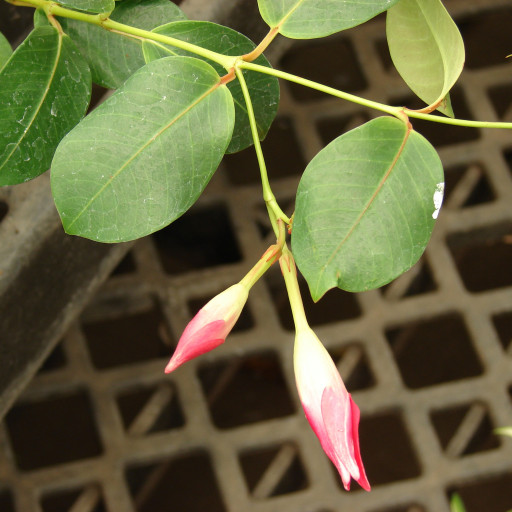
- 🍃 Glossy Foliage: Its leaves are dark green, elliptical, and notably shiny (hence the name splendens). They have a slightly wrinkled or "rugose" texture that distinguishes them from smoother-leaved relatives.
- 🧗 Twining Stems: This is a woody vine that climbs by twining its stems around supports. It lacks tendrils or suckers, meaning it relies on physical structures to wrap itself around.
🏡 In Your Garden
- 🪜 Structural Support: Because it is a twining climber, it requires a sturdy trellis, obelisk, or fence. Without something to hug, the plant will grow into a messy, tangled mound rather than a vertical focal point.
- ☀️ The Sun Balance: While it craves bright light to produce its famous flowers, it appreciates a bit of afternoon "dappled" shade in extremely hot climates to prevent the petals from wilting or scorching.
- 🪴 Winter Sensitivity: This Brazilian native is highly sensitive to frost. In temperate zones, it is best grown in a pot that can be moved indoors or treated as a "dormant" guest in a garage once temperatures dip below 50°F (10°C).
⚠️ Safety & Toxicity
- 🚫 Mildly Toxic: Like many members of the Dogbane family, the Mandevilla produces a milky white latex sap that can be problematic.
- 🐾 Risk to Pets/Kids: If leaves or stems are ingested, they can cause digestive upset, including nausea or vomiting. It is best to keep it out of reach of curious nibblers.
- 🧤 Skin Irritation: The milky sap can cause "contact dermatitis" (an itchy, red rash) for those with sensitive skin. Always wear gloves when pruning or taking cuttings to avoid irritation.
✨ Fun Fact
In its native Brazilian habitat, the tubular shape of the Mandevilla splendens flower is an evolutionary masterpiece designed specifically for long-tongued hummingbirds and specialized butterflies, which are the only creatures that can reach the nectar hidden deep within the floral tube!

Detailed Care Instructions
To grow Mandevilla Splendens, also known as Brazilian jasmine, follow these steps:
- Choose a suitable location: Find a spot that receives full sun to partial shade. Mandevilla Splendens thrives in warm climates, so ensure the temperature doesn't drop below 50°F (10°C).
- Plant selection: Purchase a healthy Mandevilla Splendens plant from a reputable nursery or garden center. Choose a plant that has vibrant green leaves, strong stems, and no signs of pests or diseases.
- Soil preparation: Mandevilla Splendens prefers well-draining soil. Mix organic matter such as compost or peat moss into the soil to improve its fertility and drainage ability.
- Planting: Dig a hole that is twice the diameter and depth of the root ball. Place the Mandevilla Splendens plant in the hole, ensuring the top of the root ball is level with or slightly above the soil surface. Backfill the hole with soil, gently firming it around the plant.
- Watering: Water the newly planted Mandevilla Splendens thoroughly, ensuring the soil is evenly moist. From then on, provide regular watering, allowing the top few inches of soil to dry out before watering again. During hotter months, the plant may require more frequent watering.
- Support and trellising: Mandevilla Splendens is a climbing vine, so provide a trellis or support system for it to cling to. If planting it in a pot, use a stake or trellis inside the pot.
- Fertilizing: Apply a balanced fertilizer once per month during the growing season (spring to fall). Use a slow-release granular fertilizer or a liquid fertilizer mixed at half strength.
- Pruning and maintenance: Prune Mandevilla Splendens to control its growth and to maintain a desired shape. Pruning stimulates new growth and encourages the plant to produce more flowers. Remove dead or damaged stems regularly. Wear gloves when pruning, as the sap from the vines can irritate the skin.
- Overwintering: In regions with cold winters, Mandevilla Splendens needs protection from frost. Before the first frost, bring potted plants indoors, and cut back the vines by half. Water sparingly during winter months and place the plant in a cool, bright area until the weather warms up. In the garden, use a mulch layer around the base of the plant to provide insulation.
- Pest and disease control: Regularly check for pests like aphids, spider mites, or whiteflies, which can be treated with insecticidal soap or neem oil. Be vigilant for fungal diseases like powdery mildew or black spot, and apply appropriate fungicides if necessary.
By following these guidelines, you can successfully grow and care for your Mandevilla Splendens plant.

Place in a bright room that is sun drenched almost all day. Or directly in a south-facing window.

To water this plant, it is important to check the soil moisture level before each watering. Stick your finger about an inch into the soil, and if it is dry, it is time to water the plant. Use room-temperature water, and avoid overwatering as it can lead to root rot. Water the soil evenly, making sure the water reaches all parts of the soil. Allow the excess water to drain out from the bottom of the pot, and make sure the drainage holes are not blocked. The frequency of watering depends on the temperature, humidity, and light conditions in your location. It is best to observe the plant's growth, and adjust the watering accordingly.
- Start by preparing a well-draining potting mix with a balanced ratio of nutrients.
- Water the soil thoroughly before applying the fertilizer to avoid any potential root burn.
- Use a water-soluble fertilizer with an NPK (nitrogen, phosphorus, potassium) ratio of 20-20-20.
- Dilute the fertilizer as per the manufacturer's instructions to avoid overfertilization.
- Apply the fertilizer once every two weeks during the growing season (spring to fall).
- Avoid fertilizing during the dormant season (winter) as it may harm the plant.
- Water the plant after fertilization to encourage nutrient uptake.
- Consider supplementing the soil with organic matter such as compost or worm castings to improve its overall health and fertility.
Mandevilla Splendens plant requires a well-draining and nutrient-rich soil that is slightly acidic with a pH range of 5.5 to 6.5. A good soil mix can be made by combining peat moss, perlite, and vermiculite in equal proportions. The peat moss provides water retention and aeration, whereas the perlite and vermiculite provide drainage and space for roots to grow. The soil should be moist but not waterlogged, and the plant should be fertilized regularly during the growing season with a balanced fertilizer. It is important to avoid over-fertilizing the plant, as this can lead to burnt roots and damage the plant's overall health. Additionally, the plant prefers full sun to partial shade and requires regular watering to keep the soil consistently moist.
To propagate this plant, you will first need to obtain a healthy stem cutting from the mother plant. The cutting should be about 4-6 inches long and should have at least 2-3 leaves attached to it.
Next, remove the lower leaves from the stem cutting so that there are no leaves below the soil line. This will prevent any rot or fungal growth from occurring.
Then, dip the cut end of the stem cutting into rooting hormone powder to help stimulate root growth.
Prepare the potting soil by mixing equal parts of peat moss and perlite, or use a well-draining soil mix.
Make a hole in the soil with your finger or a pencil, and gently insert the stem cutting into the soil, making sure that at least one node (a small bump where leaves grow) is buried in the soil.
Water the cutting thoroughly and cover it with a clear plastic bag to create a humid environment. Place the pot in a bright, warm location but out of direct sunlight.
Check the cutting regularly to ensure that the soil is moist but not soggy. After a few weeks, you should see new growth emerging from the stem cutting, which means roots have formed.
Once the cutting has established roots, you can remove the plastic bag and gradually acclimate it to direct sunlight. You now have a new plant!
Common pests of the dipladenia include Mealybugs, spider mites, aphids, whiteflies. Make a habit of checking your dipladenia frequently for pests so that any infestations can be caught and managed early.








