Plant Overview
Often called the "Plant of the Sorcerers," Mandragora autumnalis is a botanical legend steeped in ancient myth and dark folklore. Famous for its humanoid-shaped roots that were once whispered to scream when pulled from the earth, this Mediterranean native is a true curiosity for any plant enthusiast. Unlike its spring-blooming cousin, this variety waits for the cooling rains of autumn to unveil its mystical, bell-shaped violet blossoms.
🔍 How to Identify
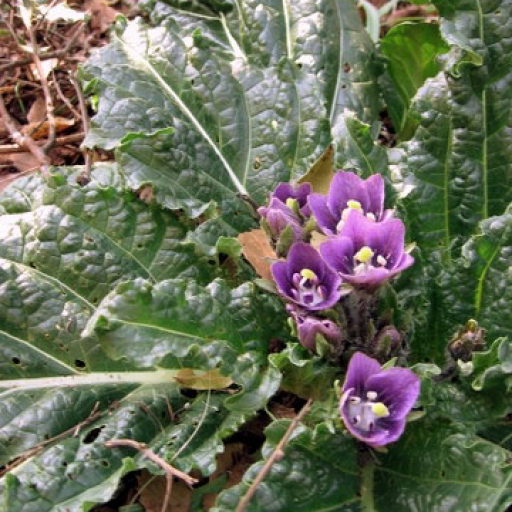
- 🍃 The Foliage: Large, wrinkled, dark-green leaves grow in a flat, star-shaped rosette that hugs the ground closely.
- 🟣 The Flowers: Clusters of delicate, bell-shaped flowers emerge from the center of the plant. They range in color from pale lavender to deep violet-blue.
- 🥕 The Root: The most famous feature is the thick, parsnip-like taproot that often bifurcates, creating a shape that eerily resembles a human torso and legs.
- 🍎 The Fruit: In late autumn or winter, it produces fleshy, yellow-to-orange berries that look like small tomatoes and emit a sweet, fruity scent.
🏡 In Your Garden
- 🏺 Room to Grow: Because of its deep, fleshy taproot, the Mandrake hates being moved once established. If growing in a container, choose a very deep pot to allow the "legs" of the root to develop properly.
- 💤 Summer Dormancy: Don't be alarmed if the plant completely disappears in the summer. It retreats underground to survive the heat, waiting for the first autumn rains to "wake up" and bloom.
- 🏜️ Soil & Sun: It thrives in well-drained, sandy, or rocky soil. It prefers a sunny spot that mimics its native Mediterranean hillsides, but it can tolerate light afternoon shade.
⚠️ Safety & Toxicity
- 🚫 Status: HIGHLY TOXIC. This plant should be handled with extreme caution and is generally recommended for display or historical interest only.
- 🧪 Details: Mandragora contains potent tropane alkaloids (like scopolamine and atropine). If ingested, it can cause blurred vision, rapid heart rate, hallucinations, and, in severe cases, respiratory failure.
- 🐾 Pets & Children: Keep this plant far out of reach of curious pets and children. Even handling the plant without gloves can occasionally cause mild skin irritation for sensitive individuals.
✨ Fun Fact
In ancient Greek mythology, the Mandrake was associated with the sorceress Circe. It was believed that she used the plant's roots to brew potions that could transform men into animals. Because of the fruit's sweet scent and supposed aphrodisiac qualities, they were also known in the Middle Ages as "Satan’s Apples."

Detailed Care Instructions








