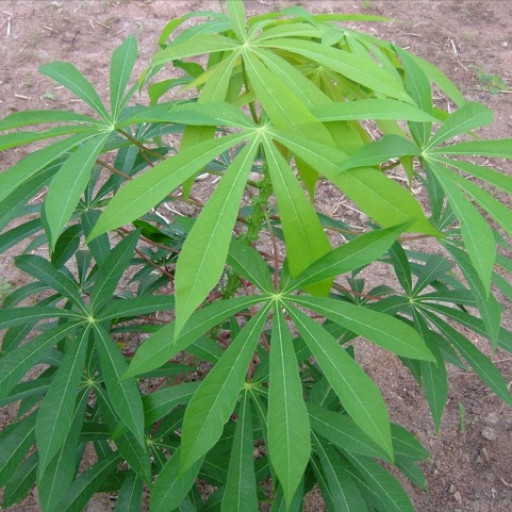
Plant Overview
Known as the "Bread of the Tropics," Manihot esculenta is a survivalist superstar. Whether you call it Cassava, Yuca, or Manioc, this South American native provides the primary calorie source for over 800 million people worldwide. It is a rugged, woody shrub that hides its greatest treasure—starchy, energy-dense tubers—deep underground.
🔍 How to Identify
- 🌿 Lobed Leaves: Its striking, hand-shaped (palmate) leaves usually feature 3 to 7 deep, finger-like lobes, giving the plant a lush, tropical appearance.
- 🪵 Knobby Stems: The tall, slender stalks are often gray-green or reddish and are marked with prominent circular "scars" where old leaves have fallen off.
- 🥔 Tuberous Roots: While hidden, the roots are heavy, elongated cylinders with a rough, brown, bark-like skin and a dense, chalk-white interior.
🏡 In Your Garden
- ☀️ Tropical Warrior: This plant thrives in intense heat and full sun. It is highly sensitive to frost and will enter dormancy or die back if temperatures drop near freezing.
- 🏜️ Drought Resilience: Cassava is famous for its ability to grow in poor, sandy soils where other plants fail. It "hibernates" during dry spells and resumes growth as soon as the rains return.
- ✂️ Stem Propagation: Gardeners rarely use seeds; instead, new plants are grown by simply pushing a 6-inch woody stem cutting into the soil, where it easily strikes roots.
⚠️ Safety & Toxicity
- 🚫 Raw Danger: WARNING: All parts of the plant are toxic if consumed raw. It contains cyanogenic glycosides, which turn into hydrogen cyanide when chewed or digested.
- 🔥 Proper Processing: To make the roots and leaves safe for humans, they must be peeled and thoroughly cooked (boiled, fried, or fermented) to neutralize the toxins.
- 🐾 Pets & Livestock: Raw leaves and peelings are dangerous for dogs, cats, and livestock. Always dispose of garden waste where animals cannot scavenge it.
✨ Fun Fact
Those chewy, translucent "pearls" found in your favorite Bubble Tea (Boba) are actually processed starch extracted directly from the Cassava root!

Detailed Care Instructions
| Lighting | Full Sun |
| Hardiness Zones | 8A - 11 |
To grow Manihot esculenta, also known as cassava or yuca, you can follow these steps:
- Choose a location: Select a sunny spot in your garden with well-draining soil. Cassava doesn't tolerate frost or standing water, so ensure the soil is light and loose.
- Prepare the soil: Remove any weeds or debris from the planting area. Loosen the soil with a garden fork or tiller and amend it with organic matter like compost or aged manure to improve drainage and fertility.
- Obtain cassava cuttings: Cassava is typically propagated through stem cuttings. Acquire healthy stems or cuttings from a nursery or a grown plant. Each cutting should be around 6-8 inches long and taken from the middle or upper part of the stem.
- Cut the stems: Cut the chosen stem into several sections, each containing a few nodes. Nodes are the small bumps or eyes on the stem from where new roots and shoots develop.
- Let the cuttings dry: Allow the cuttings to dry for a few days in a shady area. This drying period helps prevent rotting when planted.
- Plant the cuttings: Dig holes about 2-3 inches deep, spacing them at least 2-3 feet apart. Place the cuttings in the holes, ensuring they are upright and cover them with soil. Ensure that the top node is slightly exposed, as this is where new growth will emerge.
- Watering: Initially, water the cuttings thoroughly, but avoid saturating the soil. Once the plants are established, water them deeply but infrequently, allowing the top few inches of soil to dry out between waterings.
- Fertilizer: Cassava is a heavy feeder, so apply a balanced, slow-release fertilizer according to the instructions on the package. Reapply the fertilizer every few months during the growing season to maintain nutrient levels.
- Mulching: Mulch around the base of the plants with organic materials such as straw or wood chips. Mulching helps retain moisture, suppress weeds, and regulate soil temperature.
- Pest and disease control: Monitor your cassava plants regularly for common pests like spider mites, aphids, or mealybugs. Use appropriate organic insecticides if any infestation occurs. Also, maintain good airflow around the plants to prevent fungal diseases.
- Harvesting: After around 8-12 months, cassava plants usually reach maturity. To harvest, dig around the base of the plant and gently lift the tubers from the ground. Cut the stems back to ground level and allow them to resprout for future harvests.
Remember to research and follow any regional or local guidelines or regulations regarding the cultivation and harvesting of cassava in your area.

Place in a bright room that is sun drenched almost all day. Or directly in a south-facing window.

Manihot esculenta plants should be watered regularly throughout the growing season, ensuring that the soil is consistently moist but not waterlogged. Watering frequency will depend on the soil type and climate, but as a general rule, the plants should be watered deeply once a week or more during hot, dry weather. It is important to avoid letting the soil dry out completely, as this can lead to stunted growth or even the death of the plant. When watering, it is best to water at the base of the plant rather than overhead, as this helps to reduce the risk of fungal diseases. Additionally, be sure to avoid getting water on the leaves, as this can lead to sunscald or other damage. Finally, take care not to overwater, as excessive moisture can lead to root rot or other issues. If in doubt, it is better to err on the side of underwatering, as the plant can typically recover more easily from dry conditions than from overly wet ones.
The plant requires adequate amounts of fertilizer for proper growth, but over-fertilization should be avoided. Apply a balanced fertilizer once a month during the growing season. A slow-release fertilizer can also be used as per manufacturer's instructions. Be sure to water the plant thoroughly after fertilizer application.
Manihot Esculenta plant requires well-draining soil with good fertility and moisture-holding capacity. The ideal soil for this plant is sandy or loamy soil with a neutral pH level. It prefers well-drained soil that is rich in organic matter. The soil should be loose and crumbly, allowing for good airflow and root development. Avoid using heavy, clay soils or overly compacted soils, as these can lead to poor growth and disease problems. Adding compost or other organic matter to the soil can improve its structure and fertility. It's important to maintain consistent moisture levels in the soil by watering regularly, but be careful not to overwater, as this can lead to root rot.
The Manihot Esculenta plant can be propagated through stem cuttings. Start by selecting a healthy, non-flowering stem and cutting it into 6-inch sections. Make sure that each section has at least 2 to 3 nodes. Remove any leaves from the bottom 2 inches of the stem.
Dip the cuttings in rooting hormone powder to promote root growth. Then, plant the stem cuttings in compost-rich soil and water them thoroughly. Keep the soil moist but not waterlogged.
Place the pot in a bright, warm location but out of direct sunlight. It's important to maintain a constant temperature to encourage root growth. You may cover the pot with a plastic bag to create a humid environment.
Check the soil moisture daily and water as needed. In about a month, your cuttings should develop roots and new leaves. At this point, you can transplant them into their permanent location or continue to grow them indoors for a bit longer. With proper care, your Manihot Esculenta cuttings will grow into healthy plants.
Common pests of the cassava include Mealybugs, spider mites, thrips. Make a habit of checking your cassava frequently for pests so that any infestations can be caught and managed early.








