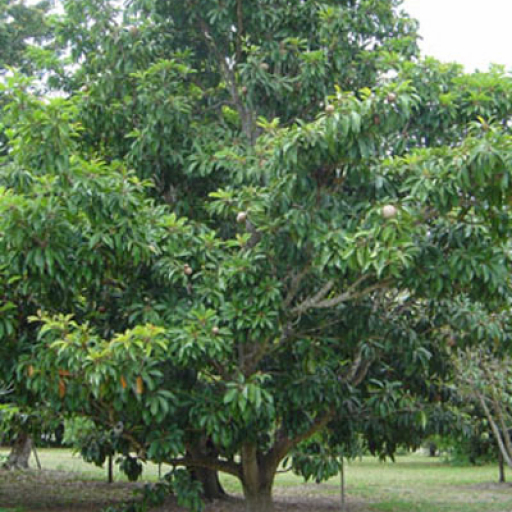
Plant Overview
Known as the legendary "Chewing Gum Tree," Manilkara chicle is a majestic evergreen native to the tropical forests of Mexico and Central America. Long before modern candy aisles existed, the ancient Mayans and Aztecs tapped this tree for its thick, milky sap to create a natural gum. Beyond its industrial history, it is a sturdy, handsome tree that provides dense shade and a glimpse into the ancient botanical traditions of the Americas.
🔍 How to Identify
- 🍃 Leathery Foliage: The leaves are stiff, glossy, and dark green, typically clustered toward the ends of the branches in an elegant, spiraled arrangement.
- ☁️ Milky Latex: If a leaf is plucked or the bark is nicked, the tree immediately exudes a thick, white, sticky sap—this is the raw "chicle" used for gum.
- 🪵 Rugged Bark: The bark is greyish-brown and deeply fissured, often showing "V" shaped scars in the wild from historical sap harvesting.
🏡 In Your Garden
- ☀️ Sun & Space: While it starts as a manageable seedling, this tree wants to reach for the clouds. It requires a spacious location with full sun to develop its broad, rounded canopy.
- 💧 Drainage is Key: Although it loves tropical humidity, it hates "wet feet." Plant it in well-draining soil, as standing water can quickly lead to root rot and yellowing leaves.
- ⏳ Patience Required: This is a slow-growing species. It invests its energy into creating incredibly dense, durable wood, meaning it won't outgrow its welcome overnight, but it is a long-term commitment for your landscape.
⚠️ Safety & Toxicity
- 🧼 Skin Irritant: The milky latex contains natural rubber and resins. People with latex allergies should avoid contact with the sap, as it can cause skin redness or itching.
- 🐾 Pet Caution: While the ripe fruit of many Manilkara species is edible, the seeds and unprocessed sap contain tannins and compounds that can cause digestive upset in curious cats or dogs.
✨ Fun Fact
In the mid-19th century, an exiled Mexican general brought a lump of chicle to New York inventor Thomas Adams. Adams originally tried to turn it into a synthetic rubber for tires, but when that failed, he boiled it with sugar to create the world’s first mass-produced chewing gum!

Detailed Care Instructions
To grow Manilkara Chicle plant, also known as the Sapodilla tree, follow these steps:
- Location: Choose a location that provides full sun or partial shade. The plant prefers tropical or subtropical climates with temperatures ranging from 60°F (15°C) to 95°F (35°C).
- Soil: The plant grows best in well-draining, slightly acidic soil with a pH level between 6.0 and 7.5. However, it can tolerate a wide range of soil types as long as it's well-draining.
- Propagation: Manilkara Chicle can be grown from seeds or grafted onto an existing tree for quicker fruiting. If growing from seeds, soak them in water for 24 hours before planting.
- Planting: Dig a hole slightly wider and deeper than the root ball of the sapling or seedling. Place the plant in the hole, backfill with soil, and gently firm it around the roots. Ensure the tree is planted at the same depth it was in the nursery container.
- Watering: Keep the soil evenly moist but avoid overwatering as it can lead to root rot. Water the plant deeply and less frequently, allowing the top few inches of soil to dry out between watering sessions. During hot weather or drought periods, increase the frequency of watering.
- Fertilization: Use a balanced, slow-release fertilizer in spring and summer to promote healthy growth. Follow the instructions on the fertilizer packaging for the correct application rate. Manilkara Chicle plants are not heavy feeders, so avoid excessive fertilization.
- Pruning: Prune the plant during the early summer or after fruiting to remove dead or damaged branches and maintain a desired shape. Avoid heavy pruning as it can reduce fruit production.
- Pest and disease control: Monitor the plant for common pests like mealybugs, scale insects, or aphids. Treat infestations with organic insecticides or neem oil. Ensure good air circulation around the plant to prevent fungal diseases.
- Harvesting: Manilkara Chicle trees produce fruit, commonly known as Sapodilla, that can be harvested when they turn slightly yellow and have a sweet aroma. Gently twist the fruit off the tree or use pruners to cut the stem close to the fruit.
Remember, growing Manilkara Chicle may require a long-term commitment as it can take several years to start producing fruit.
To water the Manilkara Chicle plant, ensure that you provide the right amount of water to meet its specific needs. Start by examining the soil moisture before watering. Insert your finger about an inch deep into the soil near the plant's root system. If it feels dry, it is time to water.
When watering the Manilkara Chicle, it is essential to provide a thorough watering session rather than a light sprinkle. This allows the water to penetrate deep into the soil and reach the plant's roots. Water the plant until you see moisture starting to drip out from the drainage holes at the bottom of the pot.
To avoid overwatering, which can harm the plant, ensure that the soil does not become waterlogged. Adequate drainage is crucial, as the Manilkara Chicle does not tolerate standing water. If excess water accumulates in the saucer or pot, empty it to prevent root rot.
When determining the frequency of watering, consider the environmental conditions. Factors such as temperature, humidity, and sunlight can influence the plant's water requirements. During hot summer months, or if the plant is placed in a sunny location, you may need to water it more frequently. Monitor the moisture levels regularly and adjust your watering schedule accordingly.
Additionally, it is advisable to use room temperature or lukewarm water to avoid shocking the plant's roots. Watering in the early morning or late afternoon is recommended, as it allows the plant to absorb moisture before the heat of the day or when the temperature drops.
Lastly, remember that each plant is unique, and its water requirements may vary. Observing the plant's overall health, growth, and the condition of the soil will help you fine-tune your watering routine for the specific Manilkara Chicle plant in your care.
To fertilize the Manilkara Chicle plant, use a balanced, slow-release fertilizer with an N-P-K ratio of 10-10-10 or similar proportions. Before applying the fertilizer, ensure that the soil is moist but not saturated.
Follow these steps for fertilizing:
- Measure the recommended amount of fertilizer based on the package instructions or as advised by a horticulturist for your specific plant size.
- Scatter the measured fertilizer evenly around the base of the plant, keeping it at least a few inches away from the stem.
- Gently scratch the fertilizer into the top layer of soil using a hand cultivator or fork.
- Water the plant thoroughly after fertilizing to help the nutrients penetrate the soil and reach the roots.
- Monitor the plant for any signs of over-fertilization, such as burnt foliage or wilting. If this occurs, flush the soil with water to dilute the excess fertilizer.
Remember to fertilize the Manilkara Chicle plant during its active growing season, typically in spring and summer. Avoid fertilizing during the dormant period, which usually occurs in fall and winter. Adjust the fertilizer application frequency based on the plant's response and specific nutrient requirements.
Manilkara chicle, the tropical tree with various common names, requires a specific type of soil to thrive. It prefers to grow in a well-draining soil that is loamy or sandy in nature. The ideal soil pH for this plant ranges from slightly acidic to neutral (6.0-7.0).
The soil should be rich in organic matter, providing essential nutrients and promoting healthy root growth. It is recommended to amend the soil with organic compost or well-rotted manure to improve its fertility and texture. This helps retain moisture without becoming waterlogged.
Furthermore, the soil should have good aeration to prevent excessive water retention, as soggy soil can lead to root rot. Adequate drainage is crucial to ensure that the roots do not become waterlogged. Sandy or loamy soil types are often suitable for this purpose, as they tend to have better drainage capabilities.
To maintain optimal soil conditions, it is advisable to regularly check the moisture level of the soil and water accordingly. Overwatering or underwatering can stress the plant and negatively affect its growth.
In summary, Manilkara chicle thrives in well-draining, slightly acidic to neutral soil that is rich in organic matter. The soil should provide good aeration and moisture retention without becoming waterlogged.
To propagate the Manilkara Chicle plant, you can follow these steps:
- Select a healthy parent plant: Choose a mature and healthy Manilkara Chicle plant from which you want to propagate new ones. Look for a plant with strong stems and vibrant foliage.
- Take cuttings: Using a sharp and sterilized pruning tool, cut a six-inch section from the terminal part of a healthy stem. Make sure to choose a stem that is not too woody or too young. Remove any leaves from the lower half of the stem.
- Prepare the rooting medium: Fill a small pot or container with a well-draining soil mix. You can use a blend of peat moss, perlite, and sand to create an ideal rooting medium for the Manilkara Chicle plant.
- Plant the cutting: Dip the cut end of the stem into a rooting hormone powder or gel to encourage root growth. Create a small hole in the prepared soil mix using your finger or a pencil, and gently place the cutting in it. Press the soil around the base of the cutting to ensure it stands upright.
- Maintain humidity: To enhance the chances of successful propagation, create a mini greenhouse-like environment for the cutting. Cover the pot with a clear plastic bag or a transparent plastic dome to trap moisture and increase humidity. This will help prevent excessive moisture loss and promote rooting.
- Provide appropriate conditions: Place the potted cutting in a warm and bright location, but avoid direct sunlight as it may scorch the young plant. The ideal temperature for rooting is around 70-75°F (21-24°C). Also, ensure that the soil remains moist but not waterlogged during the propagation process.
- Monitor and care for the cutting: Regularly check the cutting for any signs of moisture loss or mold growth. Mist the cutting occasionally to maintain humidity if needed. Keep a close eye on the leaves for any signs of wilting or disease and promptly address any issues.
- Root development: After a few weeks, gently tug on the cutting to check for resistance, indicating root development. Once you notice roots growing, you can gradually remove the plastic covering and continue to care for the young plant as you would for an established Manilkara Chicle plant.
Remember to be patient as the propagation process can take several weeks or even months before the cutting fully establishes itself as a new plant. With proper care and attention, you can successfully propagate the Manilkara Chicle plant and enjoy growing multiple plants from a single healthy parent specimen.








