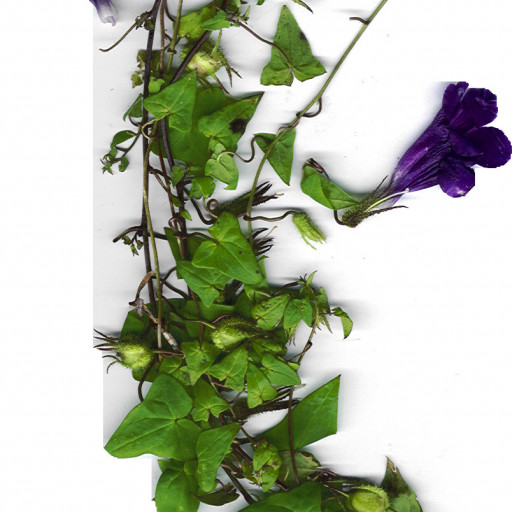
Plant Overview
Known affectionately as the Mexican Viper Herb or the Climbing Snapdragon, this Mexican native is a master of delicate vertical artistry. While it looks fragile with its thin, wiry stems, it is a vigorous climber that was a staple in Victorian-era "conservatory" gardens. Its velvety, trumpet-shaped blooms bring a touch of old-world romance to any trellis, fence, or hanging basket.
🔍 How to Identify
- 🍃 Leaf Shape: Small, bright green foliage shaped like pointed ivy or tiny arrowheads with slightly ruffled, triangular edges.
- 🌸 The Blooms: Velvety, trumpet-shaped flowers that resemble snapdragons, typically appearing in shades of deep violet, indigo, or soft rose with a pale, speckled throat.
- 🧗 Twining Stems: The plant doesn't use suction cups or thorns; instead, it climbs by gracefully wrapping its sensitive leaf stalks (petioles) around any narrow support it can find.
🏡 In Your Garden
- 🏺 Container Charisma: Because of its dainty scale and "spilling" habit, it is an elite choice for hanging baskets or tall urns where the vines can cascade downward if no trellis is provided.
- 🌤️ Cool Feet, Warm Head: Much like a Clematis, this plant thrives when its vines can reach into the sun while its roots remain cool, mulched, and protected from the baking heat of the afternoon.
- 🦋 Pollinator Magnet: The deep tubular flowers are specifically designed to attract hummingbirds and long-tongued bees, making your garden a hub for local wildlife.
⚠️ Safety & Toxicity
- ✅ Generally Safe: Maurandya barclaiana is not listed on major toxic plant databases for pets or humans, making it a "worry-free" choice for family gardens.
- 👅 Not for Eating: While non-toxic, it is strictly an ornamental plant. Ingesting any garden plant can cause mild stomach upset in curious toddlers or pets, so it is best kept out of reach of "nibblers."
✨ Fun Fact
This plant was named in honor of Robert Barclay, an 19th-century English brewery owner and obsessed plant collector who maintained one of the finest private botanical gardens in the world!

Detailed Care Instructions
To grow Maurandya barclaiana (also known as bluebell vine), follow these steps:
- Climate requirements: Maurandya barclaiana prefers a warm climate and grows well in USDA hardiness zones 9-11. Ensure that the climate in your region is suitable for this plant.
- Light requirements: This plant thrives in full sun or partial shade. Choose a location where it can receive at least 6 hours of direct sunlight each day.
- Soil requirements: The soil should be moist and well-draining. Amend the soil with organic matter, such as compost, to improve its fertility and drainage capacity.
- Planting: Sow the seeds directly into the garden bed after the last frost date in your area. Make small holes in the soil, around 1/4 inch deep, and place a few seeds in each hole, spacing them about 6-12 inches apart. Cover the seeds lightly with soil.
- Watering: Keep the soil consistently moist during the germination period, which usually takes around 7-14 days. Once the plants are established, water them regularly, ensuring the soil doesn't dry out completely. However, be cautious not to overwater, as it can lead to root rot.
- Pruning: Maurandya barclaiana is a vine and benefits from regular pruning to maintain its shape and encourage healthy growth. Prune any dead or damaged stems and trim back excessively long tendrils.
- Support: Install trellis or other support structures near the plant to allow it to climb and twine. This will help the vine grow upright and prevent it from sprawling across the ground.
- Fertilization: Apply a balanced, slow-release fertilizer in the spring to provide necessary nutrients for the plant's growth. Follow the instructions on the fertilizer package for proper application and dosage.
- Pests and diseases: Keep an eye out for common garden pests, such as aphids or spider mites, and take appropriate measures if noticed. Maurandya barclaiana is generally resistant to diseases, but it is still important to monitor its health and address any issues promptly.
- Harvesting seeds: If you wish to collect seeds from the plant, wait until the seed pods mature and turn brown. Harvest the pods and allow them to dry completely before extracting the seeds for storage or future propagation.
By following these steps, you should be able to successfully grow Maurandya barclaiana in your garden. Remember to provide the necessary care and enjoy the beautiful blue flowers that the plant produces.

Place in a bright room that is sun drenched almost all day. Or directly in a south-facing window.

To water this plant, you will want to give it a deep soaking once a week when rainfall is insufficient. Be sure to water at the base of the plant, rather than the leaves, to prevent the development of fungal diseases. Allow the top 1-2 inches of soil to dry out between watering to avoid overwatering. It is best to water in the morning or evening, when temperatures are cooler, to prevent the water from evaporating too quickly. Consider using a watering can or drip irrigation system to ensure even and gentle watering.
- Choose a well-draining soil mix with organic matter.
- Apply a balanced fertilizer with equal amounts of nitrogen, phosphorus, and potassium every 4-6 weeks during the growing season.
- Water the plant thoroughly after fertilizing to prevent burning of the roots.
- Avoid fertilizing during the dormant season or in winter.
- For container-grown plants, use a slow-release fertilizer to avoid leaching.
- Monitor the plant's growth and adjust the fertilization schedule as necessary.
The ideal soil for a Maurandya barclaiana plant should be well-draining, slightly alkaline, and rich in organic matter. It should have a pH level between 6.5 and 7.5. The soil should be loose and sandy, allowing for good airflow and water drainage. It should also be kept moist but not wet. Adding organic matter to the soil can help improve the fertility and water-holding capacity of the soil, providing the plant with essential nutrients for healthy growth. A mix of soil, sand, and compost can create the best conditions for growing a healthy Maurandya barclaiana plant.
To propagate this plant, you can take stem cuttings in the spring or early summer. Cut a stem that is 4-6 inches long and has at least two leaf nodes. Remove the bottom leaves and dip the cut end in rooting hormone. Plant the cutting in a well-draining potting mix and keep it moist but not oversaturated. Place the pot in a bright but indirect light and keep the temperature warm (around 70°F). It should take about 4-6 weeks for roots to develop. Once the roots have grown, you can transplant the cutting to a larger container or into your garden.
Common pests of the purple snapdragon vine include Mealybugs, spider mites, aphids, whiteflies. Make a habit of checking your purple snapdragon vine frequently for pests so that any infestations can be caught and managed early.







