Plant Overview
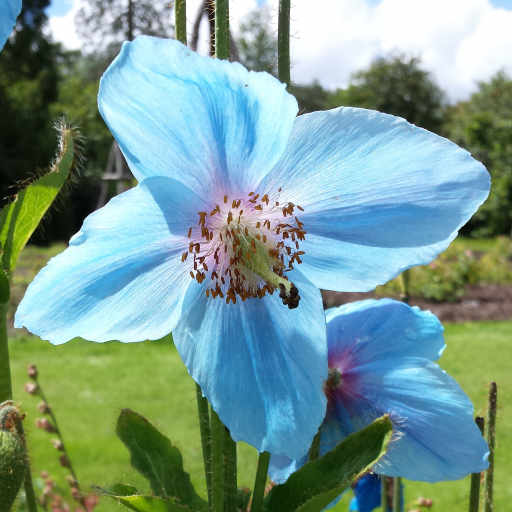
Often called the "Himalayan Blue Poppy," this plant is the holy grail for many temperate gardeners. Known for its mesmerizing, true-blue petals that seem to glow in the shade, it was first introduced to the West from the high-altitude forests of the Himalayas. It carries an air of mystery and prestige, as it is notoriously picky about its environment, demanding the cool, misty conditions of its mountain home.
🔍 How to Identify
- 💙 The Bloom: Large, bowl-shaped flowers featuring four to six delicate, papery petals in a breathtaking sky-blue to lavender-blue hue.
- 💛 The Heart: A striking cluster of bright golden-yellow stamens in the center that creates a vivid contrast against the blue petals.
- 🌿 The Foliage: Oblong, bluish-green leaves that are covered in fine, rusty-colored bristly hairs, giving the plant a textured, slightly "fuzzy" appearance.
🏡 In Your Garden
- ☁️ The Climate Factor: This plant is not a fan of the heat; it thrives in "cool summer" climates with high humidity. If you live in a place with scorching summers, it will require deep shade and constant misting to survive.
- 🥣 Soil Nuance: It demands rich, acidic soil that stays consistently moist but never soggy. It has a sensitive root system that hates being moved, so choose its "forever home" in your garden carefully to avoid transplant shock.
- ✂️ The First Year Trick: Experienced growers often pinch off the flower buds in the first year. This encourages the plant to put its energy into building a strong perennial root system rather than exhausting itself with a bloom too early.
⚠️ Safety & Toxicity
- ✅ Status: Generally considered non-toxic, but handle with care.
- 🐾 Details: While not known to be deadly like some of its poppy cousins, the bristly hairs on the stems and leaves can cause mild skin irritation for sensitive individuals. It is not edible for pets or humans and may cause an upset stomach if ingested.
✨ Fun Fact
The Himalayan Blue Poppy is so rare and difficult to cultivate that it has reached legendary status in botanical history. It was famously "rediscovered" in the early 20th century by the explorer Frank Kingdon-Ward during a grueling expedition through the Tsangpo Gorge, one of the deepest canyons in the world!

Detailed Care Instructions

Place in a window with dappled sun or a spot in the middle of a room. Or directly in a window facing west or east.

Some plants require more regular watering than others, which should be done every few days. It's critical to maintain the soil moist all of the time. The water requirements of the same plant placed in pots with varying sizes will differ. Because the water in the smaller pot evaporates faster than the water in the larger pot, it will require more watering. Regardless of pot size, the surface should constantly be maintained moist.








