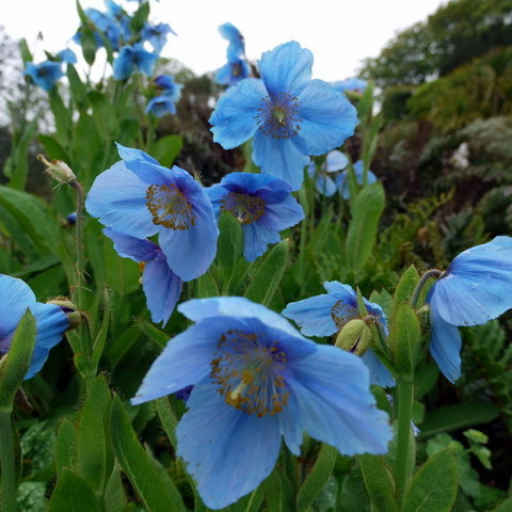
Plant Overview
Often called the "Himalayan Blue Poppy," Meconopsis grandis is the holy grail for many gardeners. With its ethereal, sky-blue petals and striking golden centers, it looks like something out of a dream rather than a mountain slope. As the national flower of Bhutan, it carries a sense of majesty and mystery, thriving in the misty, cool shadows of the high Himalayas where few other vibrant blooms dare to grow.
🔍 How to Identify
- 🌸 Petal Texture: Large, nodding flowers with four to six delicate petals that have a crinkled, silken appearance similar to fine crepe paper.
- 🎨 Electric Hue: A deep, mesmerizing shade of "Tibetan Blue" that is rare in the plant world, though colors can occasionally shift toward purple depending on soil minerals.
- 🌿 Bristly Foliage: The stems and rosettes of elongated leaves are covered in distinct, fine brownish or yellowish hairs that help the plant shed excess moisture.
🏡 In Your Garden
- ☁️ The "Goldilocks" Climate: This plant is famously finicky; it demands "just right" conditions—cool, damp summers and high humidity. It will quickly wilt in high heat or dry, stagnant air.
- 🌱 Root Sensitivity: It possesses a delicate root system that resents being disturbed. Because it is a "heavy feeder," it requires rich, acidic soil but will fail if the ground becomes waterlogged during the winter dormancy.
⚠️ Safety & Toxicity
- 🐾 Mildly Toxic: Like many members of the poppy family, it contains alkaloids that can cause stomach upset or lethargy if ingested by curious pets or children.
- 🧤 Skin Irritation: The bristly hairs on the stems and leaves can be a mechanical irritant to sensitive skin, so wearing gloves while gardening is recommended.
✨ Fun Fact
- 🏔️ High Altitude Royalty: Meconopsis grandis was officially designated as the national flower of Bhutan in 2002. It was long considered a myth by Western botanists until it was "discovered" during an Everest expedition in the early 1920s.

Detailed Care Instructions
To grow Meconopsis grandis (Blue Himalayan Poppy), follow these steps:
- Climate and Location: Blue Himalayan Poppies prefer cool and moist climates. They grow well in regions with mild summers and cold winters. Choose a spot in your garden with partial shade, as direct sunlight can scorch the fragile petals.
- Soil Preparation: Meconopsis grandis thrives in well-draining, humus-rich, and slightly acidic soil. Work compost or peat moss into the soil beforehand to improve drainage and add organic matter.
- Sowing Seeds: Ideally, sow seeds in early spring to ensure proper germination. Fill seed trays or pots with a seed starting mix that contains equal parts of compost, sand, and perlite. Lightly sprinkle the seeds on the surface, pressing them gently into the soil. Do not cover the seeds with soil or any other material as they need light to germinate.
- Watering: Keep the soil consistently moist but avoid overwatering. Water whenever the top inch of the soil feels dry. Be diligent in maintaining moisture during dry periods or when growing in containers.
- Temperature and Care: Blue Himalayan Poppies prefer cooler temperatures between 55-70°F (13-21°C). Ensure the plants are protected from extreme heat or frost. Apply a layer of organic mulch around the base of the plants to keep the roots cool and prevent weeds.
- Transplantation: When the seedlings have developed their first true leaves, and the danger of frost has passed, you can transplant them into your garden. Choose a spot with shade or partial shade and space the plants about 12-18 inches apart.
- Fertilization: Apply a balanced, slow-release fertilizer in early spring and again in mid-summer to provide essential nutrients. Follow the recommended application rates mentioned on the fertilizer packaging.
- Pest and Disease Control: Monitor your plants regularly for pests such as slugs, snails, and aphids. Use organic pest control methods like hand-picking or natural insecticides if necessary. Ensure good air circulation around the plants to prevent fungal diseases.
- Support: Meconopsis grandis can grow up to 3-4 feet tall, so provide support such as stakes or cages to prevent them from flopping over during wind or heavy rains.
- Deadheading and Maintenance: Remove spent flowers regularly by cutting them back to the base of the plant. This will encourage continuous blooming and prevent seed formation. Remove any dead or damaged leaves to maintain overall plant health.
Remember, Meconopsis grandis can be challenging to grow, and it may take a year or two to establish fully. Be patient and persevere, and you may be rewarded with stunning, sky-blue blooms in subsequent years.

Place in a window with dappled sun or a spot in the middle of a room. Or directly in a window facing west or east.

To provide adequate water for this plant, it is essential to ensure that the soil is consistently moist. It is recommended to water deeply and regularly, with the frequency of watering depending on the weather and soil conditions.
When watering, avoid getting water on the leaves to prevent the buildup of fungal diseases. It is better to water the soil directly at the base of the plant in the morning or evening when the temperature is cooler.
During rainy periods, it is essential to monitor the plant to ensure that the soil does not become too saturated. On the other hand, during dry periods, it may be necessary to supplement watering with deep watering.
Overall, proper watering practices are vital to keep this plant healthy and thriving.
To fertilize this plant, you should use a balanced fertilizer with equal amounts of nitrogen, phosphorus, and potassium. Apply the fertilizer at a rate of 1 tablespoon per square foot of soil every six to eight weeks during the growing season. Water the plant thoroughly before and after fertilizing to ensure the fertilizer reaches the roots. Avoid over-fertilizing or applying fertilizer when the soil is dry, as this can damage the plant.
Meconopsis Grandis plant prefers a soil that is rich in organic matter and well-draining. It thrives in a soil that is slightly acidic with a pH between 5.5 to 6.5. It is also important that the soil is loamy and has good moisture retention capacity. The plant is sensitive to drought, so the soil should always be kept moist but not waterlogged. The use of sandy or clay soils is not recommended as they may have poor drainage and may not provide the ideal living conditions for the plant. Good soil preparation should involve digging in organic matter such as well-rotted manure or compost. This will provide the plant with the necessary nutrients and improve the structure of the soil. Additionally, an annual application of mulch around the plant can help to enrich the soil and protect the plant from extreme temperature fluctuations.
Meconopsis Grandis is a popular plant among gardening enthusiasts due to its beautiful and unique appearance. It is a perennial plant that belongs to the family Papaveraceae and is native to the Himalayan region. This plant is propagated through seed or division.
Propagation through seed:
- Collect seeds when the seedpods have dried out and turned brown.
- Remove the seeds from the pod and store them in a cool, dry place until spring.
- In the spring, sow the seeds in a seed tray filled with a light, well-draining soil mix.
- Cover the seeds with a thin layer of soil and water gently.
- Keep the seedlings in bright, indirect light and maintain a consistently moist soil.
- Transplant the seedlings outdoors when they are large enough to handle and have developed several sets of true leaves.
Propagation through division:
- Dig up a mature Meconopsis Grandis plant during its dormant season, which is typically in the fall or winter.
- Carefully divide the plant into clumps, making sure that each clump has a healthy root system and several stems.
- Replant the divisions in a well-draining soil mix in a location with partial shade.
- Water the newly planted divisions well and keep the soil consistently moist until they establish themselves in their new location.
Overall, Meconopsis Grandis is a spectacular plant that can be easily propagated through seed or division. With proper care and attention, these plants can thrive and produce stunning blooms year after year.








