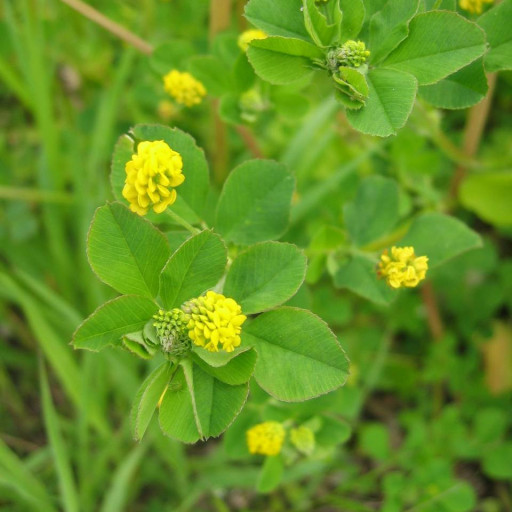
Plant Overview
Often called Black Medic, Nonesuch, or Hop Clover, this resilient little legume is a frequent visitor to lawns, roadsides, and meadows across the globe. While many gardeners dismiss it as a mere weed, it acts as a silent soil doctor, weaving a green carpet that actually improves the land beneath it.
🔍 How to Identify
- ☘️ Trifoliate Leaves: It features three-lobed leaves very similar to clover, but with a key difference: the central leaflet has a distinct short stalk, while true clover leaflets all meet at the same point.
- 🌼 Miniature Blooms: Look for tiny, dense, globe-shaped clusters of bright yellow flowers. Each "pom-pom" is actually made up of up to 50 individual pea-like blossoms.
- 🌑 Black Seed Pods: Its most defining feature is the kidney-shaped seed pods that turn a deep, leathery black once they ripen, giving the plant its common name.
🏡 In Your Garden
- 🌱 The Soil Healer: As a member of the pea family, Black Medic is a "nitrogen fixer." It works with specialized bacteria in its roots to pull nitrogen from the air and store it in the soil, effectively fertilizing your garden for free.
- 🛡️ Drought Survivor: It possesses a surprisingly tough taproot. This allows it to stay green and lush in sun-baked, compacted soil where traditional grass would wither and turn brown.
⚠️ Safety & Toxicity
- ✅ Generally Safe: Black Medic is considered non-toxic to humans, dogs, and cats. It is not known to cause skin irritation upon contact.
- 🐾 Dietary Note: While not harmful, it contains saponins (like many legumes). While small amounts are fine, it shouldn't be a primary food source for pets, as excessive munching might lead to a mild upset stomach.
✨ Fun Fact
In the 17th century, this plant was nicknamed "Nonesuch" because farmers believed it was a plant with "no equal" due to its ability to thrive in the poorest soils while providing high-protein forage for sheep and honeybees.

Detailed Care Instructions
| Lighting | Full Sun |
| Hardiness Zones | Max 9B |
To grow Medicago Lupulina, also known as black medic or hop clover, follow these steps:
- Soil preparation: The soil should be well-drained and fertile. Remove any weeds or stones from the area where you want to grow the plant.
- Seed selection: Obtain high-quality Medicago Lupulina seeds from a reputable source. Ensure the seeds are not expired or damaged.
- Planting: Depending on your location and climate, you can sow Medicago Lupulina seeds directly into the ground in early spring or fall. Space the seeds about 6-8 inches apart to allow proper growth.
- Watering: Keep the seeds moist but not overly wet. Water the plants regularly, especially during dry spells or hot weather. Avoid overwatering, as this can lead to fungal diseases.
- Sunlight: Medicago Lupulina prefers full sun but can tolerate partial shade. Provide at least 6-8 hours of direct sunlight per day for optimal growth.
- Fertilization: Fertilize the plants with a balanced organic fertilizer during the growing season to promote healthy growth. Follow the instructions on the fertilizer package for the correct dosage.
- Weed control: Remove any weeds competing with the Medicago Lupulina plants, especially during their early growth stages. Regularly inspect the area and manually remove any unwanted plants.
- Mulching: Apply a layer of organic mulch around the plants to help retain moisture and suppress weed growth. This will also protect the soil and provide nutrients as the mulch breaks down.
- Pruning: Occasionally trim the plants to maintain their shape and prevent them from becoming too tall or leggy. Pruning can also encourage bushier growth and more flower production.
- Pest and disease control: Monitor the plants for any signs of pests or diseases, such as aphids or powdery mildew. If detected, take appropriate measures, such as using organic insecticides or fungicides, to control and prevent further damage.
- Propagation: Medicago Lupulina can also be propagated through division. Dig up a mature plant, separate the clumps, and replant them in desired areas. This is best done in early spring or fall.
Remember to follow local regulations and restrictions for growing plants. Growing conditions may vary depending on your specific location and climate, so it is essential to research and adapt cultivation techniques accordingly.

Place in a window with dappled sun or a spot in the middle of a room. Or directly in a window facing west or east.

To water this particular plant, first perform a soil moisture test by sticking your finger about an inch into the soil. If it feels dry at that depth, it's time to water. When watering, use a watering can or hose to slowly and evenly water the soil around the base of the plant. Avoid getting water on the leaves as this could lead to disease. Water deeply enough to moisten the soil down to the plant's roots, but don't overwater as too much moisture can cause root rot. Allow the soil to dry out slightly before the next watering. During periods of high heat or drought, increase the frequency of watering to keep the soil consistently moist.
To fertilize the plant, mix a balanced fertilizer with equal parts of nitrogen, phosphorus, and potassium. Apply the fertilizer to the soil around the plant, avoiding the leaves and stem. Water the plant thoroughly after fertilizing, and wait for the soil to dry before applying fertilizer again. Fertilize the plant every 2-3 weeks during the growing season, and reduce the frequency in colder months.
Medicago Lupulina prefers well-draining soil that is rich in nutrients. The soil should have a pH level between 6.0 and 7.5. It is recommended to mix in organic matter, such as compost or aged manure, to improve soil texture and fertility. Avoid using soils that are compacted, heavy, or waterlogged as they can lead to root rot and other issues. It is also important to avoid using soils that are contaminated with chemicals, such as pesticides or fertilizers, as this can harm the plant and nearby wildlife. Additionally, Medicago Lupulina plants benefit from regular fertilization with a balanced or high-potassium fertilizer.
Medicago Lupulina is a plant that can be propagated through a number of different methods. One common way to propagate this plant is through seed propagation. This involves collecting seeds from mature plants and planting them in soil or seed trays. The seeds should be sown in the spring or fall and kept moist until they germinate.
Another method of propagating Medicago Lupulina is by root division. This is done by digging up an established plant and dividing it into smaller sections. Each section should have several roots and shoots. These can then be replanted in a new location or in the same spot where the original plant was growing.
Cuttings can also be used to propagate Medicago Lupulina. This involves taking a cutting from a mature plant and rooting it in water or soil. The cutting should be taken from the top of the plant and should be at least 4 inches long. Once the cutting has rooted, it can be transplanted to a new location.
In general, Medicago Lupulina is a relatively easy plant to propagate and is well-suited for home gardens and landscaping projects. With a little care and attention, it can quickly establish itself and produce beautiful blooms and foliage.
Common pests of the black medick include Spider mites, aphids. Make a habit of checking your black medick frequently for pests so that any infestations can be caught and managed early.








