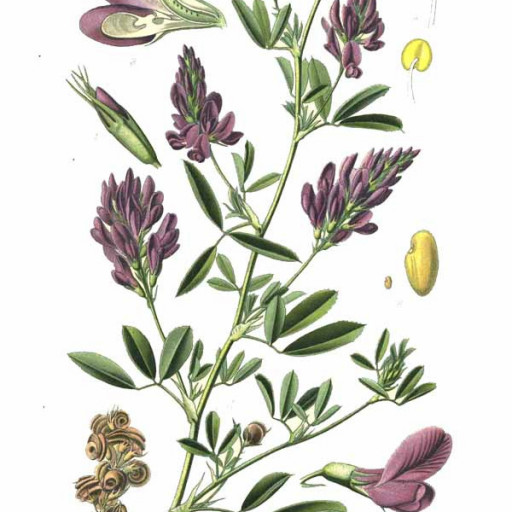
Plant Overview
Known as "Lucerne" in much of the world or the "Queen of Forages," Alfalfa has been cultivated for over 2,000 years. Its name stems from the Arabic phrase al-fisfisa, meaning "father of all foods," a testament to its incredible nutrient density. While it is famous as a high-protein livestock feed, it is also a secret weapon for home gardeners looking to naturally restore their soil.
🔍 How to Identify
- 🌿 The Leaflet Tease: Alfalfa features trifoliate (three-part) leaves that look strikingly similar to clover. However, you can tell them apart by the middle leaflet, which sits on a slightly longer stem than the two side leaflets.
- 💜 Purple Clusters: During the summer, the plant produces dense, rounded clusters of small, pea-like flowers. These blooms range from a pale lavender to a deep, royal violet.
- 🌀 Spiral Seed Pods: One of its most distinct features is the seed pod, which grows in a tight, coiled spiral—looking almost like a tiny green snail shell or a corkscrew.
🏡 In Your Garden
- 🏗️ The Soil Engineer: Alfalfa is a master "nitrogen fixer." It hosts beneficial bacteria in its roots that pull nitrogen from the air and deposit it into the earth, essentially acting as a living fertilizer factory for your garden.
- 🚰 Deep Diving Roots: This plant is a champion of drought resistance. It grows a massive taproot that can reach depths of 15 to 30 feet to find water! Because of this, it hates being moved; once you plant it, it’s there to stay.
- 🐝 Pollinator Magnet: If you want to see your garden buzzing with life, this is the plant to grow. Its nectar-rich flowers are a favorite for honeybees and butterflies.
⚠️ Safety & Toxicity
- ✅ General Status: Alfalfa is generally considered non-toxic to humans and most pets. In fact, alfalfa sprouts are a common health food.
- 🐎 Livestock Caution: While it is great feed, excessive consumption by horses or cattle can occasionally lead to "bloat" or photosensitivity due to its high protein and saponin content.
- 💊 Human Health: Because it is very high in Vitamin K, individuals on blood-thinning medications should consult a doctor before consuming alfalfa supplements or large amounts of sprouts.
✨ Fun Fact
Alfalfa is used as "Green Manure" by organic farmers. They grow a field of it just to chop it down and bury it back into the earth, allowing the plant to decompose and turn the soil into a nutrient-rich buffet for future crops!

Detailed Care Instructions
| Humidity | Normal |
| Lighting | Full Sun |
| Toxicity | Poisonous |
| Difficulty | Easy |
| Hibernation | Cold Period |
| Hardiness Zones | 4 - 8 |
To grow Medicago sativa, commonly known as alfalfa, follow these steps:
- Choose the right location: Alfalfa grows best in areas with full sun. It prefers well-drained soil with a pH between 6.0 and 7.0. Ensure the planting site has good air circulation.
- Prepare the soil: Alfalfa grows well in fertile soil. Before planting, remove any weeds and debris from the area. Loosen the soil to a depth of 12-15 inches and amend it with organic matter, such as compost or well-rotted manure.
- Select the right seeds: Purchase high-quality alfalfa seeds from a reputable source. Ensure they are fresh and free from diseases.
- Planting: Plant the seeds in early spring when the soil temperature reaches around 50°F (10°C). Rake the soil to create a smooth surface and broadcast the seeds evenly over the area. Lightly cover the seeds with ¼ inch of soil.
- Watering: Keep the soil moist but not waterlogged during germination and establishment. Water the seeds regularly to ensure they remain damp until they germinate, usually within 7-10 days.
- Fertilization: Alfalfa requires sufficient nutrients to grow optimally. Conduct a soil test to determine the soil's nutrient content and pH level. Based on the test results, apply fertilizers according to the recommendations for legume crops.
- Managing weeds: Weeds can compete with alfalfa for nutrients, sunlight, and water. Control weeds by regular hand weeding or using appropriate herbicides. Be cautious when using herbicides to prevent damage to the alfalfa.
- Harvesting: Alfalfa is typically harvested when it reaches the flowering stage. This usually occurs around 60-80 days after planting, depending on the variety and growing conditions. Cut the plants 2-3 inches above the ground using a sickle or mower.
- Regrowth and maintenance: After each cutting, alfalfa regrows. Leave the plant stubble to allow regrowth. Ensure proper irrigation, nutrient management, and weed control to maintain healthy growth.
- Crop rotation: To prevent pests and diseases, it is advisable to rotate alfalfa with other crops every few years.
Following these steps will help you successfully grow Medicago sativa, providing a valuable forage crop for livestock or a nutritious cover crop for your garden.

Place in a bright room that is sun drenched almost all day. Or directly in a south-facing window.

To properly water this plant, you should first consider the soil it is planted in. The soil should be well-draining and not hold excess moisture. Before watering, check the top layer of soil, if it is dry to the touch, it is time to water. Water the soil around the base of the plant, avoiding the leaves and stems. It is best to water deeply and infrequently, allowing the soil to dry out slightly in between waterings. Overwatering can lead to root rot and other issues. It is also important to avoid getting the foliage wet, as this can encourage fungal growth. Finally, consider the climate and weather conditions, as plants may require more or less watering depending on the temperature and humidity levels.
To fertilize this plant, use a nitrogen-rich fertilizer in the springtime before the first leaf buds appear. Apply the fertilizer evenly over the soil, making sure not to get any on the leaves or stems. It is recommended to repeat this process once a month during the growing season. Be sure to water the plant well after fertilizing to help the nutrients reach the roots. Avoid over-fertilization as it can damage the plant and cause nutrient burn.
The ideal soil for this plant is one that is well-draining, loose, and has a pH of 6.0 to 7.5. This type of soil should also have a good balance of nutrients, including nitrogen, phosphorus, and potassium. In addition, it is best to use a soil that has a sufficient amount of organic matter to help retain moisture and improve soil structure. It is also important to avoid using soil that is too compact or heavy, as this can impede root growth and limit the plant's ability to access the nutrients it needs to thrive. Overall, a light, fertile, and well-draining soil is ideal for this plant to grow and develop successfully.
Medicago Sativa plant can be propagated by two methods - sexual and asexual. In the sexual method, the plant can be propagated by collecting its seeds and sowing them directly into the soil or by starting them in pots. The best time to collect seeds is after the pods have started drying up on the plant. The seeds should be sown at a depth of 1-2 inches and should be kept moist until they germinate, which usually takes around 7-10 days.
In the asexual method, the plant can be propagated by root cuttings or stem cuttings. For root cuttings, select a healthy plant and remove a section of the root that is 3-4 inches long. Plant the cuttings in a well-draining soil mix and keep them moist until new growth appears. For stem cuttings, select a healthy stem that is at least 6 inches long and has several leaves. Remove any leaves from the bottom of the stem and dip the end in rooting hormone. Plant the cutting in a pot with a well-draining soil mix and keep it moist until new growth appears.
With proper care and maintenance, Medicago Sativa plant can be a great addition to your garden. It is a hardy plant that can tolerate a wide range of conditions and can provide a reliable source of forage for livestock.
Common pests of the alfalfa include Spider mites, aphids. Make a habit of checking your alfalfa frequently for pests so that any infestations can be caught and managed early.








