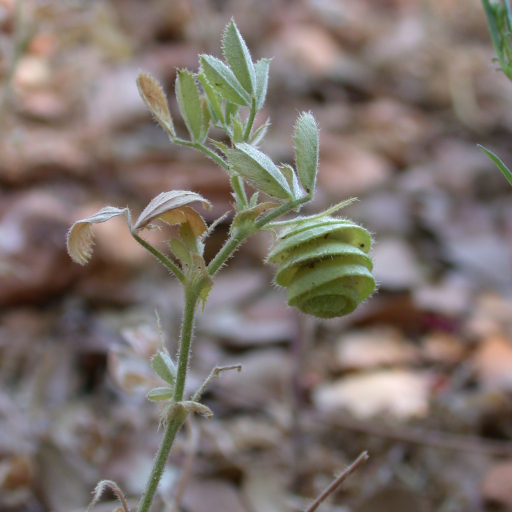
Plant Overview
Often called the Snail Medic or Shield Medic, this charming Mediterranean annual is best known for its whimsical seed pods that look exactly like tiny, coiled snail shells resting on the foliage. While it is frequently used in agriculture as a "green manure" to heal tired soil, it often pops up in wild gardens and meadows, surprising onlookers with its miniature, architectural fruit.
🔍 How to Identify
- 🐌 The "Snail" Pods: The most iconic feature is the seed pod, which consists of 5 to 10 tight, spiral coils that create a turreted shape, mimicking a snail shell or a small shield.
- ☘️ Trifoliate Leaves: Like its cousins the clovers, it features leaves arranged in groups of three. Each leaflet is oval-shaped with finely toothed edges towards the tip.
- 🌼 Sunny Blooms: It produces small, pea-like flowers that are a vibrant yellow-orange, typically appearing in clusters of one to three.
🏡 In Your Garden
- 🌱 The Soil Healer: As a legume, this plant is a nitrogen-fixer. It works with soil bacteria to pull nitrogen from the air and "pump" it into the earth, making it an excellent companion for heavy-feeding plants.
- ☀️ Sun Seeker: It thrives in open, sunny spots and is remarkably drought-tolerant once established. It prefers well-drained, alkaline soils and can struggle in heavy, waterlogged clay because its roots need to breathe.
⚠️ Safety & Toxicity
- ✅ General Safety: Medicago scutellata is considered non-toxic to humans, dogs, and cats. It is actually highly valued as a nutritious forage for livestock.
- 🐄 Livestock Note: While safe, like many medics and clovers, if ruminants (like sheep or cattle) graze exclusively on lush, young stands of this plant, it can occasionally cause "bloat." In a domestic garden setting, it is harmless.
✨ Fun Fact
The species name scutellata comes from the Latin word scutella, meaning "a small dish" or "platter," referring to the flattened, plate-like appearance of the spiral coils in the seed pod.

Detailed Care Instructions
To grow Medicago Scutellata, also known as snail medic or snail crest, you can follow these steps:
- Obtain seeds: Purchase Medicago Scutellata seeds from a reputable supplier or collect them from existing plants, if available.
- Soil preparation: Choose a sunny location with well-draining soil. Prepare the soil by removing weeds and rocks, and ensure it is loose and aerated.
- Seed sowing: Scatter the seeds directly onto the prepared soil, or you can soak them in water for a few hours before sowing. Sow the seeds in early spring or early fall.
- Light and water requirements: Medicago Scutellata prefers full sun to partial shade. Water the plants regularly, especially in hot and dry periods, to keep the soil evenly moist but not waterlogged.
- Weed control: Keep the planting area free from weeds that may compete with the young Medicago Scutellata plants for nutrients and water.
- Fertilization: You may not need to fertilize the plants as they are nitrogen-fixing legumes. However, if the soil is poor, you can apply a balanced organic fertilizer in the early growth stage.
- Maintenance: Snail medic is a low-maintenance plant, but you can trim it back after flowering to promote bushier growth. Additionally, consider providing support, like small stakes or trellises, as the plants may benefit from some vertical guidance.
- Pest and disease control: Medicago Scutellata is relatively resistant to pests and diseases. However, keep an eye out for common garden pests such as aphids or snails, and take appropriate measures to control them if necessary.
- Harvesting: You can harvest the leaves and stems of Medicago Scutellata when they are young and tender, usually around 30-40 days after planting. Harvesting the plant regularly can encourage new growth.
- Propagation: Medicago Scutellata can self-seed, or you can collect seeds from the plants to sow in new areas or save for future plantings.
Following these steps should help you successfully grow Medicago Scutellata plants in your garden.

Place in a bright room that is sun drenched almost all day. Or directly in a south-facing window.

To water this plant, first make sure that the soil is slightly dry to the touch before watering. When watering, pour water directly onto the soil, making sure to thoroughly saturate the soil and ensure the water reaches the roots. Avoid getting water on the leaves or stem of the plant as this can lead to fungal issues. Watering should be done on a regular basis to prevent the soil from completely drying out. It is important not to overwater the plant, as this can lead to root rot and other issues.
To properly fertilize this plant, begin by mixing a balanced fertilizer with equal amounts of nitrogen, phosphorus, and potassium. Use a low dosage and apply every 2-3 weeks during the growing season. If the plant shows signs of nutrient deficiency, increase the amount of fertilizer slowly until it recovers. Water the plant thoroughly before and after fertilizing to prevent fertilizer burn.
The ideal soil for the plant is one that is well-draining and contains a mixture of sand, loam, and organic matter. It prefers a slightly alkaline soil, with a pH ranging from 7.0 to 8.5. It should be planted in soil that is rich in nitrogen, phosphorus, and potassium, as these nutrients are essential for its growth and development. The soil should not be too compact, as the plant's roots need room to spread out and grow deep. Additionally, it should be free from pests and diseases that may harm the plant.
To propagate this plant, you can collect seeds from the mature plant and then sow them in well-draining soil in a sunny location. Before sowing the seeds, scarify them by gently rubbing them with sandpaper or nicking them with a knife to help them germinate more easily. Cover the seeds with a light layer of soil and keep them moist but not waterlogged. Young seedlings should emerge within a few weeks. Once they have grown a few inches tall, you can transplant them into larger pots or into the ground. Alternatively, you can take stem cuttings from the plant and root them in water or moist soil. Choose a healthy stem with several leaves and cut it just below a node. Remove the lower leaves and place the cutting in water or moist soil, keeping it in a warm, bright location. Within a few weeks, roots should begin to develop and you can transplant the new plant into a larger pot or into the ground.








