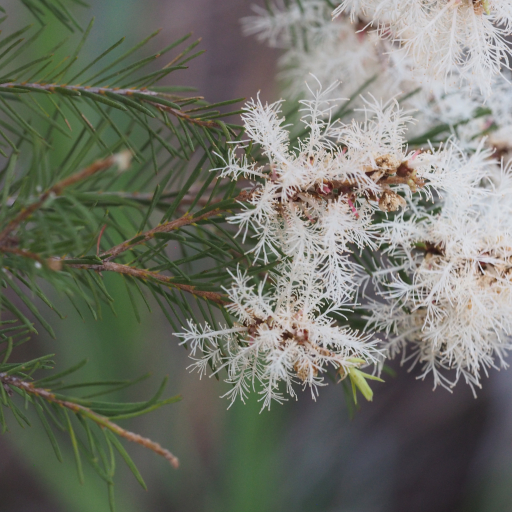
Plant Overview
Often called the "healing tree" or simply "Tea Tree," Melaleuca alternifolia is a coastal Australian native that has transformed from a traditional indigenous remedy into a global skincare superstar. Its fragrance is unmistakable—camphoraceous, clean, and sharp—signaling the potent antiseptic oils stored within its needle-like foliage. Historically, it was the "first aid kit in a bottle" for soldiers and explorers alike.
🔍 How to Identify
- 🌿 Needle-like Leaves: The leaves are small, linear, and soft to the touch, growing in an alternating pattern along the stems. When crushed, they release a powerful, medicinal aroma.
- ☁️ Bottlebrush Blooms: During late spring and summer, the tree is covered in fluffy, cylindrical white flower spikes that look like tiny, creamy clouds or bottle brushes.
- 📜 Paperbark Trunk: As the tree matures, its bark becomes white and papery, often peeling away in thin, parchment-like layers, which is a signature trait of the Melaleuca genus.
🏡 In Your Garden
- 💧 The Swamp Specialist: Because it originates from low-lying, marshy areas of New South Wales, this plant is an "aquaholic." It thrives in damp, poorly drained soils where other plants might struggle with root rot.
- ✂️ Maintain the Hedge: While it can reach up to 20 feet, it is often kept as a dense shrub. It responds exceptionally well to heavy pruning; cutting it back regularly prevents it from becoming "leggy" and encourages a flush of fresh, aromatic new growth.
⚠️ Safety & Toxicity
- 🐕 Pet Warning: Melaleuca is highly toxic to dogs, cats, and horses. If ingested, or if concentrated tea tree oil is applied to their skin, it can cause tremors, weakness, and even paralysis.
- 🚫 External Use Only: Despite the name "Tea Tree," the leaves and their essential oils are toxic if swallowed by humans. It is strictly for topical use and should be kept out of reach of children.
✨ Fun Fact
Captain James Cook is credited with naming the plant "Tea Tree" in 1770. After seeing the indigenous Bundjalung people use the leaves for healing, he tried brewing them into a spicy tea for his crew to prevent scurvy. While the taste was reportedly quite bitter, the name survived centuries of history!

Detailed Care Instructions
| Humidity | Normal |
| Lighting | Part Sun |
| Difficulty | Medium |
| Temperature | 18°C - 25°C |
| Hardiness Zones | 9A - 10B |
Growing Melaleuca alternifolia, also known as tea tree, requires a specific set of conditions. Here are some steps to help you grow this plant:
- Climate and soil: Tea tree plants thrive in warm climates with a minimum temperature of 60°F (15°C). It prefers well-draining, sandy or loamy soil with a pH level between 5.0 and 6.5.
- Location: Choose a sunny location for your tea tree plant, as it requires full sun exposure for at least six hours a day.
- Planting: Germinate the seeds by placing them in a shallow container filled with seed-raising mix. Cover the seeds lightly and keep the soil moist until germination, which may take 1-4 weeks. Once the seedling shows several sets of leaves, transplant it to a larger container or directly into the ground, ensuring it has enough space to grow.
- Watering: Tea tree plants require regular watering but should not be over-watered. Water the plant deeply once or twice a week, depending on the moisture retention of the soil. Ensure the soil is slightly damp but not waterlogged.
- Fertilizing: Use a slow-release general-purpose fertilizer during the growing season to provide essential nutrients to the plant. Follow the instructions on the packaging for proper application.
- Pruning: Prune your tea tree plant to maintain its shape and remove dead or damaged branches. Regular pruning also encourages bushier growth.
- Pest and disease control: Tea tree plants are relatively pest-resistant but can occasionally be affected by spider mites or scale insects. Monitor your plant regularly and take appropriate action if pests are present. Be cautious when using chemical pesticides, as they can harm beneficial insects. Organic neem oil or insecticidal soap can be effective alternatives.
Remember, it may take a few years for your tea tree plant to reach a mature size and produce adequate essential oil. Patience and proper care are essential for a healthy plant.

Place in a bright room that is sun drenched almost all day. Or directly in a south-facing window.

To water this particular plant, it is important to thoroughly saturate the soil until the excess water drains out of the pot's drainage holes. It is recommended to allow the top layer of soil to slightly dry out in between waterings. Overwatering can lead to root rot, so it's important not to let the plant sit in standing water. It's best to water the plant in the morning or early afternoon to allow for proper absorption before the cooler evening temperatures. Additionally, this plant prefers well-draining soil and should not be left in standing water or overly wet conditions.
To fertilize this plant, use a fertilizer that is high in nitrogen, phosphorus, and potassium. Apply the fertilizer to the soil around the plant once a month during the growing season. Make sure to follow the instructions on the fertilizer package and water the plant thoroughly after applying the fertilizer. Avoid over-fertilizing as this can damage the plant. Additionally, it is important to keep the soil moist but not waterlogged to promote healthy growth.
The best type of soil to use for Melaleuca Alternifolia plants is one that is well-draining and mildly acidic. The soil should be able to hold some moisture but not become waterlogged. A soil with a pH between 5.5 and 6.5 is suitable for this plant. The soil also must be rich in organic matter such as peat moss or compost, which can help enhance water retention while providing essential nutrients for growth. It is recommended to avoid heavy soil with high clay content as it can lead to poor drainage.
To propagate this plant, you will first need to take a cutting from a healthy and mature specimen. Using a sharp and sterilized knife, make a clean cut at a 45-degree angle on a stem with a diameter of about 1/4 inch. Remove all the leaves from the lower half of the stem. Dip the cut end in a rooting hormone powder, and then plant it in a well-draining soil mix made of equal parts sand and peat moss. Water the cutting thoroughly, and then cover it with a clear plastic bag to create a mini greenhouse environment. Keep the soil moist and the cutting out of direct sunlight until it roots, which can take up to six weeks. Once established, transplant the cutting into a larger pot or into the ground in a sunny location with well-draining soil.
Common pests of the narrow-leaf paperbark include Scale insect, mealybugs, spider mites, aphids. Make a habit of checking your narrow-leaf paperbark frequently for pests so that any infestations can be caught and managed early.








