Plant Overview
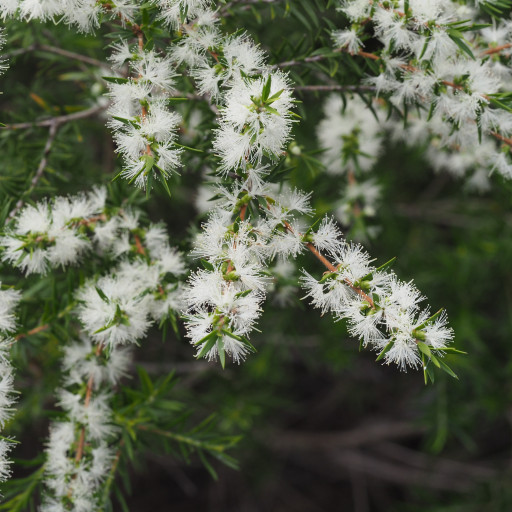
Known as the Black Tea Tree or River Teatree, this Australian native is a master of versatility and resilience. While its wild form is a rugged survivor found along creek beds, it has become a darling of the landscaping world—especially the vibrant, golden-leaved cultivar known as 'Revolution Gold.' It looks like a soft, fluffy cloud has landed in the garden, providing a delicate texture that belies its tough-as-nails personality.
🔍 How to Identify
- 🌿 Fine Foliage: The leaves are tiny, narrow, and lance-shaped, growing densely along the stems to create a feathery, needle-like appearance that is soft to the touch.
- ☁️ Bottlebrush Blooms: In late spring and summer, the plant produces small, creamy-white to pale yellow flowers that look like miniature, fuzzy "bottlebrushes" clustered at the ends of branches.
- 🪵 Rugged Bark: Unlike the peeling "Paperbarks" in the same family, Melaleuca bracteata has dark, hard, and deeply fissured bark that provides a beautiful, textured contrast to its light foliage.
🏡 In Your Garden
- 💧 Adaptable Hydration: Because its ancestors lived on riverbanks, this plant can handle "wet feet" and heavy clay soil where other plants might rot, yet it is surprisingly drought-tolerant once its roots are established.
- ✂️ The Perfect Screen: It is incredibly forgiving of the shears. You can let it grow into a tall, weeping privacy screen or prune it hard into a formal, glowing hedge to brighten up dark corners of the yard.
- 🐝 Pollinator Paradise: When in bloom, the tree becomes a hub of activity; the nectar-rich flowers are a magnetic food source for honeyeaters, native bees, and butterflies.
⚠️ Safety & Toxicity
- 🟢 General Status: Non-toxic to humans and generally safe for touch, making it a common choice for public spaces and family gardens.
- 🐾 Pet Warning: Like many members of the Myrtaceae family, the leaves contain essential oils (similar to Tea Tree oil). While grazing is rare due to the taste, ingestion of large amounts of foliage can be toxic to dogs and cats, leading to digestive upset or lethargy.
✨ Fun Fact
The species name bracteata comes from the Latin word for "thin metal plate," referring to the tiny, specialized leaves (bracts) that sit at the base of each flower—a secret detail you can only see if you get up close with a magnifying glass!

Detailed Care Instructions
To grow a Melaleuca bracteata (Black Tea Tree) plant, here are the steps you can follow:
- Obtain the seeds or plant: You can either purchase the seeds or find a nursery or garden center that sells Melaleuca bracteata plants.
- Choose a suitable location: Melaleuca bracteata prefers a sunny location with well-draining soil. Ensure the area allows room for the plant to grow to its full potential, as it can reach heights of up to 15 feet (4.5 meters).
- Prepare the soil: Melaleuca bracteata thrives in a soil pH of 6.5 to 7.5. Prepare the planting area by loosening the soil and adding organic matter, such as compost or well-rotted manure, to improve drainage and nutrient content.
- Plant the seeds or seedling: If you have seeds, sow them directly into the prepared soil at a depth of around 1/4 inch (6 mm). Alternatively, transplant a healthy seedling into the planting hole, ensuring the root ball is covered with soil.
- Water the plant: Keep the planted area consistently moist, but avoid overwatering. Ensure the soil is evenly moist, but not waterlogged.
- Mulch the plant: Apply a layer of mulch around the base of the plant to help conserve moisture and suppress weed growth. Use organic mulch, such as wood chips or straw.
- Prune as needed: Pruning is typically not required for Melaleuca bracteata, but you can remove any dead, diseased, or damaged branches to maintain the shape and health of the plant.
- Monitor for pests and diseases: Watch out for pests like aphids or scale insects. Treat infestations promptly with appropriate insecticides or by manually removing the pests. Regularly inspect the plant for any signs of diseases, such as fungal infections or leaf spot, and take appropriate measures to address them.
- Fertilize if necessary: Melaleuca bracteata usually doesn't require regular fertilization if planted in nutrient-rich soil. However, if the plant shows signs of nutrient deficiency, you can apply a slow-release, balanced fertilizer according to the manufacturer's instructions.
- Maintain regular care: Provide regular care to your Melaleuca bracteata by watering when needed, monitoring for pests and diseases, and ensuring it receives adequate sunlight. With proper maintenance, your plant should grow and flourish.
Remember to check for any specific care instructions that come with your Melaleuca bracteata plant or consult with a local horticulturist for region-specific advice.

Place in a window with dappled sun or a spot in the middle of a room. Or directly in a window facing west or east.

Melaleuca bracteata is a popular plant species that requires proper watering to thrive healthily. To water this plant, you should first ensure that the soil is adequately moist but not waterlogged. You can check the soil moisture level by using a moisture meter or inserting your finger into the soil to feel the moisture level.
When watering Melaleuca bracteata, do not overwater it. Instead, use a watering can or hose with a spray nozzle to mist the soil surface gently. It will allow the soil absorbs water without causing any disturbance to the plant's root system. Always remember to water the plant deeply, allowing the water to penetrate the soil to the roots.
During periods of hot weather or dry spells, the plant will require more water than usual. In such cases, it is advisable to water Melaleuca bracteata more frequently but in small quantities to prevent waterlogging. Ideally, the best time to water Melaleuca bracteata is early in the morning or late in the evening when the sun is less intense.
In summary, watering Melaleuca bracteata requires proper monitoring of the soil moisture level to prevent over or under watering. Water the plant deeply, but avoid waterlogging, and increase watering during hot or dry weather.
For optimal growth and health, fertilize this plant with a balanced, slow-release fertilizer in early spring before new growth emerges. Repeat the application in mid-summer if necessary. Use a fertilizer with an NPK ratio of 8-8-8 or similar. Apply the fertilizer evenly around the base of the plant, avoiding the stem. Water the plant well after fertilizing. Do not over-fertilize as it can damage the plant.
It is recommended to use well-draining soil with good water retention properties for Melaleuca Bracteata plant. The ideal pH range for the soil should be slightly acidic to neutral, around 5.5 to 7.0. The soil should be rich in organic matter and have good fertility to support healthy growth of the plant. It is also beneficial to add some sand or perlite to the soil mixture to improve drainage and aeration. Avoid using heavy clay soil or soil with poor drainage as it can lead to root rot and other diseases. Regular fertilization with a balanced fertilizer is also recommended to provide the plant with the necessary nutrients for optimal growth.
- Select a healthy, mature plant with new growth - Choose a plant that is actively growing and has new shoots emerging from its branches.
- Take a cutting from the plant - Use a clean, sharp pair of pruning shears or scissors to cut a stem from the plant. Make sure the stem is at least 4-6 inches long and has several leaves attached.
- Remove lower leaves from the stem - Remove any leaves that are close to the bottom of the stem. This will help the cutting focus on growing new roots rather than maintaining its existing leaves.
- Dip the cutting in rooting hormone - Optional, but highly recommended. Rooting hormone helps to stimulate the growth of new roots and increase the chances of successful propagation.
- Plant the cutting - Fill a pot with well-draining soil and make a hole in the center. Insert the stem into the hole and gently press the soil around it, making sure the cutting is stable and upright.
- Water the cutting - Water the cutting thoroughly, making sure the soil is evenly moist but not waterlogged. If necessary, place the pot in a saucer to catch any excess water.
- Place the cutting in a bright, warm location - Melaleuca Bracteata plants need plenty of light to grow, so place the pot in a bright location that receives several hours of direct sun each day. Keep the temperature around 70-75°F.
- Wait for the cutting to root - This may take several weeks to a few months. You can gently tug on the cutting to test for root growth. Once roots have formed, the cutting can be transplanted into a larger pot or planted outside in a suitable location.
Common pests of the black teatree include Scale insect, mealybugs, spider mites, aphids. Make a habit of checking your black teatree frequently for pests so that any infestations can be caught and managed early.








