Plant Overview
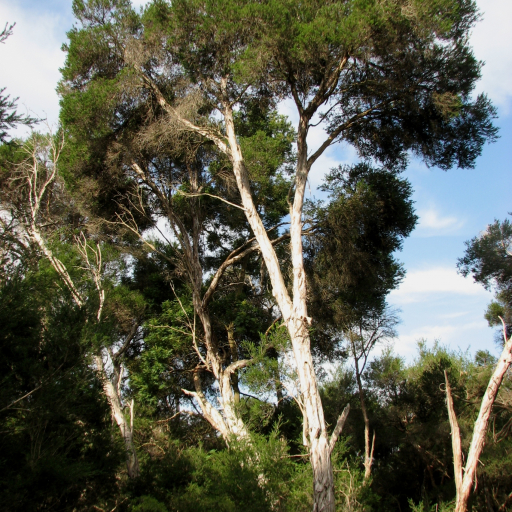
The Swamp Paperbark, often called the "Heath-leaved Paperbark," is a resilient Australian native that looks like a cross between a fluffy cloud and an ancient scroll. Known for its distinctively papery bark and needle-like foliage, it thrives in the soggy, salt-misted environments where most other plants would struggle to survive. In its home range, it often forms dense, mystical thickets along coastlines and wetlands.
🔍 How to Identify
- 📜 The Bark: Its most iconic feature is the soft, white-to-tan bark that peels away in thin, parchment-like layers, giving the trunk a textured, "shaggy" appearance.
- 🌿 The Foliage: The leaves are tiny, dark green, and needle-like (similar to Heather), arranged in alternating spirals along the stems.
- ☁️ The Flowers: During spring and early summer, it produces creamy-white "bottlebrush" flower spikes that look like soft tufts of wool at the ends of the branches.
🏡 In Your Garden
- 💧 The Thirst Factor: Unlike many garden plants that fear "wet feet," the Swamp Paperbark loves moisture. It is an excellent choice for those low-lying spots in your yard where water tends to pool after rain.
- 🛡️ Coastal Warrior: This plant is exceptionally tough against salt spray and heavy winds. Because it grows densely and quickly, it is frequently used by hobbyists to create "living fences" or privacy screens that also act as a windbreak.
- 🐝 Pollinator Magnet: The nectar-rich flowers are a favorite for honeyeaters, native bees, and butterflies, making it a "must-have" for anyone trying to build a backyard ecosystem.
⚠️ Safety & Toxicity
- ✅ Status: Generally safe and non-toxic.
- 🐾 Details: It is not considered poisonous to humans or pets. However, the leaves contain essential oils (similar to Tea Tree) which, if consumed in very large quantities, might cause mild stomach upset in curious cats or dogs.
✨ Fun Fact
Indigenous Australians traditionally used the peeling bark of the Melaleuca ericifolia as a versatile natural material—it served as everything from waterproof roofing for shelters to soft, insulating blankets for wrapping newborn babies.

Detailed Care Instructions
To grow Melaleuca Ericifolia plants, also known as Swamp Paperbark or Rosie's Paperbark, you can follow these steps:
- Climate and location: Choose a location with well-drained soil and full sun to partial shade. Melaleuca Ericifolia plants prefer a warm climate and are native to wetlands in Australia. They can tolerate light frosts but perform best in areas with mild winters.
- Soil preparation: Ensure the soil is well-draining, slightly acidic to neutral pH (around 6.0 to 7.5), and loose. If the natural soil does not meet these requirements, you can amend it by adding organic matter such as compost or well-rotted manure.
- Planting: Dig a hole large enough to accommodate the plant's root ball. Gently remove the plant from its container and place it into the hole, ensuring the top of the root ball is level with or slightly above the ground. Backfill the hole, firm the soil around the plant, and water thoroughly.
- Watering: Initially, water the plant deeply to establish a healthy root system. Afterward, water the Melaleuca Ericifolia plant regularly, especially during dry periods. Avoid overwatering as it can lead to root rot.
- Mulching: Apply a layer of organic mulch around the plant to help retain moisture and control weed growth. Make sure to maintain a gap between the mulch and the plant's stem to prevent stem rot.
- Pruning: Prune the plant lightly if necessary to maintain its desired shape. Remove any dead, diseased, or crossing branches. It is generally not necessary to heavily prune Melaleuca Ericifolia unless it becomes overgrown.
- Fertilizing: Melaleuca Ericifolia plants usually do not require heavy fertilization. However, if the plant shows signs of nutrient deficiency or poor growth, you can use a slow-release, balanced fertilizer according to the manufacturer's instructions.
- Pests and diseases: Generally, Melaleuca Ericifolia plants are relatively resistant to pests and diseases. However, keep an eye out for common garden pests like aphids, scale insects, or spider mites. In case of infestation, treat with appropriate organic or chemical controls.
Remember to research specific guidelines for your specific region, as it might have unique growing requirements or considerations for the Melaleuca Ericifolia plant.

Place in a bright room that is sun drenched almost all day. Or directly in a south-facing window.

To water this plant, you should first check the soil moisture level by sticking your finger about two inches deep into the soil. If the soil feels dry at that depth, it is time to water the plant. When watering, pour water directly onto the soil around the base of the plant, avoiding getting water on the leaves or stem. Water until you see water begin to come out of the drainage holes at the bottom of the container. Allow the excess water to drain away, and then empty any water that remains in the saucer or plate beneath the pot. Frequency of watering will depend on factors such as the size of the container, humidity levels, and amount of sunlight the plant is receiving, but generally this plant prefers moderately moist soil.
To fertilize this plant, use a balanced, slow-release fertilizer with equal parts nitrogen, phosphorus, and potassium. Apply the fertilizer evenly to the soil around the plant, being careful not to get any on the leaves or stems. Water the plant thoroughly after fertilizing to help the nutrients reach the roots. Fertilize the plant once every 2-3 months during the growing season, which is typically spring and summer.
The ideal soil for Melaleuca Ericifolia should be well-draining, slightly acidic, and sandy to loamy in texture. It should also be nutrient-rich and well-aerated to support healthy root growth. Adding organic matter such as compost or peat moss can improve soil quality and promote beneficial microbial activity. Avoid using heavy clay soils or soil mixes that retain too much moisture, as this can lead to root rot and other diseases.
Melaleuca ericifolia is a woody shrub commonly found in Australia and widely grown for its essential oil. It is possible to propagate this plant through various methods, including stem cuttings, seedlings, and layering.
Stem cuttings are the easiest and most reliable method of propagation. Select healthy, young shoots and cut them into 4 to 6 inches long pieces. Remove the lower leaves and dip the cuttings in rooting hormone before planting them in well-draining soil. Keep the soil moist and place the cuttings in a warm, bright location.
Seedlings are another option for propagation but can take longer to establish. Collect ripe seeds from the plant and soak them in water overnight. Sow the seeds in moist soil and keep them in a warm, well-lit area. Germination can take up to six weeks.
Layering is a more advanced method of propagation but can result in a more robust plant. Choose a low-hanging branch and scrape the bark lightly where it touches the soil. Apply rooting hormone to the scraped area, cover it with soil, and water thoroughly. After a few months, roots should develop from the scraped area. Cut the branch and transplant it to a new location.
When propagating Melaleuca ericifolia through any of the above methods, it is important to keep the newly propagated plants in a warm, bright location and water them frequently. With proper care, the new plants should establish themselves and thrive.








