Plant Overview
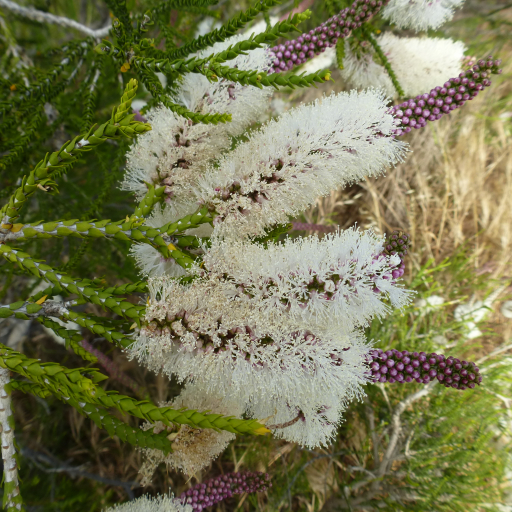
Known affectionately as the Chenille Honeymyrtle, this striking Australian native is a true survivor of the coastal cliffs. Named for its long, fluffy flower spikes that resemble velvet chenille fabric or vintage pipe cleaners, it adds a touch of whimsical texture to any landscape. While it originates from the rugged limestone coastlines of Western Australia, it has found a beloved home in Mediterranean-style gardens worldwide.
🔍 How to Identify
- 🌿 Scale-like Foliage: Unlike many shrubs with broad leaves, this plant features tiny, dark green, ovate leaves that overlap closely along the stems, giving the branches a textured, braided appearance.
- ☁️ Pipe-cleaner Blooms: The most iconic feature is the dense, cylindrical flower spikes, which can grow up to 4 inches (10 cm) long. They typically emerge as creamy white or pale pink buds.
- 🪵 Corky Bark: As the plant matures, it develops a distinctive rough, papery, or cork-like bark that provides architectural interest even when the flowers have faded.
🏡 In Your Garden
- 🌊 Coastal Warrior: This species is exceptionally salt-tolerant and wind-resistant. It is the perfect choice for seaside gardens where "salt spray" usually spells disaster for other plants.
- ✂️ Pruning for Shape: Left to its own devices, it can become a bit "leggy" or woody. To keep it dense and maintain those beautiful "chenille" flower displays, it’s best to give it a light prune immediately after the flowering season ends.
- 🏜️ Drainage is Key: While it is tough, it despises "wet feet." It naturally thrives in alkaline, limestone-rich soils, so ensure your garden spot has excellent drainage to prevent root issues.
⚠️ Safety & Toxicity
- 🟢 General Safety: Melaleuca huegelii is generally considered non-toxic and safe for home gardens.
- 🐾 Pet & Child Friendly: There are no known records of this specific species being poisonous to dogs, cats, or children. However, as with many Australian "Tea Trees," the foliage contains essential oils that may cause mild stomach upset if ingested in large quantities or skin irritation in very sensitive individuals.
✨ Fun Fact
The plant was named in honor of Baron Carl von Hügel, an Austrian nobleman and world-renowned botanist who visited the Swan River Colony in 1833. He was so captivated by the local flora that he collected thousands of specimens to bring back to Europe!

Detailed Care Instructions
To grow Melaleuca Huegelii, also known as bracteata river tea tree, follow these steps:
- Choose a suitable location: Melaleuca Huegelii prefers full sun but can tolerate partial shade. Make sure the plant has enough space to grow as it can reach a height of 10-15 feet.
- Soil preparation: The plant requires well-draining soil with organic matter. Prepare the soil by loosening it and adding compost or well-rotted manure.
- Planting: Dig a hole that is just slightly larger than the root ball of the plant. Place the plant in the hole and backfill with soil, ensuring that the top of the root ball is level with or slightly above the soil surface.
- Watering: Water the plant thoroughly after planting and continue to keep the soil moist but not soggy. Once the plant is established, it is moderately drought-tolerant but will benefit from regular watering during dry periods.
- Mulching: Apply a layer of organic mulch around the plant to help maintain soil moisture and prevent weed growth. Leave a gap around the stem to prevent rotting.
- Pruning: Prune the plant to maintain its desired shape and remove any dead or damaged branches. This can be done in late winter or early spring before new growth begins.
- Fertilizing: Melaleuca Huegelii generally doesn't require regular fertilization as it can obtain nutrients from the soil. However, you can apply a slow-release fertilizer in early spring if desired.
- Pests and diseases: This plant is relatively pest and disease-resistant but may occasionally attract scale insects, aphids, or spider mites. Monitor the plant regularly and apply appropriate organic insecticides if necessary.
- Propagation: Melaleuca Huegelii can be propagated from seeds or cuttings. Seeds should be sown in a well-draining potting mix, and cuttings should be taken from young, healthy growth and placed in a moist rooting medium.
Remember to check the specific growing requirements for your region and adjust the care accordingly. Regular maintenance and care will help ensure healthy growth and a beautiful Melaleuca Huegelii plant.

Place in a bright room that is sun drenched almost all day. Or directly in a south-facing window.

1. First, determine the watering needs of the plant based on its native habitat and current growing conditions.
2. Make sure the soil is well-draining, as the plant does not like to be in standing water.
3. Water deeply, allowing the soil to absorb the water, rather than just spraying the surface.
4. Water the plant when the top inch of soil feels dry to the touch.
5. Consider the season and weather conditions in your area when determining watering frequency. During hot and dry spells, the plant may require more frequent watering.
6. Avoid over-watering, as this can lead to root rot and damage the plant.
7. Water the plant at the base, rather than on the leaves or flowers, to prevent fungal growth.
8. Use room temperature water, rather than cold water, to avoid shocking the plant.
9. Monitor the plant for signs of stress, such as wilting or yellowing leaves, which may indicate inadequate watering.
10. Adjust watering practices as necessary to ensure the plant remains healthy and thriving.
To fertilize this plant, use a balanced, slow-release fertilizer that is high in phosphorus and potassium. Apply the fertilizer during the spring growth period and again in the fall before the start of winter. Avoid over-fertilizing, as this can damage the roots and lead to the development of weak, spindly growth. Water the plant thoroughly before and after fertilizing to help the nutrients reach the roots.
Melaleuca Huegelii is a woody plant that grows best in well-draining soil with a pH range of 5.5 to 7.5. The soil should be deep, fertile, and rich in organic matter to provide nutrient support to the plant. The soil texture should be light and airy, allowing for proper aeration of the roots. It should be able to retain moisture, but not hold excessive water as it is prone to root rot. Acidic soil is preferable for this plant, and it is best to avoid heavy clay soils, which can cause waterlogged soils. It is recommended to add perlite, sand, and other organic materials like compost, peat moss, or leaf mold to improve the drainage and nutrient content of the soil. The soil should be prepared before planting, and it is recommended to use a high-quality potting mix for container-grown plants.
To propagate this plant, take softwood cuttings from healthy stem tips during the growing season. Remove the lower leaves from the cutting, leaving a few at the top. Dip the cut end in rooting hormone powder and plant in a well-draining potting mix in a container with good drainage. Keep the soil moist by misting regularly and place in a bright, humid location, avoiding direct sunlight. After 4-6 weeks, the cutting should have rooted and be ready to transplant into a larger pot or into the ground.








