Plant Overview
Known as the Beach Daisy or Sea Oxeye, Melanthera biflora is a sun-drenched survivor that thrives where most plants wither. This coastal superstar is often found hugging the sandy shores of the Indo-Pacific, acting as a natural golden carpet against the blue ocean. It is a symbol of resilience, frequently being the first plant to recolonize a beach after a heavy storm or salt spray.
🔍 How to Identify
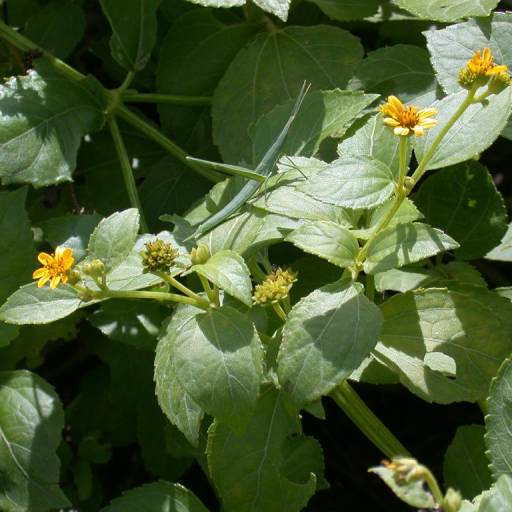
- 🌼 The Bloom: Look for small, bright yellow "daisy-like" flowers. They feature a central cluster of disc florets surrounded by about 8 to 15 petal-like ray florets.
- 🍃 Rough Leaves: The foliage is distinctively rough to the touch (scabrous). The leaves grow in opposite pairs and have serrated (toothed) edges, usually shaped like an elongated heart or oval.
- 🌱 Growth Habit: It is a scrambling perennial herb or a low-growing shrub. It doesn't usually climb, but it spreads wide across the ground, creating a dense, tangled mat of greenery.
🏡 In Your Garden
- 🌊 Salt Specialist: This plant is the ultimate choice for coastal gardeners. It has evolved to handle extreme salt spray and wind, making it perfect for "front-line" dune stabilization or erosion control where other plants would die from the salt.
- ☀️ Sun Seeker: Because it originates from open beaches, it demands full sun to stay compact and flower profusely. If planted in the shade, it will become "leggy" and sparse as it tries to stretch toward the light.
- ✂️ Vigorous Spreader: Be mindful of its enthusiasm! While it’s great for filling large gaps quickly, it can easily overtake smaller, more delicate garden neighbors if not pruned back regularly to keep its sprawling habit in check.
⚠️ Safety & Toxicity
- ✅ Generally Safe: There are no widespread reports of Melanthera biflora being toxic to humans or common household pets like cats and dogs.
- 🌿 Traditional Uses: In many Pacific cultures, the leaves have been used in traditional medicine to treat cuts or stings. However, you should never ingest or apply the plant medicinally without professional guidance, as skin sensitivities can vary.
✨ Fun Fact
In various Pacific Island cultures, this plant is known for its "cleansing" properties. The leaves contain saponins, which create a light lather when crushed and mixed with water, historically allowing them to be used as a natural, emergency soap for washing hands at the beach!

Detailed Care Instructions








