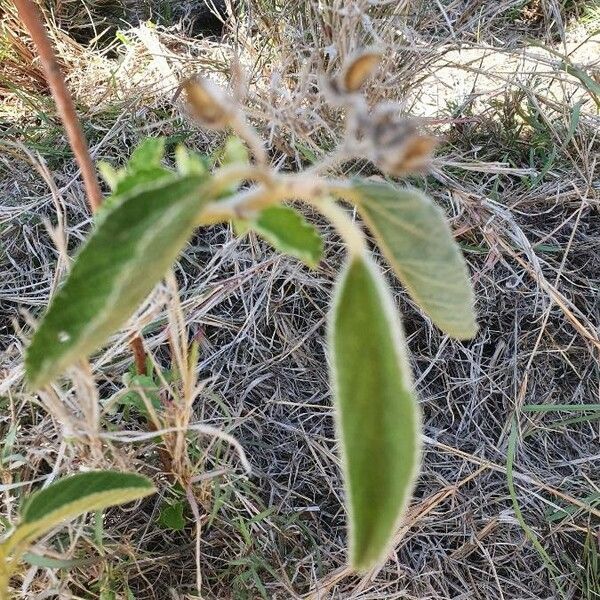
Plant Overview
Known affectionately as the Velvet Melhania, this resilient shrub is a hidden gem from the arid landscapes of East Africa and the Arabian Peninsula. Its name, velutina, is a direct nod to its most charming feature: a dense coat of soft, silver-grey hairs that make the entire plant feel like plush fabric. It is a master of survival, designed by nature to thrive in sun-drenched, rocky terrains where few other plants can cope.
🔍 How to Identify
- 🍃 Velvety Foliage: The leaves are heart-shaped or ovate with finely toothed edges. They are completely covered in a thick, soft down that gives the plant a distinct silvery-green or greyish hue.
- 🌼 Color-Changing Blooms: It produces delicate, five-petaled yellow flowers. Interestingly, these blooms often transition into a burnt orange or reddish-brown shade as they age before falling off.
- 🌿 Compact Form: This is a low-growing, woody shrub that typically forms a neat, mounded shape, rarely exceeding a meter in height, making it look like a soft cushion in the wild.
🏡 In Your Garden
- 🏜️ The Drainage Rule: Because it hails from rocky slopes and dry bushlands, this plant is highly susceptible to root rot. It requires exceptionally well-draining, gritty soil—think "cactus mix" rather than standard potting soil.
- ☀️ Natural Sunscreen: Those soft hairs aren't just for show; they act as a biological sunscreen, reflecting harsh UV rays. In a garden setting, it needs the brightest spot available to maintain its compact shape and silvery luster.
⚠️ Safety & Toxicity
- ✅ Non-Toxic Status: Melhania velutina is generally considered safe and is not known to be poisonous to humans, cats, or dogs.
- 🧤 Mild Irritation: While not toxic, the dense "stellate" (star-shaped) hairs that create the velvety texture can occasionally cause very mild skin itching for people with high tactile sensitivity if the plant is handled frequently.
✨ Fun Fact
✨ Pollinator Signaling: The way the flowers turn from bright yellow to red isn't just a sign of wilting; it’s a sophisticated signal to pollinators. Many insects see yellow more clearly than red, so the color change directs bees toward the younger, nectar-rich yellow flowers and away from the older ones that have already been pollinated!

Detailed Care Instructions








