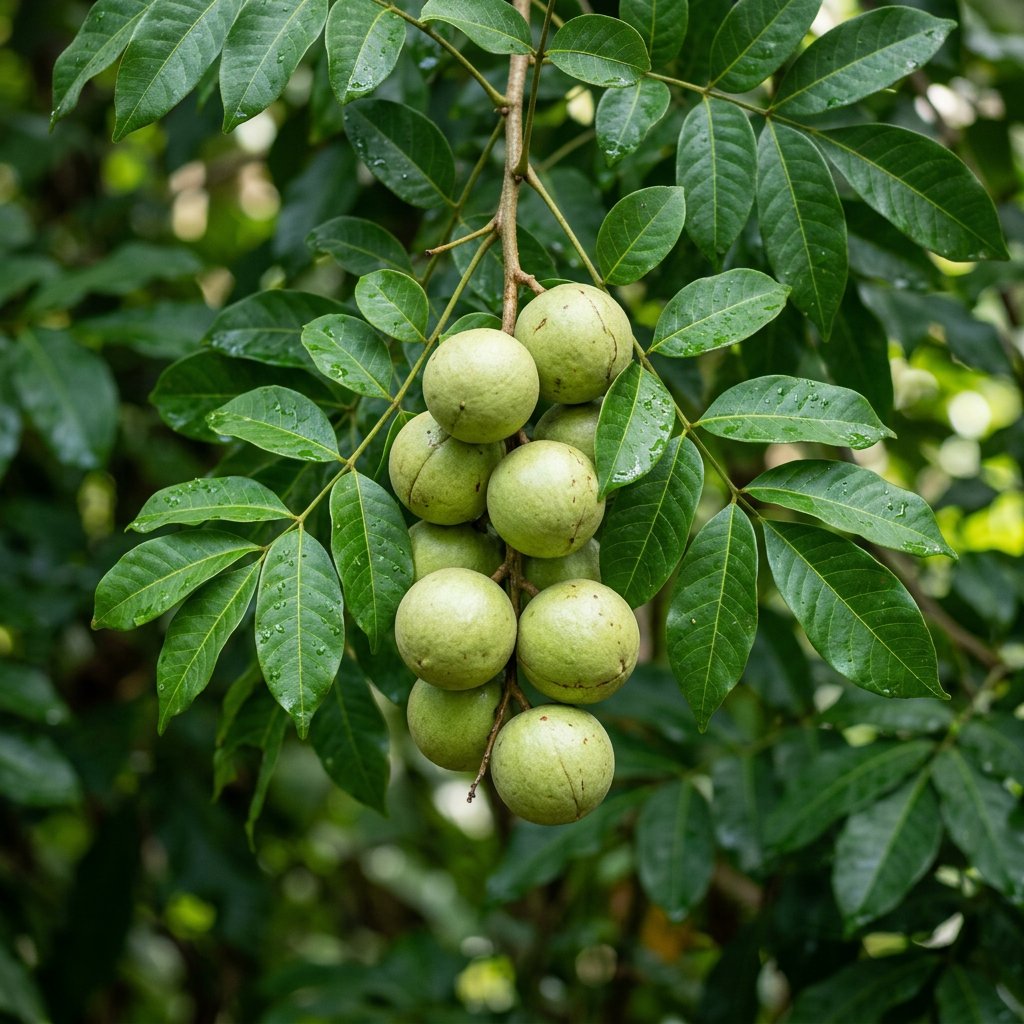
Plant Overview
Often called the Spanish Lime, Mamoncillo, or Guinep, this tropical treasure is a staple of Caribbean childhoods. While it looks like a lime, it is actually a member of the soapberry family, making it a close cousin to the Lychee and Rambutan. These trees are social landmarks in the tropics, often found providing deep shade in town squares where people gather to "pop" the brittle green shells and enjoy the tangy pulp inside.
🔍 How to Identify
- 🍃 The Foliage: Look for compound leaves arranged in pairs (usually four leaflets) with a unique "winged" stem that gives the branches a lush, layered appearance.
- 🟢 The Fruit: It produces clusters of round, green drupes that look like oversized grapes. The skin is smooth but brittle; when squeezed, it cracks neatly to reveal a salmon-colored, jelly-like pulp.
- 🌳 The Bark: The tree features a smooth, light gray bark that often becomes slightly mottled as it ages, supporting a massive, spreading canopy.
🏡 In Your Garden
- ☀️ Sun & Space: This is a slow-growing giant that can eventually reach over 80 feet. It requires full sun and a lot of vertical room, making it more of a "legacy tree" than a quick backyard filler.
- 🧱 Soil Preference: It is surprisingly hardy and thrives in poor, calcareous (limestone) soils. It is quite drought-tolerant once established, making it an excellent choice for coastal or rocky tropical landscapes.
- 👫 The "Partner" Requirement: Most Melicoccus bijugatus trees are dioecious, meaning you typically need both a male and a female tree nearby if you ever want to harvest fruit.
⚠️ Safety & Toxicity
- ❗ Physical Hazard: The most significant danger is the large, slippery seed. It is a notorious choking hazard, especially for children, because the pulp clings tightly to the seed and can easily slide down the throat.
- 👕 Staining Sap: The juice from the fruit creates a dark brown, permanent stain on fabric. If you are harvesting or eating them, wear clothes you don't mind ruining!
- 🐾 Pet Safety: While the fruit pulp is non-toxic, the large seeds can cause dangerous intestinal blockages in dogs and should be kept out of reach.
✨ Fun Fact
In some Caribbean cultures, the leaves are scattered on the floor of a house to ward off fleas, or even placed under a pillow to encourage a restful night's sleep and protect against "bad spirits."

Detailed Care Instructions
To grow a Melicoccus Bijugatus plant, commonly known as Spanish lime or mamoncillo, follow these steps:
- Obtain seeds: Look for fresh and healthy Melicoccus Bijugatus seeds from a reliable supplier or obtain them directly from a mature tree. Seeds should be firm, not wrinkled or damaged.
- Seed preparation: Soak the seeds in warm water for about 24 hours to soften the outer seed coat and improve germination.
- Germination: Plant the seeds in a pot filled with a well-draining soil mix. Sow the seeds approximately 1 inch deep and cover with soil. Water lightly to keep the soil consistently moist but not waterlogged. Place the pot in a warm location or use bottom heat to promote germination.
- Light and temperature: Once germinated, provide the Melicoccus Bijugatus plant with plenty of bright, indirect light. The plant thrives in temperatures between 70-85°F (21-29°C), so ensure it is placed in a warm location.
- Watering: Water the plant regularly, keeping the soil moist but not soggy. Allow the top few inches of soil to dry out slightly between watering to prevent overwatering.
- Fertilizer: Feed the plant with a balanced fertilizer every two to three months during the growing season. Choose a slow-release fertilizer for sustained nutrient supply.
- Transplanting: When the Melicoccus Bijugatus plant has grown several sets of true leaves and outgrows its pot, it can be transplanted into a larger container or, if desired, successfully planted outdoors in a suitable climate. Ensure the new pot or planting location has well-draining soil.
- Outdoor planting (optional): If transplanting outdoors, choose a location with full sun to partial shade. The soil should be fertile, well-draining, and slightly acidic with a pH around 6.0-6.5. Space multiple Melicoccus Bijugatus trees about 25-30 feet apart to allow for their spreading root systems.
- Pruning and care: Prune the plant to shape it and remove any dead or damaged branches. Regularly check for pests such as aphids or mealybugs and treat accordingly. Provide water during dry periods and mulch around the base of the tree to retain moisture.
With proper care and patience, your Melicoccus Bijugatus plant will grow into a healthy tree that produces delicious fruit for you to enjoy.

Place in a bright room that is sun drenched almost all day. Or directly in a south-facing window.

Melicoccus Bijugatus is a plant that requires regular watering to stay healthy and produce fruit. One way to determine if the plant needs water is to stick your finger into the soil. If the top inch of soil feels dry to the touch, it's time to water.
When watering Melicoccus Bijugatus, it's important to avoid overwatering, as this can lead to root rot and other issues. Instead, water the plant deeply but infrequently, allowing the soil to dry out slightly between waterings.
The amount of water that Melicoccus Bijugatus requires will depend on factors such as the size of the plant, the humidity in the air, and the temperature. In general, aim to provide enough water to keep the soil moist but not waterlogged.
If you're growing Melicoccus Bijugatus in a container, make sure that the pot has drainage holes to allow excess water to escape. Water the plant until water starts to come out of the bottom of the pot, then wait for the soil to dry out slightly before watering again.
Finally, be sure to water Melicoccus Bijugatus in the morning or evening when temperatures are cooler, as watering during the heat of the day can cause the water to evaporate quickly and reduce the effectiveness of the watering.
To fertilize this plant, you should apply a balanced fertilizer containing equal amounts of nitrogen, phosphorus, and potassium. Apply the fertilizer evenly around the root zone of the plant, avoiding touching the leaves or stems. Water the plant after fertilizing to help it absorb the nutrients. Fertilize the plant every six months during the growing season. Avoid overfertilizing, as this can cause nutrient burn and damage to the plant.
Melicoccus Bijugatus grows best in soil that is well-draining, rich in nutrients, and has a pH level of 6.0 to 7.5. It thrives in loamy soil that has a good mixture of sand, silt, and clay particles. The texture of the soil should be fine to medium as it allows water and nutrients to infiltrate easily. Organic matter is also crucial for the plant's growth and development, so it's recommended to add compost or well-rotted manure into the soil. However, the soil should not be too rich in nutrients, as this can cause the tree to produce more foliage than fruit. The use of inorganic fertilizers should be done with caution, as it can lead to nutrient imbalances and cause the tree to fail. It's also important to ensure the soil is free of pests and diseases that can harm the plant.
To propagate this plant, you can start by collecting seeds from mature fruits. Make sure the fruit is ripe and the seed is fully developed before collecting. Clean the seed by removing any flesh or residue on the surface.
Next, prepare a well-draining soil mix that is rich in organic matter. Fill small pots or seed trays with the soil mix and place the seeds on top. Cover the seeds lightly with soil and water lightly.
Keep the seeds in a warm, humid place and maintain moisture levels by misting or watering lightly. It may take several weeks for the seeds to germinate.
Once the seeds have sprouted, you can transplant them into larger pots or directly into the ground. Make sure the plants are placed in a warm and sunny location with well-draining soil. Water the plants regularly and fertilize with a balanced fertilizer.
The plants will take several years to mature and produce fruit. However, with proper care and maintenance, they can be a rewarding addition to any garden or orchard.
Common pests of the quenepa include Scale insect, mealybugs, spider mites, aphids, larvae. Make a habit of checking your quenepa frequently for pests so that any infestations can be caught and managed early.








