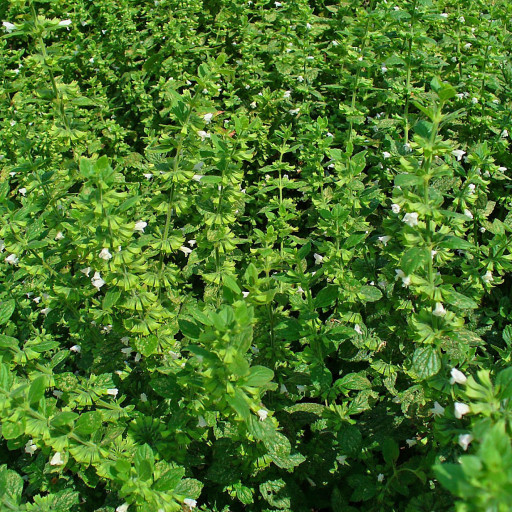
Plant Overview
Commonly known as Lemon Balm, Melissa officinalis has been a staple of apothecary gardens for over 2,000 years. This fragrant herb belongs to the mint family and is famous for its bright, citrus-scented foliage that was once believed to "renew youth" and banish melancholy. In ancient Greece, it was dedicated to the goddess Artemis and planted near beehives to keep the colony happy—its name even comes from the Greek word for "honeybee."
🔍 How to Identify
- 🍃 The Leaves: Look for heart-shaped, bright green leaves with deeply crinkled textures and "toothed" (serrated) edges. They grow in opposite pairs along the stem.
- 🌿 The Stem: Like most members of the mint family, the stems are distinctly square to the touch rather than round.
- 🌼 The Flowers: During summer, small clusters of inconspicuous white or pale-yellow flowers bloom at the leaf axils, though they are often hidden by the lush foliage.
- 🍋 The "Crush Test": The most reliable identifier is the scent; rubbing a leaf between your fingers will release a powerful, sweet lemon aroma with a hint of mint.
🏡 In Your Garden
- 🐝 The Pollinator Magnet: True to its name, Lemon Balm is one of the best plants for attracting honeybees and butterflies. If your vegetable garden needs better pollination, tucking a few of these nearby will do the trick.
- ✂️ Managing the Spread: While not quite as invasive as peppermint, it spreads via seeds and underground runners. To keep it from taking over your yard, "deadhead" the flowers before they go to seed and consider planting it in a sunken pot to contain the roots.
- 🌱 Resilient Roots: It is incredibly hardy and can survive a variety of soil types, though it prefers a bit of shade in scorching afternoon sun to prevent the leaves from wilting or losing their essential oils.
⚠️ Safety & Toxicity
- ✅ Safe for All: Lemon Balm is generally considered non-toxic to humans, dogs, cats, and even horses. It is widely used in teas and culinary dishes.
- 🧴 Skin Sensitivity: While the plant is safe, the concentrated essential oil should always be diluted, as it can cause mild skin irritation or photosensitivity in some individuals.
- 💊 Medical Note: Because it has a calming effect, it may interact with certain sedative or thyroid medications; always consult a professional if using it as a regular supplement.
✨ Fun Fact
In the Middle Ages, Lemon Balm was a key ingredient in "Carmelite Water," a tonic created by French nuns that was used for centuries as a perfume and a remedy for headaches. It was so highly regarded that the Swiss physician Paracelsus called it the "Elixir of Life."

Detailed Care Instructions
| Color | White, Yellow |
| Soil Ph | 6.7-7.3 |
| Humidity | Normal |
| Lighting | Full Sun |
| Toxicity | Non-Toxic |
| Soil Type | Well-Drained |
| Bloom Time | Summer |
| Difficulty | Medium |
| Plant Type | Perennial |
| Mature Size | 1.5 To 2 Feet Tall |
| Native Area | Europe |
| Temperature | 15°C - 21°C |
| Sun Exposure | Full Sun, Partial Shade |
| Hardiness Zones | 3-7 |
To grow Melissa Officinalis, also known as lemon balm, follow these steps:
- Choose the right location: Lemon balm prefers full sun but can also tolerate partial shade. Ensure the area has well-draining soil.
- Prepare the soil: Till the soil to loosen it up and remove any weeds or debris. You can also add compost or organic matter to enrich the soil.
- Sow the seeds or transplant: You can start growing lemon balm from seeds or transplant an established plant. If using seeds, sow them about ⅛ inch deep in the soil or peat pots. Keep the soil moist until germination occurs.
- Watering: Lemon balm prefers regular watering, especially during dry periods. However, avoid overwatering, as it can lead to root rot. Allow the top inch of soil to dry out between waterings.
- Fertilizer: Apply a balanced, slow-release organic fertilizer at the beginning of the growing season to promote healthy growth.
- Pruning: Trim back the plant regularly to promote bushier growth and prevent it from becoming too leggy. Pruning also encourages the growth of new leaves.
- Mulching: Apply a layer of organic mulch around the plant to conserve moisture, suppress weeds, and maintain an even soil temperature.
- Harvesting: Harvest the leaves when the plant is mature enough, typically after 3 to 4 months. Cut the stems just above a leaf node to encourage continuous growth.
- Pests and diseases: Lemon balm is generally resistant to pests. However, keep an eye out for aphids, spider mites, or powdery mildew. To prevent these, ensure good air circulation and avoid overcrowding plants.
- Propagation: Lemon balm can be propagated by division as well. Dig up an established plant and divide it into several clumps, ensuring each clump has roots attached. Replant the divisions in suitable locations.
Remember to check your specific climate and zone requirements for the best results when growing lemon balm.

Place in a window with dappled sun or a spot in the middle of a room. Or directly in a window facing west or east.

Melissa Officinalis is a plant that requires regular watering to thrive, but overwatering should be avoided. When watering, it is important to pour water onto the soil around the plant, rather than directly onto the leaves. The plant should be watered when the top layer of soil feels dry to the touch. The frequency of watering may vary depending on the climate and season. It is also important to ensure that the plant's pot has good drainage to prevent waterlogging. Finally, it is best to avoid watering during the hottest part of the day, as this can cause the water to evaporate before it reaches the roots.
To properly fertilize this plant, use a balanced fertilizer with equal ratios of nitrogen, phosphorus, and potassium. Apply the fertilizer during the plant's active growing season, which is typically in the spring and summer months. It is important to follow the manufacturer's instructions for the specific fertilizer being used, as different fertilizers may have different application rates and methods. Avoid over-fertilizing, as this can harm the plant's growth and health.
Melissa Officinalis plant prefers a well-draining soil that is rich in organic matter. The ideal pH range for the soil is slightly acidic to neutral, between 6.0 and 7.5. A soil mix that is high in sand, peat moss, and perlite is suitable for the plant's growth and development. The soil mix should be loose and aerated, allowing water to drain freely and roots to breathe properly. It is important to ensure that the soil is not overly wet, as it can lead to root rot. Regularly adding compost or organic fertilizer to the soil can help maintain its fertility and structure. Additionally, mulching around the base of the plant can help to retain moisture in the soil and suppress weed growth.
Melissa Officinalis plant can be propagated through stem cuttings. Here are the steps to propagate the plant:
- Select a healthy and mature stem of the plant. Make sure it is not flowering.
- Cut a stem of 4-6 inches in length from the plant using a sharp, clean pair of scissors or pruning shears.
- Remove the leaves from the lower part of the stem, leaving only the top foliage intact.
- Dip the cut end of the stem in rooting hormone powder. This will help the formation of roots.
- Place the stem in well-draining soil. Make sure the soil is moist but not too wet.
- Cover the pot with a plastic bag to create a humid environment for the stem.
- Place the pot in indirect sunlight and maintain a temperature of around 70-80°F.
- Mist the soil and the leaves of the stem regularly to keep it moist.
- After 2-3 weeks, check for signs of root growth. Gently tug on the stem, and if it feels firm, your stem cutting has produced roots.
- Once the roots have formed, remove the plastic bag and relocate the pot to a sunny area.
- Water your newly propagated plant as needed, taking care not to overwater.
With proper care and attention, your propagated Melissa Officinalis plant will thrive and grow into a mature plant.
Common pests of the lemon balm include Spider mites, fungus gnats, aphids, thrips, whiteflies. Make a habit of checking your lemon balm frequently for pests so that any infestations can be caught and managed early.








