Plant Overview
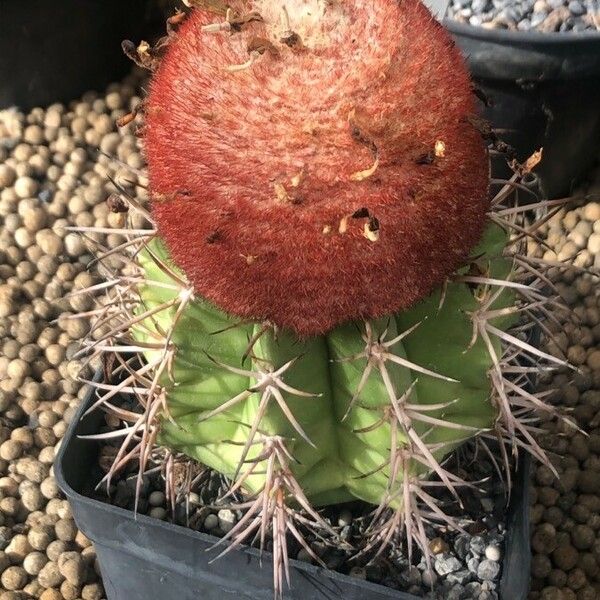
Known as the "Bellavista Turk’s Cap," this globose cactus is a masterpiece of specialized evolution. Native to the arid river valleys of Peru and Ecuador, it is most famous for developing a fuzzy, colorful "hat" known as a cephalium once it reaches adulthood. While it looks like a typical barrel cactus in its youth, its transformation into a reproductive marvel makes it a prized specimen for collectors who appreciate slow-burning botanical drama.
🔍 How to Identify
- 🌵 The Cephalium: The most striking feature is the bristly, cylindrical "cap" of white wool and reddish-orange bristles that develops at the crown of mature plants.
- 📏 Body Structure: It possesses a solitary, globose to cylindrical body with 10 to 18 sharp, vertical ribs lined with sturdy, greyish-brown spines.
- 🌸 Hidden Blooms: Tiny, tubular pink or red flowers emerge directly from the woolly cephalium, often followed by small, waxy, club-shaped red fruits.
🏡 In Your Garden
- 🏜️ The Growth Halt: A unique trait of this genus is that once the cephalium (the "cap") begins to grow, the green body of the cactus stops growing entirely. From that point on, all the plant's energy is diverted into the cap and seed production.
- 🌡️ Tropical Sensitivity: Unlike many desert cacti, Melocactus bellavistensis hails from warm valleys and is very sensitive to cold. It requires a "gritty" mineral-based soil and hates being repotted once the cephalium has formed, as its root system becomes quite fragile with age.
⚠️ Safety & Toxicity
- 🌵 Physical Hazard: While the plant is not known to be chemically toxic, the spines are stiff, sharp, and slightly hooked. They can cause deep puncture wounds if handled without protective gear.
- 🐾 Pet Safety: This cactus is generally non-toxic to cats and dogs. However, the spines pose a significant mechanical danger to curious pets, potentially causing injuries to the mouth, eyes, or paws.
✨ Fun Fact
The cephalium on a Melocactus can continue to grow for decades, sometimes eventually becoming taller than the cactus body itself, making the plant look like it is wearing an oversized, fuzzy stovepipe hat!

Detailed Care Instructions








