Plant Overview
Often called the Blue Memecylon or the "Blue-flowered Ironwood," this tropical gem is famous for its almost surreal, neon-blue blossoms that seem to glow against its dark foliage. Native to the lush jungles of Southeast Asia, it is a slow-growing shrub that transforms any garden into a miniature rainforest. In its native lands, it is prized as a "living jewel" because of its rare ability to produce true-blue pigment in its flowers.
🔍 How to Identify
- 🌸 Electric Blooms: Tiny, star-shaped flowers that are an intense cerulean or violet-blue, often appearing in dense, pom-pom-like clusters directly on the woody branches.
- 🍃 Leathery Foliage: The leaves are thick, elliptical, and have a polished, waxy texture that helps the plant retain moisture in humid environments.
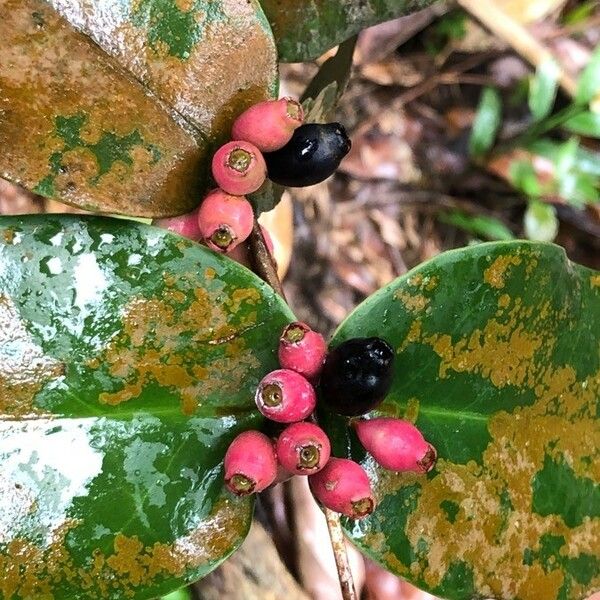
- 🍒 Changing Berries: Small round fruits follow the flowers, transitioning from a pale green to a vibrant pink and finally a deep, dark purple-black when ripe.
🏡 In Your Garden
- 🌿 The Understory Vibe: Because it naturally grows beneath giant jungle canopies, it thrives in filtered light and hates the scorching afternoon sun, which can bleach its rich green leaves.
- 💧 Humidity Lover: This plant craves moisture in the air. If you are growing it as a container plant in a dry climate, a pebble tray or regular misting is essential to keep the leaf tips from browning.
- 🪵 Ironwood Strength: It belongs to a group of plants known as "Ironwoods." Its wood is incredibly dense and tough, making it naturally resistant to many common pests but also a very slow grower that requires patience.
⚠️ Safety & Toxicity
- 🟢 Generally Safe: Memecylon caeruleum is not known to be high-risk or dangerously toxic to humans.
- 🐾 Pet Caution: While not listed as a poisonous species, the berries are primarily meant for birds and should not be consumed by pets or children, as they may cause mild stomach upset.
✨ Fun Fact
The Blue Memecylon is "cauliflorous," a rare botanical trait where flowers grow directly out of the old, woody trunks and branches rather than the new green shoots. When in full bloom, it looks as though the tree itself is dripping with blue sapphire jewels!

Detailed Care Instructions
To grow Memecylon caeruleum, also known as blue memecylon or Himalayan blueberry, you can follow these steps:
- Select a suitable location: Choose a spot in your garden or outdoor space that receives full sun or partial shade. Ensure the soil is well-draining.
- Prepare the soil: The plant prefers slightly acidic soil with good organic content. Amend the soil with well-rotted compost or organic matter before planting.
- Planting: Dig a hole slightly larger and deeper than the plant's root ball. Place the plant gently into the hole and backfill it with soil, firming it down around the base of the plant. Water thoroughly after planting.
- Watering: Keep the soil consistently moist but not waterlogged. Memecylon caeruleum prefers regular watering, especially during its establishment period.
- Mulching: Apply a layer of organic mulch, such as wood chips or compost, around the plant to help retain moisture, suppress weed growth, and keep the soil cool.
- Fertilization: The plant doesn't require heavy feeding, but you can apply a balanced, slow-release fertilizer in early spring to promote healthy growth. Follow the manufacturer's instructions for application rates.
- Pruning: Prune the plant occasionally to maintain its shape or remove any dead, damaged, or crossing branches. Late winter or early spring is the best time for pruning.
- Pests and diseases: Memecylon caeruleum is relatively disease and pest resistant. However, it can occasionally attract aphids or caterpillars. If necessary, use organic or chemical controls to manage them.
- Winter care: If you live in a colder climate, provide winter protection by mulching heavily around the base of the plant to insulate the roots from freezing temperatures.
- Propagation: You can propagate Memecylon caeruleum through seeds or softwood cuttings. Sow seeds in a well-draining potting mix or take softwood cuttings in spring or early summer.
Remember to check the specific care requirements for Memecylon caeruleum in your region, as some variations in environmental conditions may exist.
To water this plant, you should first ensure that the soil is dry to the touch before watering. This plant prefers to have the soil kept evenly moist but not waterlogged. When watering, it is essential to avoid getting water on the leaves or petals, as this can cause damage to the plant. It is best to water at the base of the plant, allowing the water to soak into the soil. Adequate drainage is also important to prevent water from becoming stagnant in the soil, which can lead to root rot. To maintain proper moisture levels, you may need to adjust your watering regimen depending on the climate and conditions in your area.
To fertilize this plant, use a balanced, slow-release fertilizer with equal parts nitrogen, phosphorus, and potassium. Apply a light application of fertilizer around the drip line of the plant every 4-6 weeks during the growing season. Be sure to water the plant thoroughly before and after fertilizing to prevent burning the roots. Avoid fertilizing during periods of drought or extreme heat.
The ideal soil for this particular plant should have a slightly acidic to neutral pH range, between 6 and 7.5. The soil should be well-draining and rich in organic matter, with a good balance of sand, silt, and clay. A nutrient-dense potting mix with added perlite or vermiculite can also be used. It is important to avoid using heavy, waterlogged soils or those that may contain high levels of salts or pollutants. Proper soil preparation is essential for ensuring healthy growth and development of this plant.
To propagate this plant, you can take stem cuttings from a healthy mother plant. Make sure the stems are about 8-10 centimeters long and have at least two leaves on them.
Next, remove all the leaves except for the top two. Then, dip the cut end of the stem into rooting hormone powder to help encourage root growth.
Fill a small pot with well-draining soil and plant the stem cutting about 2 centimeters deep. Water the soil well and cover the pot with a clear plastic bag to create a humid environment.
Place the pot in a bright spot with indirect sunlight. Check the soil regularly and water when it feels dry to the touch.
After a few weeks, you should see roots starting to form. Once the roots have established, you can transplant the new plant into a larger pot or directly into the ground.
Remember to be patient during the propagation process, as it can take several months for the plant to root and establish itself.








