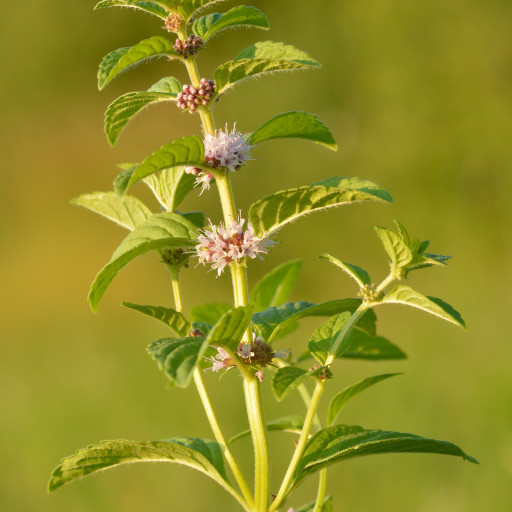
Plant Overview
Known as the "Wild Mint" or "Corn Mint," this aromatic powerhouse has been a staple in herbal medicine for centuries. Unlike its refined cousin, the Peppermint, Mentha arvensis is a rugged survivor found across the meadows of Europe, Asia, and North America. Its intense, cooling fragrance is so potent that it serves as the primary global source for natural menthol.
🔍 How to Identify
- 🌿 The Stem: Features the classic "mint family" square-shaped stem, which is often purple-tinged and covered in fine, downy hairs.
- 🍃 Leaf Pattern: Pointed, oval leaves with serrated (toothed) edges that grow in opposite pairs along the stem, releasing a sharp "toothpaste" scent when crushed.
- 🌸 The Whorls: Unlike many mints that grow flowers in a spike at the top, this species grows its lilac or pale purple blooms in "whorls"—circular clusters tucked into the leaf axils along the stem.
🏡 In Your Garden
- 🌱 Contain the Chaos: This plant spreads aggressively through underground runners called rhizomes. To prevent it from taking over your entire garden, it is highly recommended to grow it in a submerged pot or a dedicated container.
- 💧 Moisture Lover: In the wild, it thrives in damp fields and near stream banks. In a garden setting, it hates "dry feet" and will wilt quickly if the soil dries out completely, though it bounces back remarkably fast after a drink.
⚠️ Safety & Toxicity
- 🐾 Toxic to Pets: While safe for human consumption in teas and salads, Mentha arvensis contains essential oils that are toxic to dogs, cats, and horses if eaten in large quantities, leading to vomiting or diarrhea.
- 👶 Menthol Warning: Because this specific mint has a much higher menthol content than others, the concentrated oil should never be applied near the face or nose of infants, as it can cause respiratory distress.
✨ Fun Fact
- 🌬️ The Menthol King: Most of the "natural menthol" found in your favorite cough drops, muscle balms, and even cigarettes doesn't come from Peppermint—it is almost exclusively extracted from Mentha arvensis due to its incredibly high oil yield!

Detailed Care Instructions
| Humidity | Dry |
| Lighting | Part Sun |
| Difficulty | Easy |
| Hibernation | Cold Period |
| Hardiness Zones | 4 - 8 |
To grow Mentha Arvensis plants, also known as wild mint or corn mint, follow these steps:
- Choose a location: Select a spot that receives partial shade to full sunlight. Mentha Arvensis plants thrive in moist, well-draining soil.
- Prepare the soil: Loosen the soil and remove any weeds or debris. If the soil is heavy or clay-like, consider adding compost or organic matter to improve drainage.
- Planting: You have two options for planting:
- Seeds: Sow the seeds directly in the prepared soil, about 1/4 inch deep. Space the seeds 6 to 12 inches apart.
- Transplants: Purchase young Mentha Arvensis plants from a nursery or online store. Dig a hole slightly larger than the root ball of the plant, place the plant in the hole, and gently firm the soil around it.
- Seeds: Sow the seeds directly in the prepared soil, about 1/4 inch deep. Space the seeds 6 to 12 inches apart.
- Watering: Keep the soil consistently moist but not waterlogged. Mentha Arvensis plants prefer damp soil, so ensure they receive regular watering, especially during dry periods.
- Mulching: Apply a layer of organic mulch, like straw or wood chips, around the base of the plant. This helps retain moisture, suppress weeds, and regulate the soil temperature.
- Fertilizing: Mentha Arvensis plants are not heavy feeders. However, you can apply a balanced, slow-release fertilizer in the spring to provide nutrients. Follow the instructions on the fertilizer packaging for application rates.
- Pruning/Dividing: Over time, Mentha Arvensis plants tend to spread vigorously. To manage their growth and prevent overcrowding, consider dividing the plants every 2-3 years. Dig up the plant, separate the clumps, and replant in new locations or share with other gardeners.
- Pest and disease control: Mentha Arvensis plants are relatively resistant to pests and diseases. However, you may occasionally encounter issues like aphids or mint rust. Monitor your plants regularly and take appropriate actions if necessary, such as using organic pest control methods or removing affected leaves.
By following these steps, you can successfully grow Mentha Arvensis plants and enjoy their aromatic leaves for culinary uses or as a fragrant addition to your garden.

Place in a bright room that is sun drenched almost all day. Or directly in a south-facing window.

To water this plant, it is important to avoid overwatering as it can lead to root rot. Check the moisture level of the soil by sticking your finger about one inch into the soil. If the soil feels dry, it is time to water. Water the plant until water trickles out of the drainage holes at the bottom of the pot, then allow the excess water to drain away. Wait until the topsoil feels dry again before watering the plant. In hot and dry weather, this plant may require more frequent watering.
For best results, apply a balanced NPK fertilizer at a rate of 1 tablespoon per square foot of soil every four to six weeks during the growing season. Avoid over-fertilization as this can lead to excessive growth and reduced flavor. Water the plant after applying fertilizer.
Mentha Arvensis is a herbaceous perennial plant that requires a well-draining soil with a neutral pH level. The ideal soil for this plant should be a mixture of organic and inorganic components that are capable of holding moisture without becoming waterlogged. A soil mix that is high in organic matter, such as compost or peat moss, will provide the necessary nutrients for the plant's growth. Additionally, adding in some sand or perlite will help to improve the soil's drainage and prevent it from becoming too compacted. Finally, it is important to avoid using soils that are high in salts, as these can damage the plant's roots and cause it to struggle.
Mentha Arvensis is a plant that can be propagated through two main methods: division and stem cuttings.
Division involves separating the plant into smaller sections, each with its own roots and shoots. This is typically done in the spring or fall when the plant is actively growing. To propagate through division, carefully dig up the plant and separate it into smaller sections, being sure to keep the root system intact. Replant each section in soil and water thoroughly.
Stem cuttings involve taking a piece of the plant's stem and rooting it in soil or water. To propagate through stem cuttings, select a healthy stem and cut it just below a leaf node. Remove the lower leaves, leaving only a few at the top. Dip the cut end in rooting hormone if desired. Plant the stem in soil or place it in water, making sure the cut end is submerged. Keep the soil or water moist and place the cutting in a bright, indirect light. After a few weeks, roots should begin to form and the cutting can be transplanted into soil.
Common pests of the wild mint include Spider mites, fungus gnats, aphids, thrips, whiteflies. Make a habit of checking your wild mint frequently for pests so that any infestations can be caught and managed early.








