Plant Overview
Often called the Applemint or Woolly Mint, this fragrant perennial is a beloved hybrid that smells like a fresh orchard in the middle of a herb garden. Its soft, velvet-like leaves make it a sensory favorite for children and gardeners alike. Unlike the sharp bite of peppermint, this variety offers a mellow, fruity sweetness that has been used in kitchens and medicine for centuries.
🔍 How to Identify
- 🍃 Fuzzy Foliage: The leaves are noticeably hairy or "woolly" on both sides, giving them a soft, grayish-green matte appearance that feels like felt.
- ⭕ Rounded Shape: True to its botanical name (rotundifolia), the leaves are more circular or broadly ovate compared to the long, pointed leaves of common Spearmint.
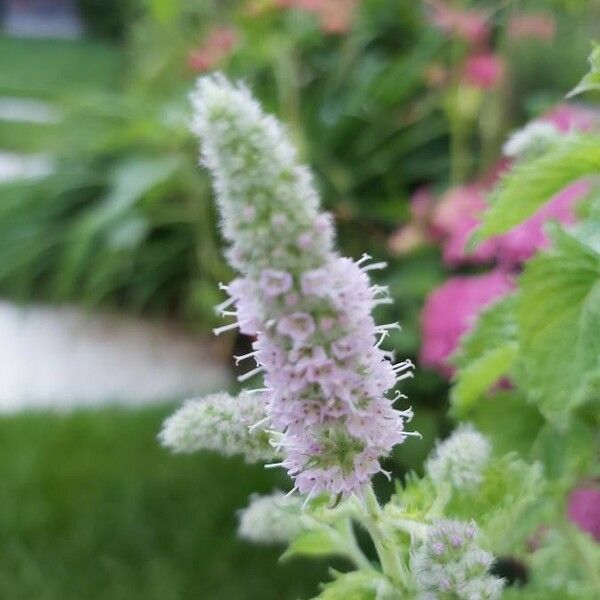
- 🌸 Tapered Spikes: In late summer, it produces dense, elongated spikes of tiny white or pale lilac flowers that stand tall above the foliage.
🏡 In Your Garden
- 🏃 The Great Wanderer: Like most members of the mint family, this plant is a "space invader." It spreads via aggressive underground runners (rhizomes). To prevent it from colonizing your entire yard, it is best grown in a deep container or a pot sunk into the ground.
- 💧 Damp & Sunny: While it is incredibly hardy and can survive neglect, it produces the most fragrant oils when kept in moist, well-draining soil. It is a fantastic choice for those "soggy" spots in the garden where other herbs might rot.
⚠️ Safety & Toxicity
- ✅ Safe for Humans: This mint is perfectly edible and widely used in teas, jellies, and summer cocktails. It is often preferred by those who find Peppermint too intense.
- 🐾 Pet Caution: While not strictly "toxic," the essential oils in mint can cause digestive upset, vomiting, or diarrhea in dogs and cats if they eat large quantities. It’s best to keep your furry friends from using the mint patch as a snack bar.
✨ Fun Fact
Because it lacks the high menthol content of other mints, it doesn't "numb" the tongue. This makes it the "secret ingredient" for gourmet chefs when flavoring delicate fruit salads or making traditional mint sauce, as it enhances the flavor of the food rather than overpowering it!

Detailed Care Instructions
To grow Mentha x rotundifolia (Pennyroyal) plants, you can follow these steps:
- Choose a suitable location: Pennyroyal prefers full sun to partial shade. Ensure the soil is well-draining and fertile.
- Prepare the soil: Loosen the soil and remove any weeds or debris. Incorporate organic matter like compost or aged manure to improve soil fertility.
- Planting: You can grow Pennyroyal from seeds, cuttings, or root division. If starting from seeds, sow them in the prepared soil, covering them lightly with a thin layer of soil. Keep the soil evenly moist until the seeds germinate.
- Watering: Pennyroyal prefers moist soil but not waterlogged conditions. Water the plant regularly, especially during dry periods, and avoid allowing the soil to completely dry out.
- Mulching: Apply a layer of organic mulch, such as straw or wood chips, around the plant to help retain moisture and suppress weed growth.
- Pruning: Regularly trim the plant to encourage branching and prevent it from becoming leggy. Pruning also helps maintain a compact and bushy appearance.
- Fertilization: Pennyroyal generally doesn't require regular fertilization. However, you can apply a balanced, slow-release fertilizer at the beginning of the growing season to provide necessary nutrients.
- Pests and diseases: Keep an eye out for common pests like aphids and spider mites. Use insecticidal soap or neem oil to control them if necessary. Pennyroyal is relatively resistant to diseases but may develop root rot if overwatered.
- Harvesting: You can start harvesting the leaves once the plant is well-established. Cut the stems just above a leaf node to encourage bushier growth. Harvesting regularly will also prevent the plant from flowering and going to seed too quickly.
Remember that Mentha x rotundifolia is a vigorous and spreading plant, so it may be best to grow it in containers or use barriers to prevent its spread in the garden.

Place in a window with dappled sun or a spot in the middle of a room. Or directly in a window facing west or east.

To water this plant, one should first assess the moisture level of the topsoil by inserting a finger or a moisture meter into the soil. If the top inch of soil is dry, it is time to water. This plant should be watered deeply, allowing the water to penetrate the soil all the way to the roots. However, it is important not to overwater as this plant does not like to sit in waterlogged soil. A good rule of thumb is to water thoroughly every 7-10 days, or when the top inch of soil is completely dry. It is also important to avoid getting the leaves wet, as this can lead to the development of fungal diseases. When watering, it is best to direct the water at the soil level, using a watering can or low-flow hose nozzle.
- Choose a water-soluble fertilizer with balanced N-P-K ratios (nitrogen, phosphorus, and potassium).
- Dilute the fertilizer according to the package instructions.
- Apply the fertilizer to the soil around the base of the plant.
- Water the plant immediately after fertilizing to help distribute the nutrients.
- Repeat the fertilizer application once every four to six weeks during the growing season.
The ideal soil type for Mentha X Rotundifolia plants is a well-draining, fertile soil that retains moisture but doesn't become waterlogged. The soil pH should be slightly acidic, between 6.0 and 7.0, to promote healthy growth. The soil should also be rich in organic matter, such as compost or well-rotted manure, to provide essential nutrients for the plant. It's recommended to plant the Mentha X Rotundifolia in a pot or container with drainage holes to maintain proper soil moisture and prevent waterlogging. Adding perlite or coarse sand can improve the soil structure and drainage. It's important to avoid using heavy clay soils, which can lead to root rot, or overly sandy soils, which drain too quickly and may not retain enough nutrients for the plant.
To propagate the plant, select a healthy stem that is about 4-6 inches long. Cut the stem just below a node using a sharp and sterile cutting tool. Strip off the lower leaves and insert the cutting into a pot filled with moist and well-draining soil. Make sure to bury the node under the soil. Cover the pot with a plastic bag or a plastic wrap to create a mini greenhouse-like environment. Place the pot in a bright, indirect sunlight location and mist the cutting regularly to keep the soil moist. After a few weeks, the cutting should develop roots and new leaves. Once the new plant is established, it can be transplanted into a larger pot or directly into the ground.








