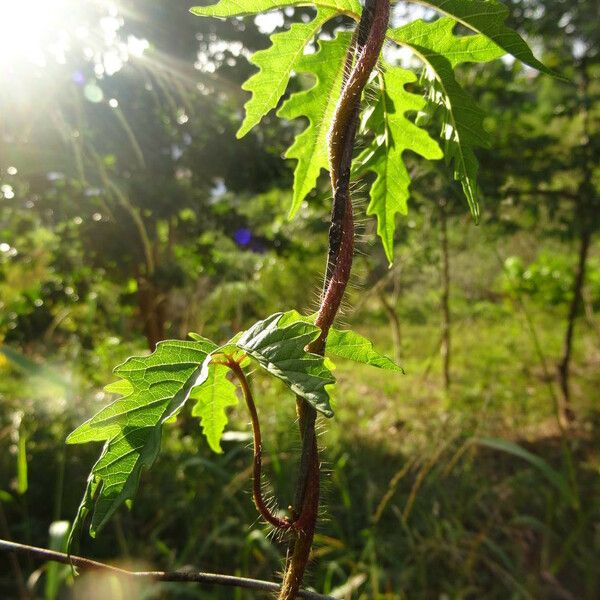
Plant Overview
Often called the Alamo Vine or Noyau Vine, this vigorous climber is a member of the morning glory family that looks like it stepped straight out of a botanical illustration. Known for its "fried egg" flowers—bright white with a deep, wine-red center—it is a favorite for southern gardeners looking to cover a fence quickly with a touch of tropical flair.
🔍 How to Identify
- 🌿 The Foliage: Unlike the heart-shaped leaves of common morning glories, these leaves are deeply "dissected" into five to seven narrow, finger-like lobes, giving the plant a delicate, lace-like appearance.
- 🌸 The Bloom: Large, funnel-shaped flowers are creamy white with a distinct dark purple or magenta "eye" in the throat. They typically open in the morning and collapse by late afternoon.
- 📦 The Seed Pods: After the flowers fade, they produce fascinating papery, straw-colored capsules. When they dry and open, they resemble small "wooden roses," often used in dried floral arrangements.
🏡 In Your Garden
- 🧗 Climbing Nature: This is a true "scrambler." It doesn't have tendrils; instead, it winds its reddish, hairy stems around anything it can touch. It’s perfect for a sunny trellis, but be careful—it can easily overwhelm smaller, slower-growing neighbors.
- ☀️ Sun & Soil: It is incredibly drought-tolerant and thrives in the heat. It prefers well-draining soil and isn't picky about nutrients, making it a "plant it and forget it" choice for warm climates, though it can become invasive if the seeds aren't managed.
⚠️ Safety & Toxicity
- 🚫 Toxic if Ingested: Like many members of its family, the Alamo Vine contains cyanogenic glycosides. These compounds can release cyanide when broken down in the stomach.
- 🐾 Pets & Kids: Keep this plant away from curious dogs, cats, and toddlers. Ingestion can cause vomiting, lethargy, or more serious neurological symptoms. Some gardeners also report mild skin irritation when handling the hairy stems.
✨ Fun Fact
The name "Noyau" comes from the French word for "stone" or "kernel." In some Caribbean cultures, the seeds and leaves were historically used to flavor a liqueur called Crème de Noyau because they have a distinct almond-like scent—though this is a dangerous practice for amateurs due to the plant's natural toxins!

Detailed Care Instructions
To grow Merremia Dissecta plants, follow these steps:
- Obtain seeds or cuttings: You can either purchase Merremia Dissecta seeds from a nursery or collect mature seeds from existing plants. Alternatively, you can take cuttings from a healthy Merremia Dissecta plant, ensuring the cutting is around 4-6 inches long with several leaves.
- Prepare the planting space: Choose a location in your garden that receives full sunlight or partial shade. The soil should be well-draining and enriched with organic matter. Clear away any weeds or debris from the area.
- Prepare the seeds/cuttings: If using seeds, scarify them by gently rubbing them against sandpaper or soaking them in warm water overnight. For cuttings, dip the cut end in rooting hormone to promote root development.
- Plant seeds or cuttings: If using seeds, sow them directly into the prepared soil, spacing them about 12-18 inches apart. Press them lightly into the soil and cover with a thin layer of soil. If using cuttings, dig holes in the soil and plant the cuttings, firming the soil around them.
- Water regularly: Keep the soil evenly moist throughout the growing season, but avoid overwatering, as it can lead to root rot. Water deeply when the top inch of soil feels dry.
- Provide support: Merremia Dissecta is a vine that will naturally grow upward, so provide some form of support, such as a trellis or fence, for the plant to climb on.
- Prune when necessary: To keep the plant tidy and promote bushier growth, prune back any long or straggly vines. Pruning can also prevent the plant from becoming invasive.
- Fertilize: Apply a balanced fertilizer every 4-6 weeks during the growing season to provide nutrients to the plant.
- Monitor for pests and diseases: Keep an eye out for common garden pests, such as aphids or whiteflies, and take appropriate measures to control them. Also, watch for signs of diseases like powdery mildew or leaf spot and treat accordingly.
- Harvest flowers/seeds (optional): Merremia Dissecta produces attractive yellow flowers that can be harvested and used in floral arrangements. If you want to collect seeds, wait for the flowers to dry out and form seed pods, then collect the pods and allow them to fully dry before extracting the seeds.
By following these steps, you can successfully grow Merremia Dissecta plants in your garden.
To water this plant, it is important to consider the soil conditions and the plant's water needs. The ideal soil for this plant should be well-draining but able to retain moisture. Water the plant deeply, allowing the water to soak into the soil and reach the roots. It is important not to overwater the plant, as this can lead to root rot and other issues. Allow the soil to dry slightly between watering, checking the moisture level by touching the soil with your finger. In hotter months or when the plant is actively growing, it may require more frequent watering. Avoid watering the leaves, as this can contribute to fungal problems. Watering in the morning or early evening is recommended, as this allows the plant to absorb the water before the heat of the day.
For optimal growth of this plant, it is important to fertilize it regularly. Use a balanced, slow-release fertilizer with equal amounts of nitrogen, phosphorus, and potassium. Apply the fertilizer every 4-6 weeks during the growing season, which is usually from spring to fall. Make sure to follow the instructions on the fertilizer package for the correct amount to use, and water the plant thoroughly after fertilizing. Avoid applying fertilizer during the dormant period, which is typically in the winter months.
Merremia Dissecta plant prefers well-drained soil that is rich in nutrients. The ideal soil should have a loamy texture that allows for proper root development and water retention. It is recommended to use a potting mix that is specifically designed for tropical plants with a pH range between 6 and 7.
When planting Merremia Dissecta, it is important to make sure that the soil is free of weeds and other debris that may hinder its growth. Adding organic matter such as compost or aged manure can help improve the soil quality and provide a good source of nutrients for the plant.
It is also important to make sure that the soil is moist but not waterlogged, as excess water can lead to root rot or other fungal diseases. Water the plant regularly, allowing the soil to dry out slightly between waterings.
Overall, a well-draining, nutrient-rich soil is key to the healthy growth and development of the Merremia Dissecta plant.
- Start by selecting a healthy, mature Merremia Dissecta plant.
- Carefully cut off a stem of the plant using a sharp, sterilized garden knife or scissors.
- Make sure that the stem you have selected has several nodes, which are points on the stem where leaves or buds emerge.
- Remove the lower leaves from the stem, leaving only a few on the top.
- If desired, dip the cut end of the stem in rooting hormone powder to promote root growth.
- Fill a small pot with well-draining soil, such as a mixture of sand and peat moss.
- Create a small hole in the soil with your finger or a pencil.
- Insert the stem cutting into the hole, making sure to bury at least one node under the soil.
- Gently press the soil around the stem to hold it in place and water the cutting well.
- Place the pot in a warm, bright location, but out of direct sunlight.
- Keep the soil moist but not waterlogged and mist the cutting daily to increase humidity.
- After a few weeks, new growth should appear, indicating that the plant has successfully rooted. Once it has grown enough, the cutting can be transplanted into a larger pot or planted outdoors in a suitable location.








