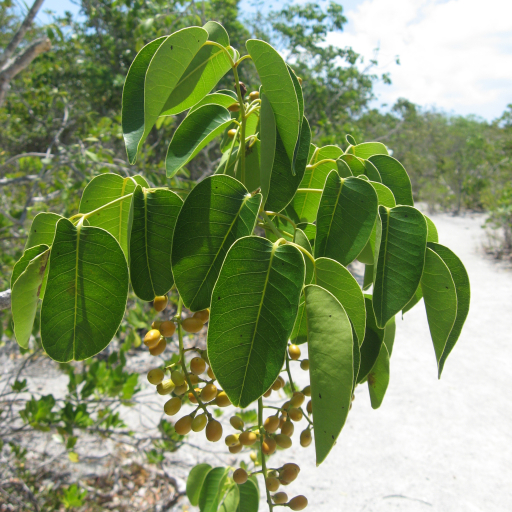
Plant Overview
Commonly known as Poisonwood or Florida Poisonwood, this deceptively handsome tree is a notorious resident of the Florida Keys and the Caribbean. While its glossy foliage looks like a lush tropical ornamental, it is a master of chemical defense, belonging to the same family as Poison Ivy and Mangoes. In local folklore, it is often whispered that wherever you find a Poisonwood tree, the "remedy" (the Gumbo Limbo tree) is growing right next to it.
🔍 How to Identify
- 🌿 The Leaves: Features compound leaves with 3 to 7 oval, glossy leaflets. They often have wavy edges and a distinct yellowish-green vein running through the center.
- ⚫ The "Ink Spills": The most reliable identifier is the presence of black, resinous spots on the trunk or leaves. This is the toxic sap that turns black like ink when exposed to the air.
- 🟠 Fruit Clusters: It produces hanging clusters of small, egg-shaped berries that turn a bright, waxy orange-yellow when ripe.
🏡 In Your Garden
- 🏖️ Coastal Specialist: Poisonwood thrives in harsh, salty conditions and limestone-rich soils. While it is rarely planted intentionally due to its toxicity, it is a common "volunteer" in South Florida landscapes.
- 🕊️ Wildlife Sanctuary: If you have one on the edge of your property, you’ll notice it is a magnet for birds. The endangered White-crowned Pigeon relies heavily on its oily fruits for survival, seemingly immune to the plant's toxins.
⚠️ Safety & Toxicity
- 🚫 Severe Irritant: EXTREME CAUTION. Every part of this tree—leaves, bark, fruit, and sap—contains urushiol, the same allergen found in poison ivy but often in much higher concentrations.
- 🩹 The Reaction: Touching the tree or even standing under it during a rainstorm (where water drips off the leaves onto skin) can cause severe blistering, swelling, and painful rashes.
- 🐾 Pets & Kids: It is highly toxic to dogs, cats, and humans. Burning the wood is particularly dangerous, as the toxins can become airborne and cause severe respiratory distress.
✨ Fun Fact
🌳 The Poisonwood has a "good twin" often found growing nearby called the Gumbo Limbo. Known as the "Tourist Tree" because of its red, peeling bark, the sap of the Gumbo Limbo is a traditional topical treatment used to soothe the very rashes caused by the Poisonwood.

Detailed Care Instructions
To grow a Metopium Toxiferum plant, also known as poisonwood or Florida poisonwood, you can follow these steps:
- Climate and Location: This plant is native to South Florida, so it requires a warm and tropical climate to thrive. Ensure that your location provides enough sunlight, preferably partial shade, and protection from strong winds.
- Soil: Poisonwood thrives in well-draining soil. Use a mixture of organic compost and sandy soil to ensure proper drainage.
- Watering: Poisonwood prefers slightly moist soil. Water the plant regularly but avoid overwatering, as it can cause root rot. Allow the top inch of soil to dry between watering sessions.
- Planting: If growing from seeds, soak them overnight before planting. Plant the seeds about 1/2 inch deep in the soil, or you can use small seedlings. Ensure that the planting hole is deep enough to cover the roots but not the stem.
- Mulching: Apply a layer of organic mulch around the plant to retain moisture and suppress weed growth. Leave a small gap around the base of the plant to prevent rotting.
- Fertilizer: Poisonwood plants generally do not require much fertilizer. However, you can use a slow-release granular fertilizer specifically formulated for tropical plants once or twice a year during the growing season.
- Pruning: Regularly prune the plant to maintain its shape and remove any dead or diseased branches. Wear protective gloves and clothing when pruning, as the sap of the poisonwood can cause skin irritation.
- Pests and Diseases: Poisonwood plants are relatively pest-resistant. However, keep an eye out for common garden pests like aphids or spider mites. Treat any infestations with organic insecticides if required.
- Safety Precautions: Be cautious when handling poisonwood plants, as their sap contains urushiol, which can cause severe skin reactions in some individuals. Wear gloves and protective clothing, and avoid contact with the sap.
- Patience: Growing plants takes time and patience. Poisonwood plants can be slow-growing, so be prepared to wait for a few years before seeing significant growth or flowering.
Remember to do thorough research and consult with local gardening experts to ensure the best possible care for your Metopium Toxiferum plant.

Place in a bright room that is sun drenched almost all day. Or directly in a south-facing window.

When watering this plant, it is important to ensure that the soil is moist but not waterlogged. Watering should be done only when the top layer of soil is dry to the touch. Overwatering can cause root rot, which can ultimately kill the plant. This plant prefers slightly acidic soil, so using rainwater or distilled water is recommended. Additionally, it is important to avoid getting water on the leaves as this can lead to fungal growth. When watering, it is recommended to use a watering can or hose with a gentle spray attachment to avoid disturbing the soil or causing soil erosion.
To fertilize this plant, use a balanced, slow-release fertilizer with a 10-10-10 or 14-14-14 NPK ratio. Apply the fertilizer to the soil around the base of the plant, being careful not to get any on the leaves or stem. Water the plant thoroughly after fertilizing to help the nutrients soak into the soil. Fertilize every 2-3 months during the growing season, which is typically spring and summer. Avoid fertilizing during the dormant season, which is usually fall and winter.
Metopium Toxiferum is a plant that has specific soil requirements for optimal growth. The plant prefers well-draining soil that is rich in organic matter. The pH level should be slightly acidic to neutral, with a range of 6.0-7.0. The soil should be kept moist but not waterlogged, as standing water can lead to root rot. Additionally, the plant prefers soil that is sandy or loamy, with good aeration to promote healthy root growth. When planting Metopium Toxiferum, it is important to amend the soil with organic matter such as compost or aged manure to provide essential nutrients and promote soil health. Regular fertilization with a balanced fertilizer can also help to maintain the plant's health.
Metopium Toxiferum is a plant that can be propagated through several methods, depending on the desired outcome. One way is to take stem cuttings from the parent plant and root them in water or a rooting hormone before planting them in soil.
Another method involves gathering the fruits from the parent plant and allowing them to fully mature before separating the seeds from the pulp. The seeds should be cleaned and planted in a nursery bed, where they can be closely monitored for the first few months.
Metopium Toxiferum can also be propagated through layering, which involves bending a low-growing stem of the parent plant and burying it in soil while it is still attached to the parent plant. Once the stem develops roots, it can be separated from the parent plant and transplanted elsewhere.
It is important to note that Metopium Toxiferum contains toxic sap, so gloves and protective clothing should be worn when handling this plant. It is also important to research local laws and regulations before propagating this plant, as it may be invasive in some areas.








