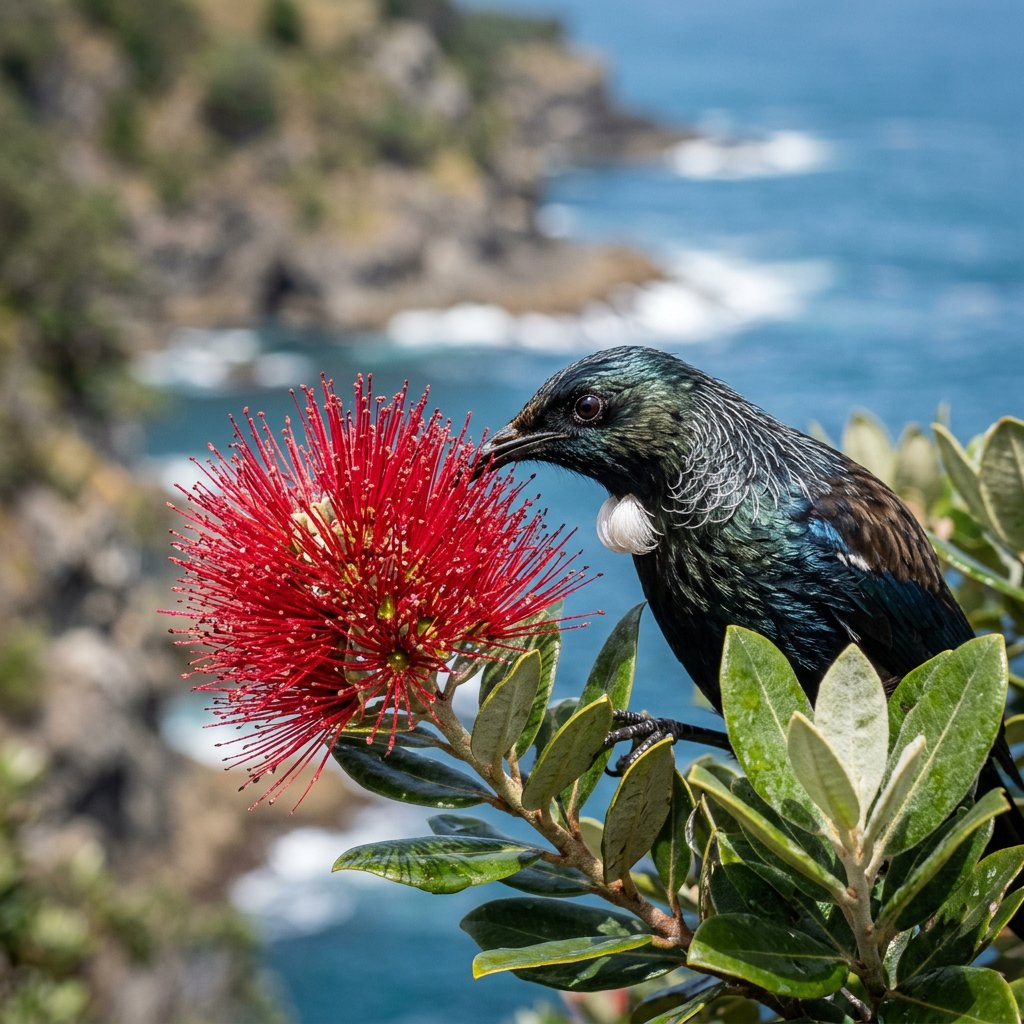
Plant Overview
Known as the "New Zealand Christmas Tree" or Pōhutukawa, this coastal titan is famous for its mid-summer explosion of crimson blossoms. In its native New Zealand, its flowering coincides with December, turning entire coastlines red just in time for the holidays. It is a symbol of strength and resilience, often seen clinging to steep, rocky cliffs where few other trees could survive.
🔍 How to Identify
- 🌺 Crimson Stamens: The "flowers" are actually dense clusters of long, bright red stamens that resemble bottle brushes or bursts of fireworks.
- 🍃 Leathery Foliage: The leaves are thick, oval, and olive-green with a distinctively furry, silvery-white underside that helps the tree conserve moisture.
- 🌳 Gnarled Form: It typically grows with a wide, spreading canopy and multiple trunks that become twisted and rugged with age, often draped in "beard-like" aerial roots.
🏡 In Your Garden
- 🌊 Salt Spray Specialist: This is one of the best choices for seaside landscapes. It is "halophytic," meaning it thrives in salt-laden winds and can even tolerate occasional splashes from the ocean.
- 🏗️ Root Awareness: While beautiful, it has an incredibly aggressive and powerful root system. Avoid planting it near swimming pools, underground pipes, or foundations, as it can easily crack concrete.
- ✂️ Slow Starter: It grows slowly in its youth and is quite sensitive to frost. If you live in a cooler climate, keep it in a large pot for the first few years so it can be moved to a sheltered spot during winter.
⚠️ Safety & Toxicity
- ✅ Non-Toxic: Metrosideros excelsa is generally considered safe and non-toxic to humans, dogs, and cats.
- 🧤 Mechanical Irritation: While not poisonous, the wood is extremely dense and "iron-like," and the leaves are stiff. Wear sturdy gloves when pruning to avoid scratches from the tough, woody debris.
✨ Fun Fact
The Pōhutukawa is often called the "Ironwood" because its timber is so incredibly hard and heavy that it was historically used by shipbuilders for the "knees" (curved supports) of wooden boats!

Detailed Care Instructions
Here are some steps you can follow to grow Metrosideros Excelsa (Pohutukawa):
- Climate: Pohutukawa is native to coastal regions of New Zealand, so it requires a Mediterranean-type climate with mild winters and warm summers. Ensure that you live in an appropriate climate zone to grow this plant successfully.
- Sunlight: Pohutukawa prefers full sun but can tolerate partial shade. Choose a sunny location in your garden or yard to plant it.
- Soil: Pohutukawa thrives in well-draining soil. It can handle a range of soil types but prefers slightly acidic to neutral soil. Add organic matter such as compost or well-rotted manure to improve the soil's fertility and drainage.
- Planting: Dig a hole twice the width and depth of the root ball. Gently remove the plant from its container, loosening the roots slightly. Place it in the hole, ensuring the top of the root ball is level with the soil surface. Backfill the hole with soil, firming it gently around the base of the plant.
- Watering: Pohutukawa requires regular watering, especially during the first year after planting. Keep the soil evenly moist, but avoid overwatering, as the plant does not tolerate soggy conditions.
- Mulching: Apply a layer of organic mulch around the base of the plant, such as wood chips or bark. Mulch helps retain moisture, suppresses weed growth, and protects the plant's roots from extreme temperatures.
- Pruning: Pohutukawa generally doesn't require much pruning. However, you can remove any dead, damaged, or crossing branches to maintain a healthy and attractive shape. Prune lightly after flowering is finished.
- Fertilizing: Pohutukawa generally does not require much fertilizer. However, you can apply a balanced slow-release fertilizer during the spring to promote healthy growth.
- Protection: If you live in an area with frost or cold snaps, consider protecting young Pohutukawa plants by covering them with frost cloth or bringing them indoors during extreme cold.
- Patience: Pohutukawa grows slowly, so be patient and allow it time to establish and mature. It may take several years for the plant to reach its full height and bloom profusely.
By following these steps, you can successfully grow Metrosideros Excelsa and enjoy its beautiful flowers.

Place in a bright room that is sun drenched almost all day. Or directly in a south-facing window.

The plant in question requires regular watering during the growing season and should be planted in well-draining soil. It is important not to overwater the plant, as this can lead to root rot. Watering should be reduced during the winter months when the plant goes dormant. The soil should be allowed to dry out slightly between watering, but not completely. When watering, it is important to avoid wetting the foliage as this can promote fungal growth. Drip irrigation or watering at the base of the plant is recommended.
To fertilize this plant, use a balanced fertilizer that includes nitrogen, phosphorus, and potassium. Apply the fertilizer in the spring and summer months, following the manufacturer's instructions for dosage and application method. Avoid fertilizing during the winter months when the plant is dormant. Always water the plant thoroughly before and after fertilizing to prevent burning the roots.
Metrosideros Excelsa prefers well-draining soil that is slightly acidic with a pH between 5.5 and 6.5. The soil should be rich in organic matter and provide sufficient nutrients for the plant's growth. A mixture of sand, loam, and peat moss can create the ideal soil conditions. The plant is also tolerant of soils with higher levels of clay content but may require some additional drainage to prevent root rot. It is important to avoid using heavy soils or soils that are prone to waterlogging, as excess moisture can harm the plant's roots. Additionally, adding a layer of mulch on top of the soil can help to retain moisture and protect the plant's roots during periods of drought.
To propagate this plant, take a cutting from a healthy mature plant during the non-flowering season. Ensure the cutting is around 8-10 cm long and has at least three nodes. Remove any leaves from the lower half of the cutting and dip the cut end into a rooting hormone powder. Place the cutting into a pot filled with a well-draining potting mix and water thoroughly. Cover the pot with a plastic bag or place it in a propagator to maintain high humidity levels. Keep the pot in a bright, warm location but out of direct sunlight. Check the soil moisture regularly and mist the cutting with water if it appears to be drying out. After 4-6 weeks, you should see new growth emerging from the cutting, which indicates that roots have formed. Gradually acclimate the new plant to lower humidity levels by removing the plastic bag or propagator, and then transplant it into a larger pot or in the garden.
Common pests of the pohutukawa include Scale insect, mealybugs, spider mites, aphids. Make a habit of checking your pohutukawa frequently for pests so that any infestations can be caught and managed early.








