Plant Overview
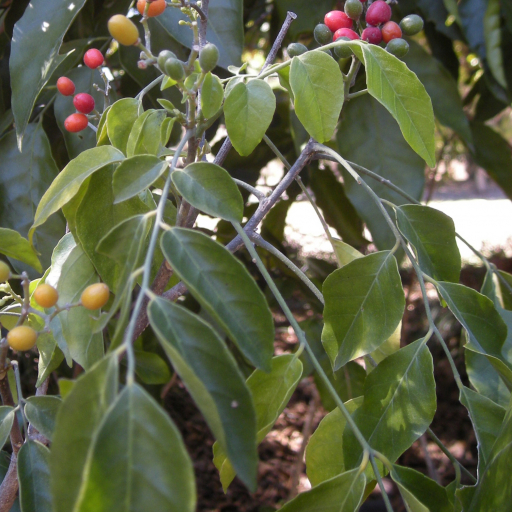
Often called the Lime Berry or Tulibas, this charming evergreen shrub is a humble member of the Citrus family. It is a native wanderer of the Indo-Pacific and Northern Australia, often found tucked away in the dappled shade of coastal forests. While it doesn't produce lemons, its delicate clusters of flowers and "kaleidoscope" berries make it a hidden gem for tropical gardeners and forest hikers alike.
🔍 How to Identify
- 🍃 Lacy Foliage: The leaves are pinnate (feather-like) with 7 to 15 leaflets that have slightly wavy edges and a soft, velvety texture on the underside.
- 🌼 Tiny Blooms: True to its name (minutum), it produces flat-topped clusters of very small, greenish-white flowers that emit a faint, sweet citrus-like fragrance.
- 🍒 Transitioning Berries: The most striking feature is the fruit; small oval berries that shift through a color spectrum from green to a vibrant orange and finally a deep, glossy red as they ripen.
🏡 In Your Garden
- 🌳 The Understory Dweller: In the wild, this plant lives under the canopy of larger trees. In a garden setting, it thrives in "bright indirect light"—too much harsh, direct afternoon sun can scorch its delicate leaflets.
- 💧 Drainage is Key: Being a relative of the orange tree, it hates "wet feet." It prefers a well-draining, organic-rich soil that mimics the loamy floor of a tropical forest. It is relatively hardy once established but dislikes being moved due to its sensitive root system.
⚠️ Safety & Toxicity
- 🐾 Pet Safety: This plant is generally considered non-toxic to household pets. However, the essential oils within the leaves can cause mild digestive upset if a curious cat or dog decides to have a large snack.
- 👶 Child Safety: The bright, jewel-like berries are very attractive to children. While the plant is used in traditional medicine in some cultures, the berries are not considered a standard edible fruit and should not be consumed.
✨ Fun Fact
In many Southeast Asian cultures, the leaves of Micromelum minutum aren't just for show—they have been used for centuries in traditional herbal baths and poultices, believed to help soothe skin irritations and reduce fevers!

Detailed Care Instructions
To grow Micromelum Minutum plant, you can follow these steps:
- Obtain seeds or seedlings: You can purchase seeds or seedlings from a local nursery or online plant store. Make sure to choose healthy and viable seeds or seedlings.
- Choose a suitable location: Micromelum Minutum prefers partial shade to full sun. Select a location in your garden or indoors that receives the appropriate amount of sunlight.
- Prepare the soil: The plant prefers well-draining soil rich in organic matter. Ensure the soil is loose and friable. You can amend the soil with compost or organic matter to improve its quality.
- Sow seeds or plant seedlings: If you have seeds, sow them at a depth of about 1/4 inch (0.6 cm) in the prepared soil. Water gently after sowing. If you have seedlings, dig a hole deep enough to accommodate the roots and place the seedling into the hole. Backfill with soil and gently press it down.
- Watering: Keep the soil consistently moist but not waterlogged. The plant prefers regular watering, especially during dry periods. Avoid over-watering, as it can lead to root rot.
- Fertilization: Apply a balanced, organic fertilizer according to the manufacturer's instructions every four to six weeks. This will help provide essential nutrients for plant growth.
- Pruning: Prune the plant as needed to maintain a desired shape and size. Remove any dead or damaged branches to promote healthy growth.
- Pest and disease control: Micromelum Minutum is generally resistant to pests and diseases. However, regular inspection is recommended to catch any issues early. If you notice any pests or diseases, treat them promptly using appropriate methods or consult with a horticulturist for guidance.
- Harvesting: Once the plant matures, you can harvest the fruits. They should be harvested when fully ripe for best flavor and quality.
Remember to keep an eye on your plants, observe their growth, and make adjustments as needed. Good luck with your Micromelum Minutum plant!

Place in a window with dappled sun or a spot in the middle of a room. Or directly in a window facing west or east.

Micromelum Minutum plant prefers to be regularly watered, but it does not like standing water around its roots. Therefore, it is recommended to water it deeply but infrequently, allowing the soil to dry out a little bit between waterings. The best way to check whether the plant needs water is by feeling the top layer of soil, which should be dry to the touch before watering. It is also important to avoid getting water on the leaves, as this can lead to fungal diseases and damage the foliage. Instead, it is better to water the soil directly around the base of the plant. In addition, make sure to use room temperature or lukewarm water, as cold water can shock the roots. Finally, during the winter months, the plant may require less frequent watering as it goes into a dormant phase.
To fertilize this particular plant, use a balanced fertilizer with equal parts nitrogen, phosphorus, and potassium. Apply the fertilizer every two weeks during the growing season, which will promote healthy growth and flowering. Additionally, make sure to water the plant thoroughly before and after applying the fertilizer to prevent any root damage.
The ideal soil for this plant should be well-draining and high in organic matter. It should have a pH level between 5.5 to 7.5, as this plant thrives in slightly acidic to neutral soil. Adding compost or peat moss to the soil can improve its organic content and help retain moisture. Avoid using heavy clay soil or soil that is prone to waterlogging, as this can cause root rot and other plant diseases. A mix of sand, loam, and perlite can also be added to the soil for better drainage.
Micromelum minutum plant can be propagated through the use of stem cuttings. First, select a healthy stem from the parent plant that is approximately 4-6 inches in length and has at least 2-3 leaves. Using a clean, sharp knife or scissors, make a clean, diagonal cut just below a node. Remove any bottom leaves from the stem cutting, leaving only the top leaves. Dip the cut end of the stem in rooting hormone powder to promote root growth. Then, plant the cutting in a well-draining potting mix and keep the soil moist and warm. The cutting should start to develop roots within a few weeks. Once the roots are established, the new plant can be transplanted into a larger pot or directly into the garden. It is important to keep the new plant in a shaded area for the first few weeks to prevent scorching from direct sunlight.








