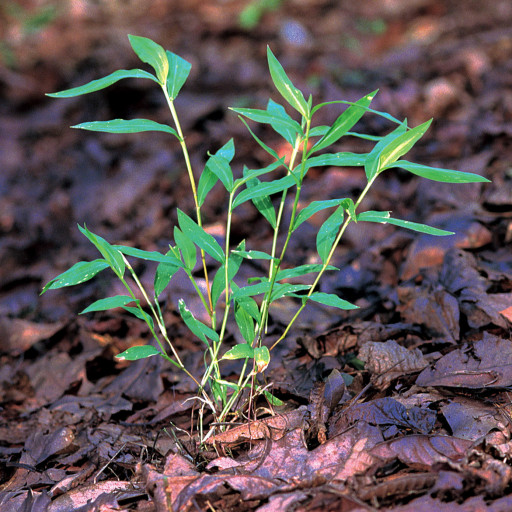
Plant Overview
Often called Japanese Stiltgrass or "Packing Grass," this delicate-looking annual grass hides a surprisingly resilient nature. Originally native to Asia, it famously hitchhiked to North America in the early 1900s as dried packing material for fine porcelain. Today, it is known for its ability to form dense, lime-green carpets that "stilt" over native forest floors, earning it a reputation as a beautiful but aggressive invader.
🔍 How to Identify
- 🌿 The Silver Stripe: The most distinctive feature is a pale, slightly off-center silvery midvein that runs down the length of each leaf, shimmering when it catches the light.
- 🎋 Bamboo Mimicry: The leaves are short, lance-shaped, and arranged alternately along a thin, wiry stem, giving it the appearance of a miniature, sprawling bamboo plant.
- 📐 Growth Habit: It typically grows 1 to 3 feet tall, but as the stems get heavier, they flop over and "crawl" across the ground, rooting at the spots where the stem touches the soil.
🏡 In Your Garden
- 🌱 The Opportunist: This plant is the ultimate survivor of the shade. While most grasses crave sun, Stiltgrass thrives in low-light environments, particularly in moist, disturbed soil along woodland edges or garden borders.
- ✂️ Managing the Spread: If you find it in your yard, the key is to stop it before it goes to seed in late summer. Because it has a shallow root system, it pulls out easily by hand—just be sure to do it before those tiny flower spikes emerge, as a single plant can drop 1,000 seeds.
⚠️ Safety & Toxicity
- ✅ Safe for Touch: Japanese Stiltgrass is not known to be toxic to humans or common household pets like dogs and cats if touched or accidentally nibbled.
- 🌎 Ecological Hazard: While safe for your skin, it is a "safety" threat to your local environment. It changes the soil chemistry and crowds out native wildflowers, making it difficult for local pollinators to find their preferred food sources.
✨ Fun Fact
Japanese Stiltgrass seeds are incredibly hardy; they can sit dormant in the soil for up to five years, waiting for a fallen tree or a gardener’s shovel to provide the perfect patch of light to finally sprout!

Detailed Care Instructions
To grow Microstegium Vimineum, also known as Japanese stiltgrass or Nepalese browntop, follow these steps:
- Choose the right location: Japanese stiltgrass grows best in partial shade to full shade conditions. Look for an area in your garden that has well-draining soil and receives dappled sunlight or shade throughout the day.
- Prepare the soil: Japanese stiltgrass prefers moist, loamy soil. Before planting, work the soil by removing any weeds, rocks, or large debris. Incorporate organic matter, such as compost or well-rotted manure, to improve soil fertility and drainage.
- Sow the seeds: Japanese stiltgrass can be propagated by seeds. Scatter the seeds over the prepared soil, ensuring even distribution. The seeds will germinate best if slightly covered with a thin layer of soil or mulch.
- Water regularly: Keep the soil evenly moist during the germination and establishment process. Avoid overwatering, as this can cause rot or fungal issues. Water deeply and less frequently once the plants are established.
- Control weed competition: Japanese stiltgrass can be an invasive species, so it's essential to control competing weeds in the area. Mulching around the plants can help suppress weed growth and retain soil moisture.
- Monitor for pests and diseases: Japanese stiltgrass is relatively resistant to pests and diseases. However, regularly inspect the plants for any signs of damage or infestation. If necessary, employ appropriate organic pest control measures.
- Regular maintenance: As the plants grow, remove any weeds that manage to sprout around the stiltgrass. Though it can spread via seed dispersal, hand-pulling or mowing can help control its expansion.
- Harvesting seeds: If you want to collect seeds for future plantings, allow the grass to fully mature and dry on the stalk. Carefully cut the seed heads and place them in a paper bag or envelope to collect the seeds.
Remember, Japanese stiltgrass can be aggressive and compete with native plants. It's essential to monitor its growth and prevent it from spreading into natural areas where it may become invasive.

Place in a window with dappled sun or a spot in the middle of a room. Or directly in a window facing west or east.

To water this plant, use a watering can or hose with a gentle flow of water. Avoid getting the water directly on the leaves as this can promote disease. Water the soil around the plant, making sure it is evenly moist but not waterlogged. Check the soil regularly, and adjust watering based on the plant's needs and the amount of rainfall it receives. Always water in the morning or evening to prevent evaporation loss and avoid watering during the hottest part of the day.
To fertilize this plant, use a balanced fertilizer with equal amounts of nitrogen, phosphorus, and potassium. Apply the fertilizer according to the package instructions, making sure to water the plant well before and after fertilizing to prevent root burn. Fertilize once a month during the growing season, which is typically spring through summer. Avoid over-fertilizing, as this can cause the plant to grow too quickly and become weak or susceptible to disease.
The ideal soil for the plant in question is a well-draining, slightly acidic soil with a pH range of 5.5 to 6.5. The soil should be rich in organic matter and nutrients, as the plant requires fertile soil to grow properly. Adding compost or leaf litter to the soil will provide the necessary nutrients and structure to support healthy growth. The plant prefers moist soil conditions but can tolerate periods of drought once it has become established. When planting, it is important to ensure that the soil is well-compacted around the roots to prevent the plant from becoming waterlogged. Overall, the plant thrives in soil that is rich in organic matter, well-drained, and slightly acidic.
To propagate this plant, you can collect mature seeds from the flowers and sow them in well-draining soil. Alternatively, you can take stem cuttings and root them in water or soil. Make sure to keep the cuttings moist and in indirect sunlight until they establish roots. Once rooted, transplant the new plants to their desired location.








