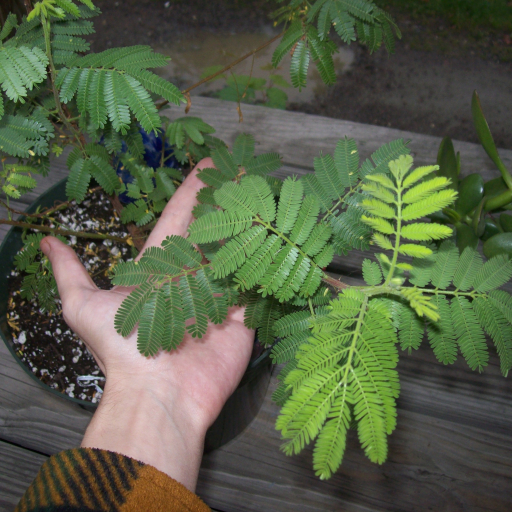
Plant Overview
Commonly known as Tepezcohuite or Jurema Preta, the Mimosa tenuiflora is a legendary tree deeply rooted in Mesoamerican history. Often called the "Skin Tree" by the Mayans, its bark has been used for centuries to treat wounds and burns. While it belongs to the same family as the famous sensitive plant, this species grows into a sturdy, thorny shrub or small tree that commands a presence in any tropical landscape.
🔍 How to Identify
- 🌿 Fern-like Foliage: The leaves are finely divided and feathery (bipinnate), resembling a delicate fern. While they are sensitive to touch, they don’t fold up as dramatically or quickly as their cousin, Mimosa pudica.
- ☁️ White Flower Spikes: Unlike the round "pink puffs" of other mimosas, this species produces fragrant, white, cylindrical flower spikes that look like soft, fuzzy caterpillars hanging from the branches.
- ⚔️ Thorn-Armed Stems: The branches are often guarded by small, sharp prickles that are broad at the base, making it a natural choice for defensive hedging in its native habitat.
- 🪵 Dark Bark: The trunk features a dark, reddish-brown to almost black bark that is often deeply fissured, which is the most prized part of the plant for traditional uses.
🏡 In Your Garden
- ☀️ Sun-Seeker Nuance: This plant is a true child of the sun and thrives in intense light. If grown indoors or in a greenhouse, it requires the brightest spot possible; otherwise, it will become "leggy" and drop its lower leaves in protest.
- 🌱 Root Resilience: It is a nitrogen-fixing plant, meaning it actually improves the soil quality around it. However, it develops a deep taproot and deeply dislikes being moved once established, so choose its forever home carefully.
- 💧 Drought Strategy: Once it matures, it is incredibly drought-tolerant. In fact, overwatering is the quickest way to harm it, as its roots are prone to rot in soggy, heavy clay soils.
⚠️ Safety & Toxicity
- 🐕 Physical Hazard: The primary safety concern for pets and children is the sharp thorns. These can cause painful scratches or skin punctures if the plant is placed near a walkway.
- 🧪 Alkaloid Content: The bark and roots contain high concentrations of tannins and alkaloids. While used topically in skincare (Tepezcohuite), it should never be ingested without professional medical guidance, as it can cause significant internal distress.
- 🐈 Pet Safety: While not listed as highly toxic to touch, the foliage is not meant for grazing. Keep it out of reach of curious nibblers.
✨ Fun Fact
In 1984, after a massive explosion at a gas plant in Mexico City, the Red Cross used powdered Mimosa tenuiflora bark to treat hundreds of burn victims when conventional supplies ran out. The results were so effective in regenerating skin that it sparked a global scientific interest in the plant's healing properties!

Detailed Care Instructions
To grow a Mimosa Tenuiflora plant, also known as Jurema or Tepezcohuite, follow these steps:
- Obtain seeds or cuttings: You can buy seeds or acquire cuttings from a reputable source. Seeds are usually easier to find.
- Prepare the soil: Mimosa Tenuiflora prefers well-draining soil with a slightly acidic pH. Mix equal parts of sand, peat moss, and perlite to create a suitable growing medium.
- Soak the seeds (optional): If you have seeds, you can soak them in water overnight to improve germination rates. This step is not mandatory, but it may speed up the process.
- Sow the seeds or plant the cuttings: If using seeds, plant them about a quarter-inch deep in the prepared soil. If using cuttings, plant them directly in the soil, ensuring at least one node is below the surface.
- Provide optimal conditions: Place the pot or planting container in a warm and sunny location. Ideally, the temperature should be around 70-80°F (21-27°C). Mist the soil regularly to keep it moist, but not waterlogged.
- Be patient: Germination can take anywhere from a few weeks to a few months, so be patient and keep the soil moist during this time. Once the plant starts growing, it will require less frequent watering.
- Transplanting (optional): If the seedlings or cuttings outgrow their initial container, you can transplant them into larger pots or directly into the ground. Ensure there is sufficient space for the plant's roots to expand.
- Pruning: As the plant grows, you might want to prune it to maintain its shape and encourage branching. Regular pruning can result in a bushier plant.
- Protection from frost: If you live in a colder climate, protect the Mimosa Tenuiflora plant from frost by moving it indoors or providing appropriate shelter during the winter months.
- Harvesting (optional): If you are interested in obtaining the bark's medicinal properties, you can harvest it from mature trees. However, seek guidance from experts or trusted sources before attempting this, as some regulations may apply.
Remember to research the specific requirements and considerations for growing Mimosa Tenuiflora in your region, as they can vary depending on climate and local conditions.

Place in a bright room that is sun drenched almost all day. Or directly in a south-facing window.

1. Determine the appropriate watering schedule based on the plant's humidity and moisture preferences.
2. Ensure the soil is well-draining to avoid waterlogging and root rot.
3. Use room temperature water to avoid shocking the plant and disrupting its growth.
4. Water directly into the soil around the base of the plant rather than overhead watering.
5. Avoid over-watering as this can cause damage to the root system and inhibit growth.
6. During the hotter months, water more frequently but reduce watering during cooler months.
7. Use mulch around the plant to preserve moisture and regulate soil temperature.
8. Monitor the soil's moisture level by checking its dryness or dampness before watering.
9. Adjust watering routine depending on the plant's growth and response to watering.
10. Consider using a moisture meter to accurately measure soil moisture levels.
To fertilize this plant, begin by choosing a balanced fertilizer that is specifically formulated for flowering plants. Choose a time-release fertilizer for best results. Use a small amount of fertilizer, as too much can burn the roots and cause damage to the plant. Apply the fertilizer early in the growing season, and then again in mid-season. Avoid fertilizing during the winter months, as the plant is dormant at this time. Follow the instructions on the fertilizer package carefully.
The soil that is suitable for Mimosa Tenuiflora plant is well-draining and should contain organic matter. The pH level of the soil should range from slightly acidic to neutral. It is recommended to use a mixture of sand, peat moss, and loam soil to provide the plant with the necessary nutrients and moisture. The soil should be light and loose to promote proper drainage and aeration. It is important to avoid using heavy clay soils as they tend to retain too much moisture, which can lead to root rot and other harmful diseases in the plant. Additionally, it is recommended to add fertilizers and other nutrients to the soil to promote healthy growth and development of the Mimosa Tenuiflora plant.
To propagate this plant, one can start by collecting fresh seeds in the fall after the pods have split open. Clean and dry the seeds for storage until planting in the spring. Mimosa Tenuiflora can also be propagated by taking softwood cuttings in early summer. Cut a 4- to 6-inch stem from the plant, remove the lower leaves and dip the cut end in rooting hormone. Place the cutting in soil and keep it evenly moist until roots begin to form. Mimosa Tenuiflora can also be propagated by layering. Choose a low branch and bend it down to the ground. Cut the underside of the stem at a 45-degree angle and place soil over the cut. Keep the soil moist until roots form. Once new growth appears, the new plant can be separated from the parent plant and transplanted.








