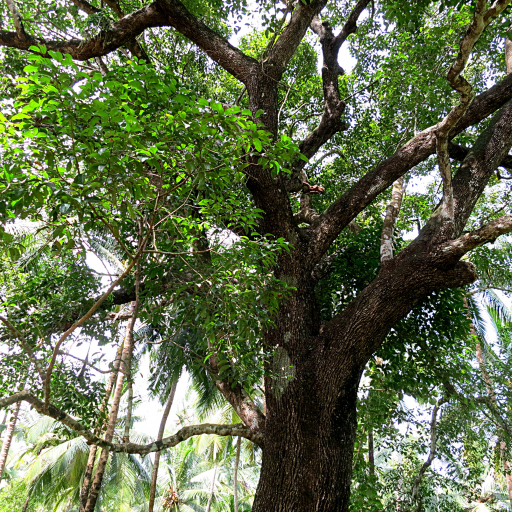
Plant Overview
Known across South Asia as the Bakul or Spanish Cherry, this elegant evergreen is legendary for its intoxicatingly sweet fragrance. In ancient Sanskrit literature, it is said that the Bakul tree only blooms when sprinkled with nectar from the mouth of a beautiful woman. Whether or not you believe the myths, its dense, cooling canopy and star-shaped flowers make it a prized "heritage tree" for large gardens and urban spaces.
🔍 How to Identify
- 🍃 Wavy Foliage: The leaves are glossy, dark green, and distinctively "wavy" or undulating along the margins, providing a lush look year-round.
- 🌸 Star-Shaped Blooms: The flowers are small, cream-colored, and look like tiny, thick-petaled stars. They are famous for retaining their scent long after they fall and dry out.
- 🍒 Bullet-Shaped Fruit: It produces ovoid berries that turn from a dusty green to a vibrant orange-red when ripe, resembling small, pointed bullets (hence the name "Bullet Wood").
🏡 In Your Garden
- 🌳 The Ultimate Shade Tree: Because of its extremely dense leaf growth, it is a top choice for creating "cool spots" in hot climates. It acts as a natural air conditioner for your backyard.
- ⏳ Slow and Steady: This isn't a "fast-fix" plant. It grows slowly and develops very hard, heavy wood, meaning it won't easily succumb to wind damage or storms once established.
- 💧 Drought Endurance: While it appreciates regular water while young, a mature Mimusops elengi is incredibly hardy and can survive long dry spells thanks to its deep root system.
⚠️ Safety & Toxicity
- ✅ Generally Safe: The tree is considered non-toxic and has a long history of use in traditional Ayurvedic medicine.
- 👅 Astringent Fruit: While the ripe orange fruits are technically edible, they are very "furry" or astringent on the tongue. They aren't a favorite for fresh eating but are safe if a curious pet or child takes a nibble.
- 👶 Seed Caution: Like many stone fruits, the hard seeds inside the berries should be kept away from small children to prevent choking.
✨ Fun Fact
Unlike most flowers that lose their smell once they wither, Bakul flowers actually hold their fragrance for days—and even weeks—after falling to the ground. In many cultures, dried Bakul flowers are placed in linen closets to keep clothes smelling sweet for months!

Detailed Care Instructions
Here are some steps to help you grow a Mimusops Elengi plant:
- Obtaining a plant: You can purchase a Mimusops Elengi plant from a local nursery or online. Look for a healthy plant with green leaves and no visible signs of pests or diseases.
- Choose the right location: Mimusops Elengi plants prefer a well-draining soil and full to partial sun exposure. Ensure the location you choose receives at least 4-6 hours of direct sunlight.
- Prepare the soil: The soil should be rich in organic matter and have good drainage. If your soil is heavy clay or sandy, consider amending it with compost to improve its texture and fertility.
- Dig a hole: Dig a hole that is slightly wider and slightly deeper than the root ball of the plant.
- Planting the tree: Place the Mimusops Elengi plant in the hole, ensuring that the top of the root ball is level with or slightly above the soil surface. Backfill the hole with soil, gently pressing it down to eliminate any air pockets.
- Watering: Give the newly planted Mimusops Elengi plant a thorough watering. Afterward, water it regularly, keeping the soil evenly moist but not waterlogged. Adjust the watering frequency based on the weather conditions and the plant's water requirements.
- Mulching: Apply a layer of organic mulch, such as wood chips or bark, around the base of the plant. Mulch helps to retain moisture, suppress weed growth, and regulate soil temperature.
- Pruning: Regular pruning is beneficial for shaping the plant, removing dead or diseased branches, and promoting overall health and vigor. Prune selectively during the dormant season or after flowering.
- Fertilization: Feed the Mimusops Elengi plant with a balanced, slow-release fertilizer in early spring and mid-summer. Follow the package instructions for application rates.
- Protect from extreme temperatures: Shield the plant from extreme temperatures, especially during frost or cold winter conditions. If necessary, cover it with a frost cloth or move potted plants indoors during cold periods.
Remember to regularly monitor the plant's health, look out for common pests or diseases, and make any necessary adjustments to care accordingly.

Place in a bright room that is sun drenched almost all day. Or directly in a south-facing window.

Mimusops Elengi plant should be watered deeply and consistently but not excessively. It is important to let the soil dry out a bit between watering to avoid root rot. Water should be directed towards the base of the plant and avoid wetting the leaves. During the summer, the plant may need to be watered more frequently, while during the winter, watering can be reduced. It is recommended to use room temperature water and avoid using hard water or water with a high level of salt. Additionally, the plant should be kept in well-draining soil to prevent waterlogging.
To fertilize this plant, use a balanced fertilizer with equal amounts of nitrogen, phosphorus, and potassium. Apply the fertilizer during the growing season, from spring to fall. Mix the fertilizer with water according to the manufacturer's instructions and then pour it around the base of the plant. Be careful not to sprinkle the fertilizer directly on the leaves or stem, as it can burn them. Water the plant thoroughly after fertilizing. Repeat this process every four to eight weeks depending on the plant's growth rate.
In general, Mimusops elengi plants prefer well-draining soils that are rich in organic matter. A suitable soil mix for this plant should consist of a blend of garden soil, sand, and compost. The garden soil should be free of any debris such as rocks or twigs and should be well-aerated. The sand should be coarse and percolative, helping to prevent soil compaction and waterlogging. The compost should be well-rotted and nutrient-rich, providing essential nutrients to the plant. It is important to ensure that the soil mix is not too acidic, with a pH range between 6 and 7.5 being optimal for this plant. The soil should also be moist but well-drained, as this plant is susceptible to root rot if planted in waterlogged soil.
Propagation of Mimusops Elengi plant can be done through various methods such as seed propagation, cutting propagation, and air layering.
Seed propagation involves collecting mature seeds from the plant during the flowering season and sowing them in a well-draining potting mix. The pot should be kept in a warm, humid place with regular watering until the seeds germinate and produce new shoots.
Cutting propagation involves taking stem cuttings from the plant during the growing season and rooting them in water or a rooting hormone. Once roots have developed, the cuttings can be planted in a well-draining potting mix and kept in a warm, humid environment with regular watering until they establish.
Air layering involves making a small cut on a healthy stem and applying rooting hormone to the cut. A small amount of moist sphagnum moss is then wrapped around the cut and secured with plastic wrap. Roots will develop in the moss and once they have established, the stem can be cut and planted in a well-draining potting mix.
Regardless of the propagation method, it is important to keep the newly propagated plant in a warm, humid environment with regular watering until it is established.








