Plant Overview
Often called the Brewer's Bishop’s Cap, this delicate woodland gem looks like it belongs in a miniature fairy tale garden. Native to the high mountain ranges of Western North America, it thrives in the cool, damp shadows of subalpine forests. Its tiny, intricate blossoms are so fine they are often mistaken for lingering morning frost or stray snowflakes caught on a stem.
🔍 How to Identify
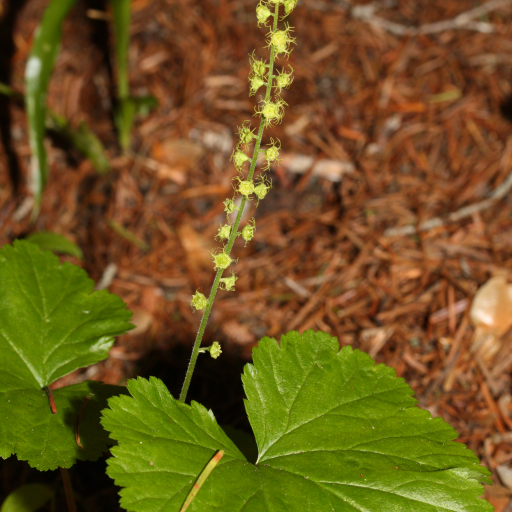
- ❄️ Snowflake Petals: The most striking feature is the tiny, greenish-yellow flowers. Each petal is "pinnatifid," meaning it is divided into thread-like branches that give the flower a complex, crystalline appearance.
- 🍃 Heart-Shaped Leaves: The foliage consists of bright green, kidney or heart-shaped leaves with shallow lobes. They grow in a tidy basal rosette, hugging the ground closely.
- 📏 Slender Stalks: The plant sends up thin, leafless flowering stems (racemes) that can reach up to 10–12 inches, carrying several of its characteristic "miter" flowers.
🏡 In Your Garden
- 💧 Moisture Mimicry: To keep this plant happy, you must mimic its alpine stream-side home. It demands consistently moist, organic-rich soil and will wilt quickly if the ground dries out or if the humidity drops too low.
- 🏔️ The Deep Shade Rule: Unlike many garden perennials, Brewer's Bishop's Cap thrives in "true shade." It is an excellent choice for the north side of a house or tucked under a thick canopy of conifers where other plants might struggle to find enough light.
⚠️ Safety & Toxicity
- ✅ Non-Toxic: Brewer's Bishop's Cap is generally considered non-toxic to humans and common household pets like dogs and cats.
- ✋ Physical Fragility: While not chemically dangerous, the plant is physically delicate. Its shallow root system and thin stems make it very sensitive to being stepped on or disturbed by curious pets.
✨ Fun Fact
The name Mitella is a diminutive of the Latin word "mitra," meaning a bishop's cap. This refers to the unique shape of the tiny seed pod, which looks like a miniature version of the tall, pointed hat worn by bishops.

Detailed Care Instructions
To grow Mitella breweri plants, also known as Brewer's mitrewort or brewer's bog saxifrage, follow these steps:
- Choose a suitable location: Mitella breweri is native to wetlands and boggy areas and prefers partially shaded conditions. Select a site that receives morning sun and afternoon shade or dappled sunlight throughout the day. The soil should be consistently moist but well-draining.
- Prepare the soil: Remove any weeds or grass from the planting area and loosen the soil. Add organic matter like compost or well-rotted manure to improve drainage and enrich the soil.
- Planting: Plant the Mitella breweri plants in late spring or early summer. Dig a hole slightly larger than the plant's root ball and place the plant in the hole. Ensure that the top of the root ball is level with the ground. Space the plants about 12-18 inches apart to allow for their spread.
- Watering: Keep the plants consistently moist, but avoid overwatering. Water deeply about once or twice a week, depending on the weather and soil conditions. Increase or decrease watering frequency as needed to maintain moist soil.
- Mulching: Apply a layer of organic mulch, such as shredded bark or straw, around the plants to help retain moisture, regulate soil temperature, and suppress weeds. Leave a gap between the mulch and plant stem to prevent rot.
- Fertilizer: Mitella breweri doesn't typically require heavy fertilization. However, you can apply a slow-release, balanced organic fertilizer in spring or early summer to provide a nutrient boost. Follow the manufacturer's instructions for proper application.
- Pruning: Minimal pruning is needed for Mitella breweri plants. Remove any dead, damaged, or diseased leaves or stems as necessary throughout the growing season.
- Propagation: You can propagate new Mitella breweri plants by dividing mature clumps in early spring or fall. Carefully dig up the clump, separate the sections, and replant them in suitable soil.
- Maintenance: Monitor the plants regularly for pests or diseases, such as slugs or powdery mildew. Apply appropriate organic pest control methods or treatments if required.
- Winter care: In cold climates, apply a layer of mulch around the plants in late fall to protect the roots from freezing temperatures. Alternatively, you can grow Mitella breweri in containers and move them to a protected area for winter or bring them indoors.
By following these steps, you should be able to successfully grow Mitella breweri plants and enjoy their delicate, white flowers and attractive foliage.

Place in a dark room with little light, like a dark bedroom or a spot far away from a window or directly in a north-facing window.

To properly water this plant, it is important to consider its natural habitat and growing conditions. This species is typically found in moist, shady environments such as forests or near streams. Therefore, it will thrive with consistent watering that mimics these conditions.
When watering, make sure to thoroughly saturate the soil, but be careful not to overwater as this can lead to root rot. It is best to allow the soil to partially dry out in between waterings, but never to the point of becoming completely dry.
A good rule of thumb is to water when the top inch of soil feels dry to the touch. Use a watering can or hose with a gentle stream to avoid disturbing the plant's delicate root system. Do not wet the leaves, as this can increase the risk of fungal diseases.
In addition to regular watering, it is important to ensure proper drainage by planting in well-draining soil and a pot with drainage holes. This will prevent water from pooling around the roots and causing damage.
Overall, providing consistent, moderate watering and good drainage will help ensure the health and vitality of this plant.
To fertilize this plant, apply a balanced, slow-release fertilizer in early spring. Mix the fertilizer into the soil around the base of the plant, being careful not to get it on the leaves or stems. Water the plant deeply after fertilizing to help the nutrients soak in. Avoid over-fertilizing, as this can cause the plant to become weak and unhealthy.
The ideal soil for the plant is acidic, rich in organic matter, and well-draining. It should have a pH between 4.5 and 6.5. A good mix would include peat moss, sand, and loamy soil. It's best to avoid heavy clay soils or soil that is too alkaline. Before planting, amend the soil with compost or leaf litter to improve its nutrient content and moisture retention. In general, the plant prefers moist soil but can tolerate some drought.
To propagate this plant, you will need to collect mature seeds from the parent plant once they are fully developed. Carefully remove the seeds from the seed heads and store them in a dry, cool place until you are ready to plant them.
To plant the seeds, you will first need to prepare a seed tray or small pot with fresh, well-draining potting soil. Sprinkle the seeds on top of the soil and cover lightly with a thin layer of additional soil.
Next, water the seeds gently until the soil is moist but not saturated. Cover the seed tray or pot with clear plastic wrap or a propagation dome to create a humid environment.
Place the seed tray in a bright, indirect light location and maintain a constant temperature of around 70 degrees Fahrenheit. Check the soil moisture regularly and water as needed to ensure it remains consistently moist.
The seeds should begin to germinate in approximately two to four weeks, at which point you can remove the plastic cover and continue to grow the seedlings until they are large enough to transplant to their permanent growing location.








