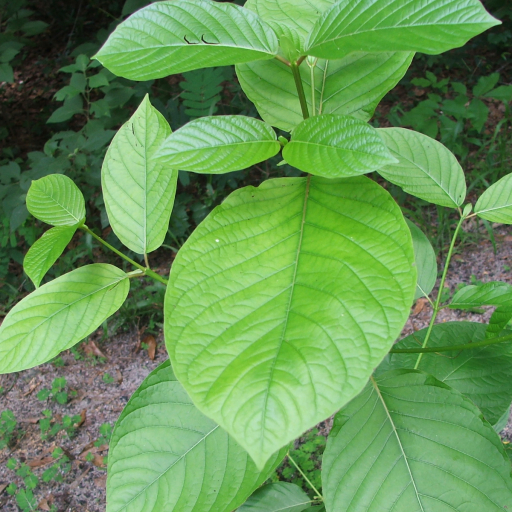
Plant Overview
Deep in the humidity-soaked rainforests of Southeast Asia, the Mitragyna speciosa—more commonly known as Kratom—reigns as a towering member of the coffee family. For centuries, its leaves have been woven into the local culture of Thailand and Indonesia, used by laborers to stave off fatigue. While it has gained global fame (and sparked significant debate) for its complex chemistry, it remains a lush, tropical evergreen with a commanding presence.
🔍 How to Identify
- 🍃 Glossy Foliage: The leaves are broad, ovate, and a deep, waxy green. They can grow surprisingly large, often reaching over 7 inches in length.
- 🎋 Distinct Veining: A key identifying feature is the prominent venation. Depending on the age of the leaf and the specific variety, these veins can appear creamy white, pale green, or even a deep, sunset red.
- 🌼 Globular Blooms: Unlike the delicate flowers of many houseplants, Kratom produces small, yellow, ball-shaped clusters of flowers that hang from the branch tips like golden ornaments.
🏡 In Your Garden
- 🌡️ Tropical Requirements: Because it is a true rainforest native, this tree is not a "set it and forget it" plant for most. It craves intense humidity and consistently warm temperatures; even a light frost can be fatal.
- 🪴 Growth Potential: While often sold as small seedlings, don't be fooled—in its natural habitat, Mitragyna speciosa can reach heights of 50 to 80 feet. If you are growing one in a pot, it requires frequent pruning and a very rich, nitrogen-heavy soil to mimic the forest floor.
⚠️ Safety & Toxicity
- 🛑 Status: Psychoactive & Controversial: Kratom contains mitragynine, a compound that acts on opioid receptors. While used medicinally by some, it is unregulated in many regions and can lead to dependency or adverse reactions if ingested.
- 🐾 Pet & Child Safety: This plant should be kept strictly out of reach of pets and children. Ingestion of the leaves can cause sedation, tremors, or digestive upset in animals, and its legal status varies wildly by country and state.
✨ Fun Fact
☕ Family Ties: Despite its controversial reputation, Kratom is a direct botanical relative of Coffea arabica. That’s right—your morning cup of coffee and the Kratom tree are both members of the Rubiaceae family!

Detailed Care Instructions
Growing Mitragyna speciosa, also known as kratom, requires specific conditions and care. Here are some tips to help you grow the plant successfully:
- Obtain seeds or young plants: You can acquire Mitragyna speciosa seeds or seedlings from specialty nurseries, reputable online vendors, or from local growers.
- Climate requirements: Kratom plants thrive in tropical and subtropical climates. They prefer temperatures between 75-90°F (24-32°C). If you live in a colder region, you can grow the plant indoors or in a greenhouse.
- Choose the right soil: Mitragyna speciosa prefers well-draining soil with a pH level of 5.5-6.5. A mix of potting soil, perlite, and vermiculite is usually recommended.
- Planting: If you have seeds, germinate them in a germination tray filled with moist soil. Cover them lightly, ensuring they still receive some light. Once the seedlings develop a few leaves, transplant them into separate pots. If you have young plants, transplant them directly into pots.
- Light exposure: Mitragyna speciosa requires bright, indirect sunlight. Place the plants near a window or use artificial grow lights to provide adequate light for 10-12 hours a day.
- Watering: Keep the soil consistently moist but not waterlogged. Monitor the plant's water needs, adjusting the frequency of watering based on the drying rate of the soil.
- Humidity: Mitragyna speciosa requires high humidity levels. Using a humidifier or placing a tray filled with water near the plant can help maintain a humid environment.
- Fertilizing: Fertilize the plants with a balanced fertilizer every two weeks during the growing season (spring and summer). A 10-10-10 NPK ratio is commonly used.
- Pruning: Regularly prune the plant to encourage bushier growth. Pinch off the top growth or cut back any leggy stems.
- Pests and diseases: Inspect the plant regularly for pests such as aphids, spider mites, or scale insects. If found, treat them with appropriate insecticidal soap or neem oil. Keep an eye out for any signs of fungal diseases and provide good air circulation to prevent issues.
Remember that growing Mitragyna speciosa requires patience and careful attention to the plant's needs. It can take several years for the plant to reach maturity and produce leaves suitable for harvesting.

Place in a window with dappled sun or a spot in the middle of a room. Or directly in a window facing west or east.
To properly hydrate the Mitragyna Speciosa plant, it is essential to understand the amount of water it requires. One major factor to consider is the size of the plant; a smaller plant will require less water than a larger one. Additionally, the type of soil and the humidity level of the plant's environment can affect its hydration needs.
When watering the plant, it is crucial to avoid overwatering it as this can cause root rot and lead to the plant's death. A good rule of thumb is to wait until the topsoil is dry before watering the plant. It is also important to pay attention to the drainage of the soil; if the soil is not draining correctly, the plant may become waterlogged.
To water the plant correctly, use a small watering can or a spray bottle to moisten the soil evenly. Do not pour water on the plant's leaves or stem as this can cause damage and promote the growth of harmful bacteria.
Overall, caring for the hydration needs of Mitragyna Speciosa plant requires careful attention and a balanced approach to watering. By taking the necessary precautions and monitoring the plant's moisture levels, it is possible to keep it healthy and thriving.
- Use a balanced fertilizer: Choose a fertilizer that has equal proportions of nitrogen, phosphorus, and potassium. This will help ensure that the plant gets all the nutrients it needs.
- Apply fertilizer sparingly: It's important not to over-fertilize your plant, as this can lead to nutrient burn. Apply small amounts of fertilizer every 4-6 weeks.
- Water your plant before fertilizing: Make sure your plant is well-hydrated before adding any fertilizer, as this will help prevent the fertilizer from burning the roots.
- Use organic fertilizers: Organic fertilizers are a great option for Mitragyna Speciosa plants, as they release nutrients slowly and are less likely to burn the roots.
- Follow the instructions on the fertilizer package: Be sure to read the instructions on the fertilizer package and follow them carefully. Over-fertilizing or using the wrong type of fertilizer can harm your plant.
- Monitor your plant's growth: Pay attention to your plant's growth and adjust your fertilization schedule as needed. If the plant seems to be growing slowly, you may need to fertilize more frequently. If it's growing too quickly, you may need to cut back on fertilization.
The ideal type of soil for the Mitragyna Speciosa plant would be a well-draining, loose soil mix with a pH range of around 5.5-6.5. It should consist of a blend of organic and inorganic materials to provide ample nutrients and support root growth, such as perlite, vermiculite, peat moss, and sand. The soil should also be rich in nitrogen, phosphorus, and potassium, which can be achieved through the use of organic fertilizers such as worm castings and bat guano. It is important to avoid using soils that are heavy or compacted, as this can result in poor water drainage and root rot. Additionally, the soil should be free from harmful pathogens and pests, so it is recommended to sterilize the soil before planting the Mitragyna Speciosa plant.
Mitragyna Speciosa can be propagated through different methods such as seed propagation or stem cutting.
The process of seed propagation involves collecting fresh seeds from the matured plant and drying them off. Once dried, the seeds can be stored in airtight containers and kept in cool and dry places. Before planting the seeds, they should be soaked in water for a few hours to enhance the germination process. Once soaked, the seeds can be planted in a well-drained soil mix and placed in a warm and humid location.
Another method of propagating Mitragyna Speciosa is through stem cutting. The stem cuttings should be collected from matured plants around four to six inches long with a few leaves attached. The lower leaves should be removed to avoid any fungal or bacterial infections. The cuttings should be placed in well-draining soil mix and kept moist. The cuttings should be placed in a shaded area, away from direct sunlight.
The stem cuttings should begin rooting in a few weeks and can be repotted into larger pots after they show signs of growth. It is important to ensure that the soil is kept moist as the plant establishes its root system. Once the plant has grown to a certain size, it can be transplanted outdoors or into a larger pot.
Propagation of Mitragyna Speciosa requires patience and a little care, but if done correctly, it can be an enjoyable experience.








