Plant Overview
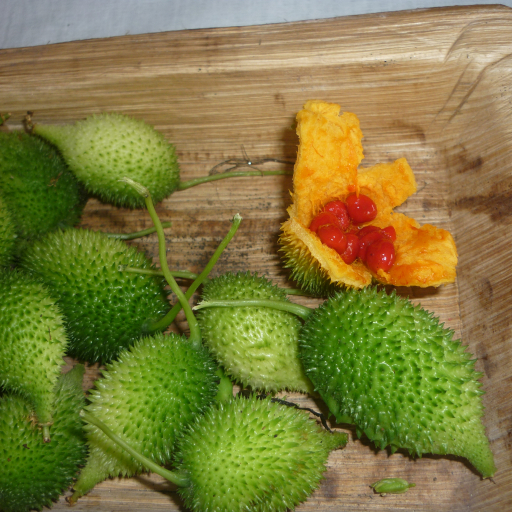
Commonly known as the Spiny Gourd or Kantola, this tiny powerhouse is a beloved staple in South Asian monsoon cooking. While it looks like a miniature, prickly green balloon, it is actually a distant, much milder relative of the bitter melon. In many cultures, it is hailed as a "superfood" due to its high protein content and medicinal properties, often found climbing wild over forest edges and garden fences.
🔍 How to Identify
- 🍃 Heart-Shaped Leaves: The foliage consists of bright green, deeply lobed or heart-shaped leaves that grow alternately along a slender, climbing vine.
- 🎾 Prickly Fruit: The most distinct feature is the small, oval fruit, which is covered in soft, non-stinging green spines that give it a fuzzy or "teasle" appearance.
- 🌼 Pale Yellow Blooms: It produces delicate, butter-yellow flowers with five petals; because the plant is dioecious, you will see distinct male and female flowers on separate plants.
🏡 In Your Garden
- 🧗 The Need to Climb: As a vigorous vine, the Spiny Gourd uses curly tendrils to hitchhike onto anything nearby. If you grow it at home, a sturdy trellis or chain-link fence is essential to keep the fruit off the ground and prevent rot.
- 🍠 Perennial Tubers: Unlike common cucumbers, this plant grows from a perennial tuberous root. Even if the vine dies back during a cold or dry snap, the "underground heart" stays alive, ready to sprout again as soon as the rains return.
⚠️ Safety & Toxicity
- ✅ Status: Generally safe and highly edible.
- 🐾 Pet Watch: While the cooked fruit is a nutritious vegetable for humans, the raw vines and roots contain mild bitter compounds (cucurbitacins) that can cause minor stomach upset in curious cats or dogs if chewed in large quantities.
✨ Fun Fact
In some regions of India, the Spiny Gourd is nicknamed the "King of Gourds" because it contains roughly 4-5 times more protein than a standard cucumber or watermelon!

Detailed Care Instructions
To grow Momordica dioica, also known as spiny gourd or teasel gourd, you can follow the steps below:
- Obtaining Seeds: Purchase Momordica dioica seeds from a reputable seed supplier or seek out local nurseries that specialize in unique or exotic plants.
- Germination: Soak the seeds overnight in water to enhance germination. Alternatively, lightly scar the seed coat with sandpaper to break the dormancy. This will help the seeds absorb water and sprout faster.
- Potting Mixture: Fill a seed tray or small pots with a well-draining potting soil mixture. A mix of peat moss, perlite, and sand will do well to promote healthy root growth.
- Planting: Sow the seeds about half an inch deep into the potting mixture. Gently water the soil to keep it moist but not waterlogged.
- Positioning: Choose a sunny location for your pots or seed tray. Provide the plant with at least 6-8 hours of direct sunlight per day.
- Temperature and Humidity: Momordica dioica prefers warm and tropical climates. Maintain temperatures of 70-85°F (21-29°C). A humidity level of around 60-70% is ideal.
- Watering: Water the seedlings regularly, keeping the soil consistently moist but not soggy. Ensure proper drainage to prevent waterlogging, which can lead to root rot.
- Transplanting: Once the seedlings have developed a couple of true leaves, they can be transplanted into larger pots or into a garden bed if the weather is suitable. Maintain a spacing of about 2-3 feet between plants.
- Support: Since Momordica dioica is a climbing vine, provide a trellis or some form of support for the plant to climb on.
- Fertilization: Apply a balanced, slow-release fertilizer according to the package instructions once the plant has established itself. Additionally, regular applications of organic compost can help promote healthy growth.
- Pruning and Maintenance: Regularly trim back excessive growth to maintain the size and shape of the plant. Pruning also promotes better air circulation and can help prevent diseases.
- Harvesting: Harvest the spiny gourds when they are fully mature but still tender. They are typically ready to be picked within 60-70 days after planting. Use gardening shears to cut the gourd from the vine.
Remember to consult local gardening resources and adapt these steps to your specific climate and conditions.
To water this plant, you should ensure that the soil is evenly moist, but not soaked. It is best to water deeply, allowing the water to penetrate the soil at least an inch or two. However, you should avoid watering too frequently, as this can lead to root rot. The plant prefers well-draining soil, so be sure to allow excess water to drain out of the bottom of the pot. As the plant grows, you may need to adjust your watering schedule to ensure that it is getting enough water to support its growth.
To fertilize this plant, use a balanced fertilizer in the ratio of 10:10:10. Apply the fertilizer to the soil around the plant, avoiding getting any on the leaves or stem. Water the plant thoroughly after fertilizing. Repeat the fertilization every 4-6 weeks during the growing season.
Momordica dioica plants prefer well-draining soil with a slightly acidic to neutral pH level. A mix of sand, perlite, and peat moss is recommended for optimal growth. Adding compost or organic matter can also help improve soil structure and nutrient content. It is important to avoid heavy or compacted soils that can lead to root rot. Additionally, ensuring proper moisture levels and good aeration in the soil will help promote healthy growth of the Momordica dioica plant.
Propagating the Momordica Dioica plant can be done through seeds or stem cuttings. To propagate via seeds, first, collect the seeds from ripe fruits. Soak them overnight in warm water to soften the hard seed coat. Sow the seeds in pots filled with a mixture of sand, compost, and garden soil. Water regularly and keep them in a warm, humid place until the seedlings emerge. Once the seedlings are established, they can be transplanted into the garden or larger containers.
To propagate via stem cuttings, choose a healthy stem from a mature plant, about six inches long. Remove the leaves from the bottom half of the stem, and dip the cut end in rooting hormone powder. Plant the cutting in a pot filled with a well-draining mix of soil, sand, and compost. Water well and cover the pot with a plastic bag to create a humid environment. Keep the pot in bright, indirect sunlight until roots develop and new leaves appear. Once the new plant is established, it can be transplanted into the garden or larger containers.








