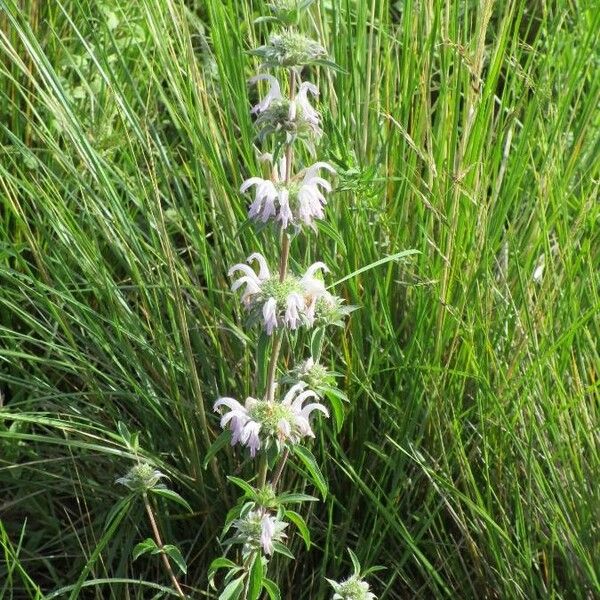
Plant Overview
Known as the "Pony Beebalm" or "Plains Beebalm," this aromatic wildflower is a rugged beauty native to the sun-drenched plains and deserts of North America. Often found dancing in the breeze of the Southwest, it is a favorite of both pioneers and pollinators alike. Its distinct, tiered flower structure looks like something out of a botanical fantasy novel, earning it a spot in many drought-resistant "xeriscape" gardens.
🔍 How to Identify
- 🗼 The Pagoda Shape: The flowers grow in unique, stacked clusters (whorls) along the upper stem, creating a tiered look that resembles a miniature green and purple pagoda.
- 🐆 Spotted Petals: Look closely at the delicate tubular flowers; they are usually white to pale pink and decorated with tiny, intricate purple spots.
- 🌿 Square Stems: As a member of the mint family, it features the classic four-sided stem that feels distinctly square when rolled between your fingers.
- 👃 Aromatic Leaves: The narrow, lance-shaped leaves release a spicy, oregano-like fragrance when bruised or crushed.
🏡 In Your Garden
- 🌵 Thirst for Sun: Unlike its moisture-loving cousin (Scarlet Bee Balm), the Pony Beebalm thrives in dry, sandy, or rocky soils. It is incredibly drought-tolerant once established and actually prefers "neglect" over being overwatered.
- 🦋 The Pollinator Party: It is a high-value nectar plant. If you plant this, expect a steady parade of hummingbirds, hawkmoths, and native bees who are specifically adapted to reach into its deep tubular blooms.
⚠️ Safety & Toxicity
- ✅ Generally Safe: Monarda pectinata is not considered toxic to humans or common household pets like cats and dogs.
- 🍵 Essential Oils: While the leaves are often used in herbal teas (similar to "Oswego Tea"), the essential oils (thymol) are very concentrated. Sensitive individuals or small pets might experience mild stomach upset if they consume a large quantity of the raw foliage.
✨ Fun Fact
Early settlers and Indigenous tribes didn't just admire this plant for its beauty; they used it as a culinary spice. Because of its high thymol content, the dried leaves taste remarkably like a blend of oregano and thyme, earning it the nickname "Wild Oregano" in some regions!

Detailed Care Instructions
To grow Monarda Pectinata, also known as the Spotted Bee Balm or Horsemint, follow these steps:
- Select a suitable location: Choose a spot in your garden that receives full sun to partial shade. Monarda Pectinata prefers well-draining soil.
- Prepare the soil: Before planting, work the soil to remove any weeds or grass. Add organic matter such as compost or aged manure to improve soil fertility and drainage.
- Planting: Dig a hole slightly larger than the root ball of the plant. Place the Monarda Pectinata in the hole and backfill it with soil, gently firming it around the plant. Space the plants about 12-18 inches apart to allow for sufficient growth and airflow.
- Watering: Water the plant immediately after planting and keep the soil consistently moist but not soggy until it establishes. Once established, Monarda Pectinata tolerates drought but performs best with regular watering during dry spells.
- Mulching: Apply a layer of organic mulch, such as straw or wood chips, around the plant to conserve moisture and suppress weed growth. Avoid placing mulch directly against the stems to prevent rotting.
- Fertilizing: Monarda Pectinata typically does not require heavy fertilization. However, if the soil is poor, you can add a slow-release, balanced fertilizer once or twice a year in spring or early summer.
- Pruning: After blooming, you can deadhead the flowers to encourage continuous blooming. In late fall or early spring, you can trim back the stems to about 6 inches from the ground to promote better growth and prevent overcrowding.
- Pest and disease control: Monarda Pectinata is generally resistant to pests and diseases. However, keeping the leaves dry and providing good air circulation helps prevent powdery mildew.
- Propagation: You can propagate Monarda Pectinata from seeds or by dividing established plants. It is best to collect seeds in the fall and sow them directly in the garden or start them indoors. Divide crowded clumps every few years in early spring.
- Enjoy the beauty and benefits: Monarda Pectinata attracts bees, butterflies, and hummingbirds to your garden, making it both visually appealing and beneficial for pollinators. Enjoy the lovely flowers and aromatic foliage.
Watering this particular plant requires some attention to detail. The best approach is to aim for a consistent moisture level in the soil without overwatering. This can be done by checking the soil moisture regularly and watering as necessary. When watering, make sure to avoid getting the leaves wet and water the soil only. It is also important to be mindful of the amount of watering done during dry spells or hot summers as the plant may require more water. The best time to water is early in the morning or in the evening to avoid excessive evaporation.
To fertilize the Monarda Pectinata plant, you should apply a balanced fertilizer with a ratio of 10-10-10 or 20-20-20 once per month during the growing season, which is typically from spring to fall. Make sure to water the plant thoroughly before fertilizing and apply the fertilizer according to the package instructions. Do not over-fertilize as this can cause the plant to become weak and susceptible to disease. Additionally, you can also add compost or organic matter to the soil around the plant to help provide nutrients.
Monarda Pectinata plant prefers a well-draining soil that is slightly acidic to neutral. The soil should be moist but not waterlogged, as the plant does not tolerate wet feet. A rich, fertile soil with plenty of organic matter is also beneficial, but the plant is adaptable and can tolerate a range of soil types. It is recommended to add a layer of organic mulch around the base of the plant to help retain moisture and suppress weeds. Overall, the key to successful growth and blooming of the plant is to ensure that the soil is well-draining and amended with organic matter.
Monarda Pectinata is a herbaceous perennial plant that is relatively easy to propagate. The plant can be propagated using several methods, including cuttings, seed sowing, and division.
Propagation by Cuttings:
- Choose a healthy stem with several leaves growing from it.
- Cut the stem about 3-4 inches below the leaf node.
- Remove the lower leaves and flowers from the stem.
- Dip the cut end of the stem in rooting hormone powder to encourage root growth.
- Plant the stem in a pot filled with a mixture of soil and sand.
- Keep the pot in a warm, humid place and mist the cuttings regularly.
- Keep the soil moist and wait for the cuttings to develop roots. This should take about 4-6 weeks.
- Once the cuttings have rooted, they can be transplanted to their permanent location.
Propagation by Seed Sowing: - Collect seeds from the mature Monarda Pectinata plant.
- Plant the seeds in a pot filled with soil and sand mixture.
- Water the pot and keep it in a warm, well-lit place.
- Wait for the seeds to germinate and grow into seedlings, which should take around 2-3 weeks.
- Once the seedlings are in their permanent location, make sure they are well-watered and receive plenty of sunlight.
Propagation by Division: - Wait until the Monarda Pectinata plant has matured and is well-established.
- Dig up the plant and carefully separate the root ball into smaller sections.
- Each section should have some roots and a few stems.
- Soil and sand mixture should be prepared.
- Transplant each section into a pot filled with soil and sand mixture and water thoroughly.
- Keep the new plants in a warm, well-lit place and water them regularly.
- Once the new plants have grown and are established, they can be transplanted to their permanent location.








