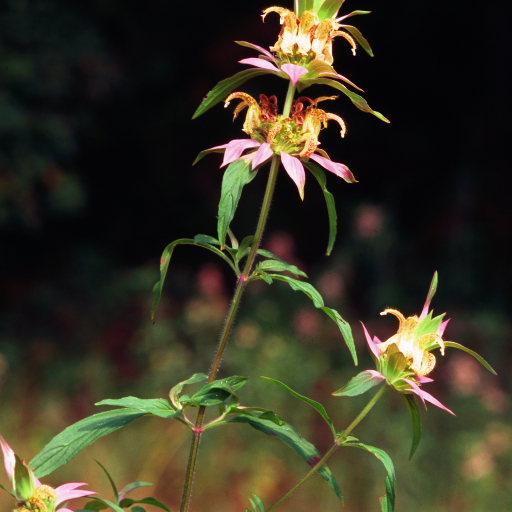
Plant Overview
Known as the Spotted Bee Balm or "Horsemint," this isn't your average garden flower. It looks like something designed by a surrealist artist, featuring stacked "pagodas" of spotted yellow blooms framed by blushing pinkish-purple leaves. Native to North American prairies, it was historically prized by Indigenous peoples for its potent medicinal oils.
🔍 How to Identify
- 🎨 The Blooms: Small, tubular yellow flowers heavily speckled with maroon or purple spots, growing in distinct circular clusters along the stem.
- 🌸 Showy Bracts: Large, leaf-like bracts sit directly under the flower clusters, turning a stunning shade of lavender-pink or creamy white as they mature.
- 🍃 Aromatic Foliage: Lance-shaped, serrated green leaves that release a powerful, spicy scent similar to oregano or thyme when crushed.
🏡 In Your Garden
- 🏜️ Drainage is Key: Unlike its cousin Monarda didyma (which loves moisture), the Spotted Bee Balm thrives in sandy, well-draining soil and is surprisingly drought-tolerant once established.
- 🐝 Pollinator Party: This plant is a powerhouse for biodiversity. It is the primary nectar source for the endangered Rusty Patched Bumble Bee and attracts beneficial "gentle" wasps that help control garden pests.
- ✂️ Growth Habit: It has a somewhat "wild" look and can be short-lived, but it readily re-seeds itself, ensuring a fresh colony of funky flowers year after year.
⚠️ Safety & Toxicity
- ✅ Status: Generally non-toxic to humans and pets.
- 🌿 Details: While safe, the plant contains high levels of thymol. While this makes it a great antiseptic, it can be slightly irritating to the skin of sensitive individuals if handled excessively. It is technically edible and often used in herbal teas.
✨ Fun Fact
- 🧪 Nature's Listerine: Monarda punctata contains a higher concentration of thymol—the active antiseptic ingredient in commercial mouthwash—than even the herb Thyme itself! In the early 20th century, it was grown commercially in the U.S. specifically to extract this compound.

Detailed Care Instructions
| Color | Pink, Yellow, Purple |
| Soil Ph | Neutral |
| Humidity | Normal |
| Lighting | Full Sun |
| Toxicity | Non-Toxic |
| Soil Type | Loamy, Sandy, Silt, Well-Drained |
| Bloom Time | Summer |
| Difficulty | Easy |
| Plant Type | Herbaceous, Perennial |
| Hibernation | Cold Period |
| Mature Size | 18 In.-3 Ft. Tall, 12-18 In. Wide |
| Native Area | North America |
| Sun Exposure | Full Sun |
| Hardiness Zones | 3-8 |
To grow Monarda punctata (Spotted Bee Balm), here are the steps you can follow:
- Choose a suitable location: Monarda punctata prefers full sun to light shade. Select a site with well-draining soil, as these plants do not tolerate wet feet.
- Prep the soil: Before planting, prepare the soil by removing any weeds, rocks, or debris. Loosen the soil to a depth of about 6-8 inches and amend it with organic matter, such as compost, to improve its fertility and drainage.
- Plant the seeds or seedlings: Monarda punctata can be grown from seeds or seedlings. Sow the seeds in early spring or fall, as they require a stratification period for better germination. Gently press the seeds into the soil or cover them with a thin layer of soil. If using seedlings, dig a hole slightly larger than the root ball and place the plant, making sure to space them about 12-18 inches apart.
- Watering: Keep the soil evenly moist but not soggy. Water the plant regularly, especially during dry periods. Monitor the moisture levels of the soil and adjust watering accordingly, ensuring it doesn't become waterlogged.
- Mulch: Apply a layer of organic mulch, such as straw or wood chips, around the base of the plant. Mulching helps to conserve moisture, suppresses weed growth, and insulates the roots during extreme temperatures.
- Fertilization: Monarda punctata usually doesn't require heavy fertilization. Apply a balanced slow-release fertilizer in early spring or side dress the plant with compost to provide essential nutrients.
- Pruning: Deadhead the spent flowers to promote continuous blooming and prevent self-seeding. Cut back the plant to the ground in late fall or early spring to stimulate fresh growth.
- Pests and diseases: Monarda punctata is generally resistant to many pests and diseases, but occasional issues may arise. Watch out for powdery mildew, spider mites, and leaf-spotted horsemint beetles. Treat any infestations or diseases promptly using organic methods if necessary.
- Propagation: Monarda punctata can also be propagated through division. Every few years, in early spring or fall, carefully dig out clumps of the plant and divide them into smaller sections with roots, then replant them individually.
By following these steps, you should be able to successfully grow Monarda punctata in your garden. Remember to consult local gardening resources or a nursery for specific care recommendations based on your region's climate conditions.

Place in a bright room that is sun drenched almost all day. Or directly in a south-facing window.

To water this plant, a daily watering routine is not required, as overwatering can cause the roots to rot. Instead, it is recommended to wait until the top inch of soil feels dry to the touch before watering. When it is time to water, make sure to thoroughly saturate the soil around the plant's base, ensuring that the water reaches the roots. Avoid getting water on the plant's stems and leaves, as this can lead to disease. It is also important to note that this plant prefers well-draining soil, so avoid allowing it to sit in standing water.
To fertilize this particular plant, you should use a balanced fertilizer with equal portions of nitrogen, phosphorus, and potassium. Apply the fertilizer in early spring just as new growth begins to emerge. Then, you should provide another application right before the peak growth period during the early summer. Be sure to water the plant thoroughly before and after fertilization to ensure the nutrients are well distributed. Additionally, avoid over-fertilizing, as it can lead to excessive growth and weaken the plant's structure.
Monarda punctata prefers a well-drained soil that is rich in organic matter. The soil pH should be slightly acidic to neutral, typically between 5.5 and 7.5. Sandy soils may require additional amendments to improve water and nutrient retention. The plant benefits from occasional fertilization with a balanced, slow-release fertilizer during the growing season. Mulching around the plant can help retain soil moisture and reduce competition from weeds. It is important to avoid overwatering, as this can lead to root rot and other issues.
Monarda Punctata is a plant that can be propagated through seed or division. To propagate through seed, collect ripe seeds from the plant and sow them in a propagation tray filled with well-draining soil. Keep the tray in a warm, bright location and ensure the soil stays moist. The seeds should germinate within 2-3 weeks.
To propagate through division, dig up the plant and separate the root clumps. Each new clump should have at least one healthy stem and root system. Replant the new clumps in a well-draining soil and keep them well-watered until they establish in their new location.
Both methods of propagation should be done in the spring or fall when the plant is dormant. It is recommended to propagate Monarda Punctata every 2-3 years to maintain its health and vigor.
Common pests of the spotted beebalm include Aphids, larvae. Make a habit of checking your spotted beebalm frequently for pests so that any infestations can be caught and managed early.








