Plant Overview
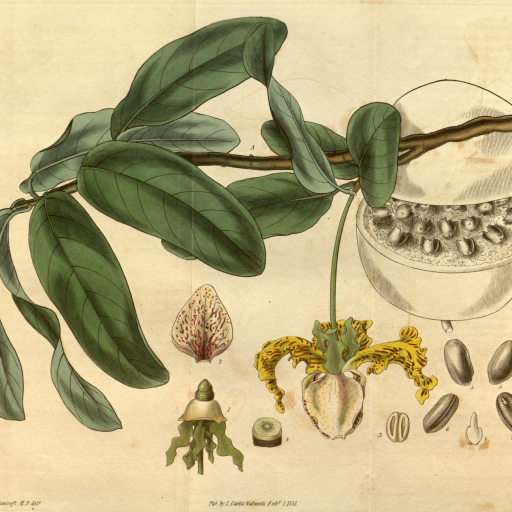
Often called the Calabash Nutmeg or the Orchid Nutmeg Tree, this African native is one of the most visually stunning tropical trees in existence. While its seeds are famous across West Africa as a fragrant, peppery spice, it is the tree's spectacular, dangling flowers that truly capture the imagination. In many cultures, the aromatic seeds were traditionally carried as amulets to ward off negative energy and provide protection to travelers.
🔍 How to Identify
- 🌸 The Showstopper Flowers: The blossoms hang downward on long, slender stalks. They feature incredibly wavy, crinkled petals colored in creamy yellow with intricate reddish-purple splashes, making them look like exotic, hanging orchids.
- 🍃 Lush Foliage: The leaves are large, oblong, and glossy, often reaching up to 18 inches in length. They create a dense, deep green canopy that provides excellent shade in tropical climates.
- 🌰 The "Calabash" Fruit: The tree produces heavy, perfectly round, woody fruits that resemble small green pumpkins or gourds. Inside, dozens of aromatic seeds are embedded in a fragrant pulp.
🏡 In Your Garden
- 🌳 Deep Roots: As a large tropical tree, it develops a significant taproot. If you are lucky enough to grow one from a seedling, it is vital to plant it in its permanent location early; it absolutely "hates" being moved once established and may go into shock if transplanted.
- 💧 Tropical Requirements: Coming from the rainforests of West and Central Africa, this plant thrives in high humidity and rich, well-draining soil. It is not a fan of dry indoor air, so it performs best in large conservatories or humid, frost-free outdoor gardens.
⚠️ Safety & Toxicity
- 🍽️ Edible Spice: The seeds are widely used as a culinary spice, similar to common nutmeg. They are safe for human consumption when used in typical seasoning quantities.
- 🐾 Pet Caution: While not classified as highly toxic, the high concentration of essential oils in the seeds can cause stomach upset, drooling, or lethargy in cats and dogs if chewed. It is best to keep the fallen fruits away from curious pets.
✨ Fun Fact
Despite its name and its almost identical scent to the spice we put in eggnog, the Calabash Nutmeg is not actually related to the common Nutmeg (Myristica fragrans)! They belong to completely different botanical families, making this a perfect example of "convergent evolution" in the world of flavors.

Detailed Care Instructions
To grow a Monodora Myristica plant, follow these steps:
- Seed Selection: Obtain fresh seeds from a reputable source. Monodora Myristica seeds are often available online or in specialized plant nurseries.
- Soil Preparation: Prepare a well-draining soil mix. Use a blend of equal parts garden soil, compost, and sand. Fill a pot or seed tray with this soil mixture.
- Seed Sowing: Sow the Monodora Myristica seeds about 1 inch (2.5 cm) deep into the soil. Space the seeds a few inches apart to provide enough room for growth. Gently cover the seeds with soil and pat it down lightly.
- Germination: Place the pot or seed tray in a warm and humid location, as Monodora Myristica plants require warmth for successful germination. The ideal temperature for germination is around 80°F (27°C). Keep the soil consistently moist but not waterlogged.
- Light and Temperature: Once the seedlings emerge, provide them with bright, indirect sunlight. Monodora Myristica prefers a warm environment, so maintain a temperature of 70-85°F (21-29°C).
- Watering and Fertilization: Water the plants regularly, ensuring the soil remains evenly moist but not soggy. Avoid overwatering, as it can lead to root rot. Fertilize the plants every 2-3 weeks with a balanced liquid fertilizer, following the instructions on the label.
- Repotting: When the seedlings have developed several leaves and outgrow their initial container, transplant them into larger pots. Ensure the new container has good drainage to prevent waterlogged roots.
- Pruning: As the plant grows, you can trim and shape it as desired. Pruning helps maintain an attractive shape and encourages better branching.
- Pollination: Monodora Myristica plants typically require hand-pollination. Use a small brush to transfer pollen from the stamen (male part of the flower) to the pistil (female part) when the flowers are receptive. This can help ensure successful fruit development.
- Harvesting: Monodora Myristica plants produce large woody fruits that contain aromatic seeds. Harvest when the fruit turns yellow or brown, indicating ripeness. Allow the fruit to fully mature and dry out before opening it to extract the seeds.
Remember, growing Monodora Myristica plants can be a long process, and it may take several years for the plant to produce fruits. Patience and consistent care are key to successful growth.
To water the Monodora Myristica plant effectively without mentioning its common names, follow these steps:
- Understanding the plant's watering needs: Monodora Myristica plants prefer moist but well-draining soil. They do not tolerate waterlogged conditions or consistently dry soil.
- Observe the soil moisture: Check the moisture level by inserting your finger about an inch into the soil. If it feels dry, it's time to water; if it is still moist, wait for a few more days before watering.
- Watering frequency: Depending on factors like temperature, humidity, and pot size, Monodora Myristica plants usually require watering once or twice a week. However, always prioritize the moisture level of the soil over a specific watering schedule.
- Watering technique: Use a watering can or a gentle spray nozzle to water the plant. Water the soil around the base of the plant instead of directly onto the leaves to avoid issues like fungal diseases or pests.
- Amount of water: Water the plant until you see the excess water coming out from the drainage holes of the pot. This ensures thorough watering and helps prevent waterlogging.
- Avoiding water stagnation: Discard any standing water from the saucer or tray beneath the pot after about 15-20 minutes. It's crucial to prevent the plant from sitting in water as it can lead to root rot.
- Adjusting watering during seasonal changes: Monitor the plant's water requirements closely during different seasons. In colder months, when the growth rate slows down, reduce the watering frequency slightly. In warmer months or if the plant is placed in a heated room, you may need to increase watering frequency.
Remember that the watering needs may slightly vary based on individual plant conditions and environmental factors. Therefore, always keep an eye on the plant's response to the watering routine and make necessary adjustments.
To fertilize your Monodora Myristica plant, follow these instructions:
- Choose a well-balanced fertilizer: Look for a fertilizer labeled as a balanced or all-purpose fertilizer, often with an N-P-K ratio of 10-10-10 or similar.
- Dilute the fertilizer: Mix the fertilizer with water according to the package instructions. It is usually recommended to dilute it to half or quarter strength to avoid overfeeding the plant.
- Water the plant: Before applying the fertilizer, thoroughly water the soil around the plant to ensure it is moist.
- Apply the fertilizer: Pour the diluted fertilizer mixture onto the soil around the base of the plant, avoiding the leaves. Take care not to overfertilize as it can harm the plant.
- Repeat fertilization: Fertilize your Monodora Myristica plant every 4-6 weeks during the active growing season, which is typically spring and summer. Reduce or stop fertilization during the plant's dormant period in fall and winter.
- Monitor the plant: Keep an eye on the plant for any signs of nutrient deficiencies or excesses. Adjust the fertilization frequency or strength if necessary.
Remember, it is always recommended to follow the specific instructions provided by the manufacturer of your chosen fertilizer.
Monodora Myristica, commonly known as the Calabash Nutmeg or Jamaican Nutmeg, is a tropical evergreen tree that belongs to the Annonaceae family. When it comes to the ideal soil conditions for this plant, you should consider the following factors:
- Well-Draining Soil: Monodora Myristica thrives in soil that has excellent drainage to prevent waterlogging. It is recommended to use a soil mixture that allows excess water to drain away freely, preventing root rot.
- pH Level: This plant prefers a slightly acidic to neutral soil pH ranging from 5.5 to 7.0. It is best to maintain the pH within this range to ensure optimal growth.
- Organic Matter: The addition of organic matter, such as compost or well-rotted manure, enhances the soil quality and fertility for Monodora Myristica. Organic matter improves moisture retention, promotes nutrient availability, and creates a favorable environment for root development.
- Moisture Retention: While well-draining soil is crucial, it is also important to ensure that the soil retains some moisture. Monodora Myristica appreciates evenly moist soil, but it should not be overly saturated. Soil that holds some water without becoming soggy is ideal.
- Nutrient Content: Like most plants, Monodora Myristica benefits from a nutrient-rich soil. You can incorporate slow-release fertilizers or organic amendments when preparing the soil to provide a steady supply of essential nutrients.
- Loamy Texture: Loam, a soil texture that consists of an equal mix of sand, silt, and clay, is generally suitable for Monodora Myristica. This balanced texture allows for good drainage, moisture retention, and proper aeration for the plant's root system.
- Avoid Compacted Soil: Compact and heavy soils with poor aeration can hinder the growth and development of Monodora Myristica. It is important to avoid using such soil types and instead focus on using loose and well-aerated soil.
Keep in mind that providing the right soil conditions is just one aspect of successfully cultivating Monodora Myristica. It is equally important to consider other factors like temperature, humidity, light requirements, and regular care to ensure a healthy and thriving plant.
To propagate the Monodora Myristica plant, follow these steps:
- Select a healthy and mature Monodora Myristica plant from which you can take cuttings. Ensure that the plant is disease-free and has no visible signs of stress or damage.
- Prepare a clean and sharp pair of pruning shears or a knife. Sterilize the cutting tool by wiping it with rubbing alcohol or dipping it in a solution of one-part bleach and nine parts water. This will help prevent the spread of any pathogens.
- Choose a suitable branch from the Monodora Myristica plant for your cutting. Look for a branch that is at least six inches long and has several healthy leaves. Avoid selecting branches with flowers or fruits, as they may hinder the rooting process.
- Make a clean cut just below a leaf node on the chosen branch. A leaf node is where a leaf attaches to the stem. Aim for a diagonal cut that exposes as much surface area as possible for root development.
- Remove the lower leaves from the cutting, leaving a few at the tip. This will reduce water loss and redirect energy towards root growth.
- If desired, you can dip the cut end of the cutting in a rooting hormone powder or gel. This step is optional but can encourage faster root development.
- Prepare a pot or container with a well-draining rooting medium. A mix of equal parts perlite and peat moss or a commercial seed-starting mix can work well. Moisten the rooting medium until it feels evenly damp but not soggy.
- Create a small hole in the rooting medium using your finger or a pencil. Gently place the cutting into the hole, ensuring that at least two nodes are buried in the soil and the remaining leaves are above the surface.
- Provide the cutting with a warm and humid environment to promote successful rooting. Cover the pot with a clear plastic bag or place it in a propagator to create a mini greenhouse effect. This will help maintain moisture and warmth around the cutting.
- Place the pot in a location with bright, indirect light. Avoid direct sunlight, as it can scorch the cutting. A warm indoor temperature between 70-80°F (21-27°C) is ideal for root development.
- Check the cutting regularly for signs of rooting. After a few weeks, gently tug on the cutting to feel for resistance, indicating the development of roots. Be patient, as it may take several weeks or even months for the cutting to establish roots.
- Once the cutting has developed a healthy root system, you can gradually acclimate it to outdoor conditions if desired. Transplant it into a larger pot or directly into a prepared garden bed with well-draining soil.
By following these propagation steps, you can grow new Monodora Myristica plants and expand your collection without relying on common names.








