Plant Overview
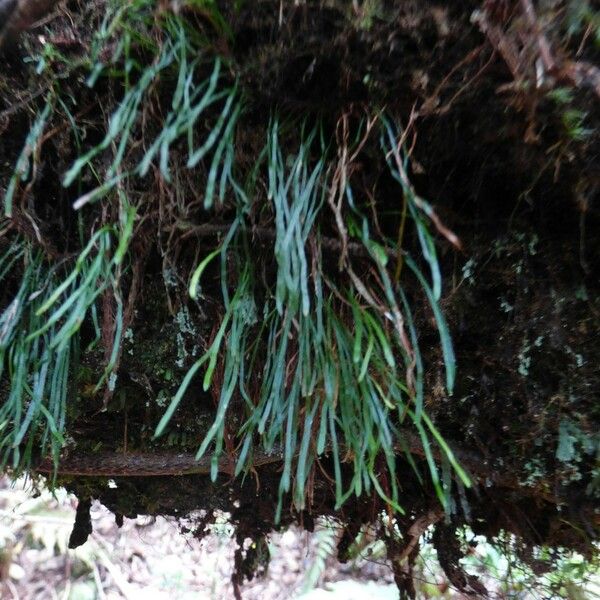
Often referred to as the "Grass Fern" or "Ribbon Fern," Monogramma graminea is a master of disguise. At first glance, you might mistake it for a stray tuft of lawn grass growing high up in a tree, but this botanical minimalist is actually a specialized fern. Found clinging to mossy branches in humid, tropical forests, it has traded the classic "lacey" fern look for a sleek, streamlined design that helps it thrive in the canopy.
🔍 How to Identify
- 🌿 The Fronds: Unlike typical ferns, these look like individual blades of dark green grass. They are incredibly narrow, often only a few millimeters wide, and can grow several inches long.
- 🧶 Growth Habit: It grows in dense, pendulous tufts. It doesn't have a central trunk; instead, it spreads via tiny, creeping rhizomes that anchor it firmly to bark or rock faces.
- 📏 Spore Placement: If you look closely at the underside or edges, you won’t see circular dots (sori) like on a Boston Fern. Instead, the spores are hidden in deep, protective grooves along the length of the blade.
🏡 In Your Garden
- ☁️ Humidity is Key: Because it is an epiphyte (a plant that grows on other plants), it draws much of its moisture from the air. In a home setting, it will struggle in dry air and prefers the misty environment of a closed terrarium or a high-humidity greenhouse.
- 🪵 Substrate Nuance: Do not plant this in heavy potting soil! It hates having "wet feet" in the traditional sense. It performs best when mounted on cork bark or tucked into a mix of live sphagnum moss and orchid bark, mimicking its natural home on a mossy tree limb.
⚠️ Safety & Toxicity
- ✅ Status: Generally considered non-toxic.
- 🐾 Details: Like most members of the fern family, Monogramma graminea is not known to be poisonous to cats, dogs, or humans. However, because its blades are thin and "grass-like," curious pets might be tempted to nibble on them, which can lead to mild digestive upset.
✨ Fun Fact
The name "Monogramma" comes from the Greek words for "single line," referring to the incredibly simple, single-veined appearance of the fronds. It is considered one of the most evolutionarily "reduced" ferns, having stripped away all the decorative frills of its ancestors to become a specialist in its niche.

Detailed Care Instructions








