Plant Overview
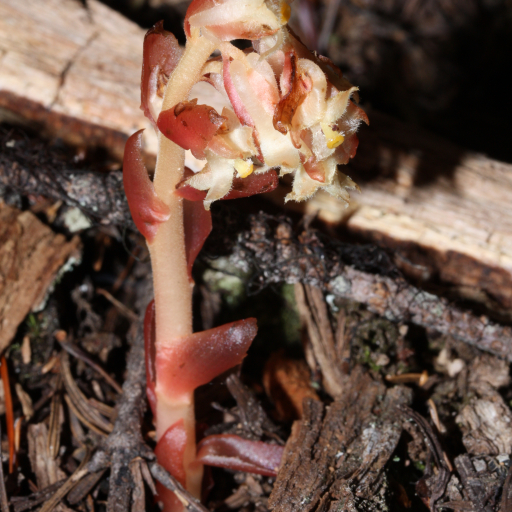
Often called the Pinesap or Yellow Bird’s Nest, this botanical oddity looks more like a waxy sculpture than a living plant. Lacking any green chlorophyll, it haunts the deep shade of ancient forests, surviving not on sunlight but through a complex underground heist. It is a "mycoheterotroph," a plant that lives in a secret, three-way partnership with fungi and trees to steal the nutrients it needs to survive.
🔍 How to Identify
- 🎨 The Color Palette: Unlike most plants, Pinesap is never green. It ranges from a ghostly cream and pale yellow to a deep, fleshy red, especially later in the season.
- 🔔 Clustered Blooms: It is easily distinguished from its cousin, the Ghost Pipe, because it carries a cluster of multiple bell-shaped flowers on a single stem, rather than just one.
- 🍂 Scaly Stems: Instead of broad leaves, the succulent stems are covered in small, translucent scales that feel slightly waxy or "fleshy" to the touch.
🌲 Habitat & Ecology
- 🍄 The Fungal Connection: You won't find this plant in a nursery because it is impossible to "garden." It relies entirely on a specific relationship with Tricholoma fungi and the roots of trees like Pine or Beech to get its energy.
- 🌑 Shadow Dweller: Because it doesn't need the sun for photosynthesis, it thrives in the darkest, leaf-littered corners of the forest floor where almost nothing else can grow.
⚠️ Safety & Toxicity
- 🚫 Status: Generally considered inedible. While some historical records mention medicinal uses by indigenous groups, it is not a food source and should not be consumed.
- 🤢 Potential Irritant: The plant contains glycosides (like gaultherin) which can cause digestive upset, nausea, or vomiting if ingested by humans or curious pets.
✨ Fun Fact
If you gently crush a piece of the stem, it often releases a surprising and pleasant scent of wintergreen or vanilla! This is due to the presence of methyl salicylate, the same compound found in wintergreen oil.

Detailed Care Instructions
| Humidity | High |
| Difficulty | Medium |
| Hibernation | Cold Period |
| Temperature | 25°C - 35°C |
| Hardiness Zones | 9 - 11 |
To grow Monotropa Hypopitys, also known as Ghost Pipe or Pine Drops, you will need to follow these steps:
- Find a suitable location: Ghost Pipe typically grows in shady and damp forests, often under pine or oak trees. It prefers acidic soil conditions, so make sure the location you choose has a pH level around 4.5-5.5.
- Collect seeds or rhizomes: You can collect seeds or rhizomes from existing Ghost Pipe plants in the wild. This can be done in late summer or early fall when they are ripe. Alternatively, you can purchase seeds or rhizomes from a reputable nursery or seed supplier.
- Prepare the soil: Ghost Pipe prefers loamy or sandy soil with good drainage. Clear away any debris or competing vegetation. If your soil is heavy clay, you may need to amend it with organic matter or sand to improve drainage.
- Planting seeds: If you have collected fresh seeds, sow them in the fall as they require a period of cold stratification for successful germination. Plant the seeds on the soil surface or lightly cover them with a thin layer of soil. Water gently to ensure the soil is evenly moist.
- Planting rhizomes: If you have acquired rhizomes, plant them in the early spring. Dig a hole large enough to accommodate the rhizome and gently place it in the hole, making sure the top is level with the soil surface. Fill the hole with soil, firming it gently around the rhizome. Water thoroughly to settle the soil.
- Watering and care: Ghost Pipe prefers evenly moist soil, so water regularly to keep the soil moist but not waterlogged. Mulching around the plant can help retain moisture and suppress weed growth. Avoid using chemical fertilizers as Ghost Pipe is a mycoheterotroph that obtains nutrients from a symbiotic association with mycorrhizal fungi.
- Patiently wait for growth: Ghost Pipe is a slow-growing plant, and it may take several years before you see any significant growth. Be patient and continue to provide the appropriate growing conditions.
- Protect from disturbance: Ghost Pipe is a delicate plant, so it's important to avoid disturbing the plant or its roots. Protect it from foot traffic, pets, and any activities that may damage the plant.
Remember that growing Ghost Pipe can be challenging due to its specific habitat requirements and slow growth. It may be more successful to admire and appreciate this unique plant in its natural woodland environment rather than attempting to cultivate it.
To water this plant, it is important to first consider its natural habitat and growing conditions. Monotropa Hypopitys is typically found in shady, forested areas with moist soil. As such, it requires regular watering to maintain healthy growth and development.
When watering, it is important to use room-temperature water, as cold water can shock the roots and hot water can scald them. The soil should be evenly moist, but not waterlogged, as this can lead to root rot. It is best to water from the bottom up, by placing the pot in a saucer of water and allowing the soil to soak up the moisture.
It is recommended to water this plant once or twice a week, depending on the humidity and temperature of the surrounding environment. In drier climates, more frequent watering may be necessary, while in more humid conditions, less frequent watering may be sufficient.
Overall, it is important to monitor the soil moisture level and adjust watering accordingly to ensure healthy growth and development of this unique plant.
To fertilize this plant, use a slow-release, all-purpose fertilizer during the growing season. Apply the fertilizer according to the manufacturer’s instructions, taking care not to over-fertilize. In general, fertilize the plant every 4 to 6 weeks during the growing season and refrain from fertilizing during the dormant season. Additionally, ensure that the soil around the plant remains moist but not waterlogged, as over-watering can cause fertilizer to leach out of the soil and harm the plant.
For Monotropa Hypopitys plant, it is recommended to use a soil that is rich in nutrients and well-draining. The soil should not be too heavy or compact, as this can lead to poor root development and drainage issues. It is best to use a soil that has a pH that is slightly acidic and a texture that is fluffy and loose. Organic matter should also be added to the soil to provide the plant with additional nutrients and moisture retention. Additionally, the soil should be kept consistently moist but not overly saturated. It is also important to ensure that the soil is not too hot or too cold, as this can also affect the growth and development of the plant.
The most effective way to propagate this plant is by division. To perform this process, carefully dig up the clump of roots and separate them into smaller sections. Each section should have at least a few root stems and some healthy foliage. Plant these sections in well-draining soil, making sure to keep them moist. Another way to propagate this plant is by using cuttings. Take cuttings of healthy stems and place them in rooting hormone. Once roots have formed, plant the cuttings in the soil. It is important to note that this plant is parasitic, meaning it relies on other plants for nutrients. When propagating, make sure to plant it near a host plant that it can attach itself to.








