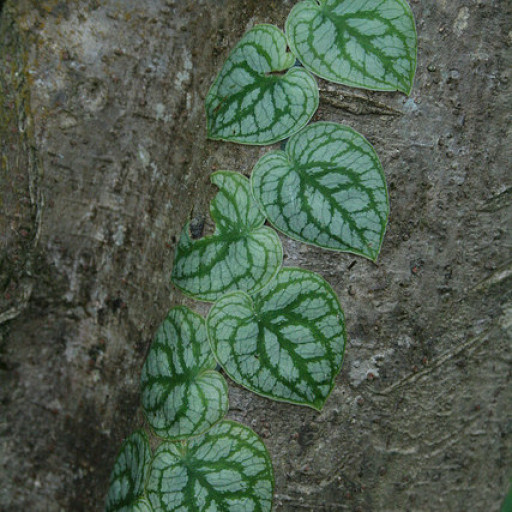
Plant Overview
Known affectionately as the "Shingle Plant," Monstera dubia is a tropical showstopper that looks more like a piece of living wallpaper than a traditional houseplant. Unlike its famous cousin, the Monstera deliciosa, this climber starts its life hugging surfaces so tightly that its leaves appear to be glued down. It is a botanical chameleon, undergoing a dramatic transformation as it climbs from the dark forest floor toward the sunlight.
🔍 How to Identify
- 🍃 Silver Patterning: In its juvenile stage, the leaves are heart-shaped and decorated with a stunning silver-gray variegation that contrasts sharply against dark green veins.
- 🧗 Shingle Growth: The leaves grow perfectly flat against whatever they are climbing, overlapping each other like the shingles on a roof.
- 🔄 The "Adult" Shift: If the plant reaches the top of a tree (or a very tall moss pole), the leaves eventually lose their silver pattern, grow massive, and develop large holes known as fenestrations.
🏡 In Your Garden
- 🪵 The Need for Support: This plant is an obligate climber. To see it thrive, you must provide a flat surface like a cedar plank or a moss pole. Without a surface to "shingle" against, the leaves will stay small and the plant will eventually stop growing.
- 🌫️ Humidity is Key: Hailing from the rainforests of Central and South America, Monstera dubia craves moisture. High humidity helps the aerial roots "stick" to their support, allowing the plant to climb effectively.
- 🌤️ Dappled Light: In nature, it lives under the canopy. It prefers bright, indirect light; too much direct sun will scorch those delicate silver leaves, while too little will cause the plant to "reach" and lose its compact shingle look.
⚠️ Safety & Toxicity
- 🐾 Toxic to Pets: Like all Monsteras, this plant contains insoluble calcium oxalate crystals.
- 👄 Irritant: If leaves are chewed or swallowed, they can cause intense oral pain, swelling of the mouth and throat, and drooling in both cats and dogs. It is best kept on high shelves or in a greenhouse cabinet away from curious pets.
✨ Fun Fact
- ✨ Botanical Camouflage: Scientists believe the silver, patterned leaves of the juvenile Monstera dubia act as a form of camouflage. By mimicking the dappled light and shadows of the forest floor, the plant hides from hungry herbivores until it is big enough to climb out of their reach!

Detailed Care Instructions
| Color | Pink |
| Soil Ph | Acidic, Neutral |
| Humidity | High |
| Lighting | Part Sun |
| Toxicity | Toxic |
| Soil Type | Loamy, Moist But Well-Drained |
| Bloom Time | Spring, Summer |
| Difficulty | Medium |
| Plant Type | Perennial |
| Mature Size | 3 Ft. Tall Indoors, 10 Ft. Tall Outdoors |
| Native Area | Central America, South America |
| Temperature | 18°C - 24°C |
| Sun Exposure | Partial Sun |
| Hardiness Zones | 9-11 |
To grow a Monstera Dubia plant, you can follow these steps:
- Choose a healthy plant: Start by selecting a healthy Monstera Dubia plant from a reputable nursery or plant store. Look for a plant with vibrant green leaves and no signs of pests or diseases.
- Potting and soil: Select a suitable pot with good drainage holes. Use a well-draining potting mix that is rich in organic matter. You can also add perlite or coarse sand to improve drainage.
- Planting: Gently remove the plant from its nursery pot and carefully place it in the new pot. Ensure the plant is positioned at the same depth it was growing before. Backfill the pot with potting mix, pressing it firmly around the plant's roots.
- Light requirements: Monstera Dubia plants prefer bright, indirect light. Place them near a window where they can receive filtered sunlight or provide them with artificial grow lights if necessary.
- Temperature and humidity: Maintain a temperature range of 65-85°F (18-29°C). These plants prefer high humidity levels, so consider placing a humidifier nearby or misting the leaves regularly.
- Watering: Keep the soil consistently moist but not waterlogged. Water the plant once the top inch of soil feels dry to the touch. Avoid overwatering as it can lead to root rot.
- Fertilization: Use a balanced liquid fertilizer diluted to half-strength during the growing season (spring to summer) every 4-6 weeks. This will provide the plant with essential nutrients.
- Support: As Monstera Dubia plants grow, they will develop aerial roots. Consider providing a support structure, such as a moss pole or trellis, to help the plant climb and provide stability.
- Pruning: Regularly trim off any yellow or dead leaves to maintain plant health and appearance. Pruning can also help control the plant's size and shape.
- Propagation: To propagate Monstera Dubia, you can take stem cuttings with a node and place them in water or directly in potting mix. Keep the cuttings in a warm and humid environment until roots develop.
Remember to regularly monitor your Monstera Dubia plant for any signs of pests or diseases. Additionally, observe and adjust the care routine based on the specific needs of your plant to promote healthy growth.

Place in a window with dappled sun or a spot in the middle of a room. Or directly in a window facing west or east.

The best way to water this plant is to ensure that the soil is evenly moist throughout but not waterlogged. Keep the soil moist during the growing season but do not overwater as this can cause root rot. Water less frequently during cooler months and reduce watering if the plant is not actively growing. When watering, make sure to water around the root ball and not over the plant leaves. Always check the soil moisture level before watering to avoid overwatering or underwatering the plant. It is also recommended to use filtered or distilled water as this plant is sensitive to fluoride.
To fertilize the Monstera Dubia plant, you should choose a balanced fertilizer with an NPK ratio of 20-20-20. Dilute the fertilizer to half strength and apply during the growing season every two weeks. During the dormant season, reduce fertilization to once a month. Be careful not to over-fertilize, as this can damage the plant. Additionally, make sure to water the plant thoroughly before and after fertilizing.
Monstera Dubia plant requires a well-draining soil mix that can hold enough moisture without becoming waterlogged. The ideal soil for this plant should be loose and porous, allowing air to circulate around the roots. A mix of peat moss, coarse sand, and perlite is recommended, as it promotes good drainage and prevents soil compaction. The soil pH should be between 5.5 and 7.0, slightly acidic to neutral.
It's important to avoid using heavy potting soil or soil mixes that retain too much moisture, as this can lead to root rot and other issues. Choosing a soil mix specifically formulated for tropical plants can be a good option, as they typically have the right balance of organic matter and inorganic materials to promote healthy growth.
When potting Monstera Dubia, ensure to plant it in a container with drainage holes to prevent water from pooling around the roots. When watering, allow the soil to dry out slightly before giving it a good soak. Over-fertilizing or over-watering can be detrimental to this plant, so take care to provide the right conditions for optimal growth.
- First, identify the plant by its scientific name, Monstera Dubia.
- To propagate the plant, select a healthy and vigorous stem that is at least 6 inches long.
- Prepare a rooting hormone solution by mixing 2 tablespoons of powder rooting hormone with 1 gallon of lukewarm water.
- Dip the cut end of the stem into the rooting hormone solution for 5-10 seconds.
- Plant the stem into a pot filled with well-draining soil. Make sure the bottom is buried about 1-2 inches below the surface of the soil.
- Cover the pot with a clear plastic bag to create a humid environment. This will encourage root growth.
- Place the pot in a bright, indirect light location. Avoid direct sunlight to prevent the cutting from burning.
- Water the plant regularly to keep the soil moist but not waterlogged.
- After a few weeks, check for root growth by lightly tugging on the stem. If there is resistance, roots have formed.
- Once the plant has established roots and new growth has emerged, remove the plastic bag and continue caring for the plant as usual.
Common pests of the shingles plant include Mealybugs, spider mites, fungus gnats, thrips. Make a habit of checking your shingles plant frequently for pests so that any infestations can be caught and managed early.








