Plant Overview
Known as the Sansapote or Monkey Apple, Moquilea platypus is a majestic giant of the Central American tropics. This isn't just a fruit tree; it is an architectural masterpiece, often used as a stately shade tree in its native lands from Mexico to Colombia. While it belongs to the cocoa plum family, it stands out for its massive size and its unique, heavy fruits that look more like prehistoric stones than typical garden produce.
🔍 How to Identify
- 🍃 The Foliage: The leaves are exceptionally long and narrow (lanceolate), often reaching up to 10 inches. They have a distinct "drip tip" to shed tropical rain and emerge in a beautiful reddish-bronze color before turning a deep, glossy green.
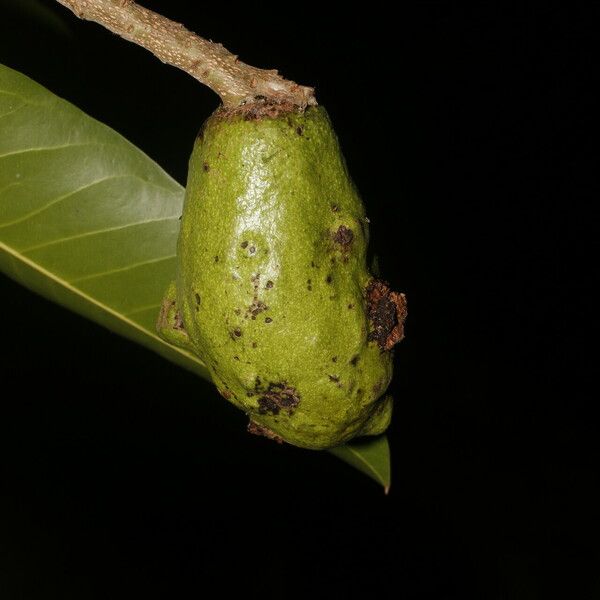
- 🍐 The Fruit: The fruit is unmistakable—large, heavy, and oblong with a rough, brownish-grey rind. The skin is thick and "cork-like," hiding a bright orange, fibrous flesh that smells faintly of cantaloupe.
- 🪵 The Trunk: As the tree matures, it develops a thick, straight trunk with dark, relatively smooth bark, supporting a dense, rounded canopy that can cast a massive circle of shade.
🏡 In Your Garden
- 🌳 Space is Essential: Because this tree can eventually reach heights of 60 to 100 feet, it is rarely suitable for small suburban lots. It requires a vast area where its extensive root system won't interfere with foundations or pipes.
- 💧 Establishment Nuance: The Sansapote is notoriously slow-growing in its youth. It demands high humidity and protection from strong winds while young, as its long leaves can act like sails and cause "wind burn" or structural stress before the trunk thickens.
⚠️ Safety & Toxicity
- ✅ Safe for Humans: The fruit is perfectly edible when ripe, though it is an "acquired taste" for some due to its dry, fibrous texture compared to a juicy mango.
- 🐾 Pet Safety: There are no recorded toxicities for dogs or cats regarding the leaves or fruit flesh. However, the large, woody seed inside the fruit is a significant choking hazard and should be kept away from pets.
- 🧤 General Caution: The fruit is very heavy and grows on high branches; in a garden setting, be mindful of "falling fruit" during harvest season, as a single Sansapote can weigh several pounds.
✨ Fun Fact
Despite its name, the Moquilea platypus has nothing to do with the Australian mammal! In botanical Latin and Greek, "platypus" translates to "flat foot," a reference to the broad, flattened base of the fruit where it meets the stem.

Detailed Care Instructions








