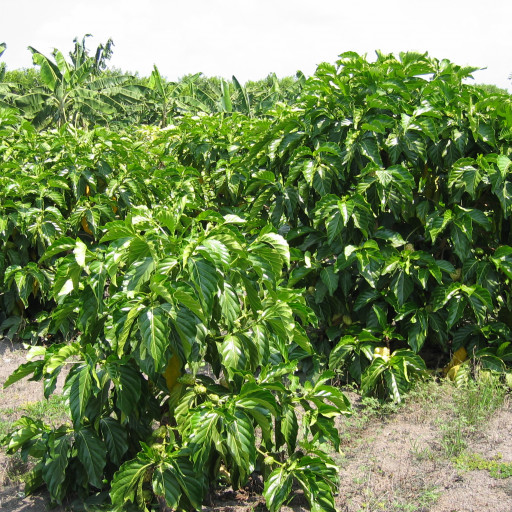
Plant Overview
Known globally as Noni or the Cheese Fruit, Morinda citrifolia is a tropical powerhouse with a polarizing reputation. While its fruit is celebrated in traditional medicine and modern health tonics, its pungent, "stinky" aroma when ripe has earned it some less-than-glamorous nicknames. Originating in Southeast Asia and the Pacific Islands, it is a resilient coastal survivor that famously traveled across oceans with ancient explorers as a "canoe plant."
🔍 How to Identify
- 🍃 Large Glossy Foliage: The leaves are broad, oval, and deeply veined, often reaching up to 12 inches in length with a waxy, dark green finish that shimmers in the sun.
- 🥥 The "Grenade" Fruit: The fruit is bumpy and pitted, starting as a hard, lime-green "grenade" before softening and turning a translucent, creamy white as it ripens.
- 🌼 Integrated Flowers: Small, white, star-shaped flowers emerge directly from the surface of the developing fruit clusters, creating a unique "bunch" look.
🏡 In Your Garden
- 🌊 Coastal Warrior: This plant is incredibly salt-tolerant and wind-resistant. It’s an ideal choice for seaside gardens where salt spray and sandy soils usually make gardening a challenge.
- 🌡️ Warmth is Non-Negotiable: As a true tropical native, Noni lacks a "dormancy" phase. It requires consistent warmth; if temperatures drop near freezing, the plant will drop its leaves in protest and may struggle to recover.
- 🧀 The Ripening Scent: If you plant this for the fruit, place it away from windows! When the fruit reaches peak ripeness, it emits a powerful odor reminiscent of rotting blue cheese or gym socks, which is the plant's way of attracting seed-dispersing bats.
⚠️ Safety & Toxicity
- 🐾 Pet Caution: While the fruit is edible for humans, it is exceptionally high in potassium and fiber. Ingesting large amounts of the fruit or leaves can cause significant digestive upset or diarrhea in cats and dogs.
- 🧤 Sap Sensitivity: The sap from broken stems is generally mild, but sensitive individuals or those with latex allergies may experience slight skin redness or itching upon contact.
✨ Fun Fact
Ancient Polynesian voyagers considered Noni so essential for survival that it was one of the few "Canoe Plants" brought to Hawaii. It wasn't just for food; the roots were used to create a vibrant yellow dye for clothing, and the leaves were used as "primitive Band-Aids" to wrap wounds and broken bones.

Detailed Care Instructions
| Lighting | Full Sun |
| Hardiness Zones | 10A - 12 |
To grow Morinda Citrifolia, also known as Noni, you can follow these steps:
- Choose a suitable location: Morinda Citrifolia prefers warm, tropical climates. Select a spot that receives direct sunlight for at least 6-8 hours a day and has well-draining soil.
- Obtain seeds or seedlings: You can purchase Morinda Citrifolia seeds or seedlings from a reputable nursery or online store. Alternatively, you can collect seeds from mature Noni fruits.
- Prepare the soil: Ensure the soil is fertile, well-draining, and slightly acidic (pH of 6.0-6.5). If your soil is heavy or clayey, mix in organic matter like compost or well-rotted manure to improve drainage.
- Planting: If using seeds, soak them in warm water for 24 hours before planting to boost germination. Sow the seeds in small pots or directly into the ground, about 1 inch deep. If using seedlings, dig a hole large enough for the root ball and place the seedling gently, then cover it with soil.
- Watering: Keep the soil consistently moist but not waterlogged. Water the plant regularly, especially during dry periods. Avoid overwatering as it can lead to root rot.
- Mulching: Apply a layer of organic mulch around the base of the plant to conserve moisture, suppress weeds, and improve soil fertility. Suitable mulches include straw, wood chips, or shredded leaves.
- Fertilizing: Feed Morinda Citrifolia plants with a balanced, slow-release fertilizer in early spring. Additionally, you can apply a liquid organic fertilizer once a month during the growing season.
- Pruning: Noni plants can become bushy if left unpruned. Prune back any dead or diseased branches and shape the plant as desired. Pruning helps maintain air circulation, encourages branching, and promotes overall plant health.
- Pests and Diseases: Morinda Citrifolia is generally resistant to pests and diseases. However, monitor the plant regularly for any signs of insect infestation or disease. If necessary, treat with organic pest control methods or seek professional advice.
- Harvesting: Noni fruits take around 3-4 months to ripen. They will turn yellow or white when fully ripe and emit a strong odor. Harvest the fruits by twisting them gently from the plant. Enjoy the fruit fresh or use it in various culinary preparations and medicinal applications.
Remember, growing Morinda Citrifolia might not be feasible outside of its natural tropical range unless you can provide a warm, controlled environment such as a greenhouse.

Place in a window with dappled sun or a spot in the middle of a room. Or directly in a window facing west or east.

1. The first step is to determine the watering requirement of the plant. This can be done by observing the soil moisture level and the foliage's appearance. If the leaves start to wilt or turn yellow, it may be a sign of underwatering, while soggy soil may indicate overwatering.
2. It is recommended to water the plant deeply once every week or two, depending on the environmental conditions and the plant's growth stage. During the warmer months or when the plant is actively growing, it may need more frequent watering, while in the dormant season, it may require less water.
3. When watering the plant, make sure to saturate the soil evenly, reaching the root zone. Avoid getting water on the foliage, as this can increase the risk of fungal diseases and sunburn.
4. Use a watering can or a hose with a gentle nozzle to avoid damaging the soil or the roots. Allow the water to soak in completely, and then remove any excess water from the saucer or tray to prevent waterlogging.
5. Consider adding a layer of organic mulch around the base of the plant to retain moisture and prevent evaporation. This can also improve the soil quality and reduce the need for watering.
6. Lastly, pay attention to the weather conditions and adjust the watering schedule accordingly. During periods of heavy rain or high humidity, the plant may require less water, while during drought or dry spells, it may need more frequent watering.
To fertilize the Morinda Citrifolia plant, mix a balanced fertilizer with equal parts nitrogen, phosphorus, and potassium. Apply the fertilizer once every two months during the growing season. Be sure to water the plant thoroughly before and after fertilizing. Avoid applying too much fertilizer as it may damage the roots and cause burning of the leaves.
The most desirable soil for this specific plant should be well-draining and fertile. The soil pH should range from slightly acidic to neutral. It should also contain a moderate amount of organic matter and be able to hold moisture without becoming waterlogged. The plant is quite adaptable to a variety of soil types, but it thrives best in loamy soils. Clay soils should be avoided as they can cause waterlogging and suffocate the roots. In addition, sandy soils may not hold enough moisture required for the plant, so proper watering is crucial for this type of soil. Overall, the optimal soil conditions for this plant should promote healthy root growth and support the plant's vigorous growth.
Morinda Citrifolia plant can be propagated through various techniques such as stem cuttings or air layering.
Stem cuttings involve taking a small part of the stem from the parent plant and placing it in a rooting hormone and potting mix. This can be done during the growing season when the plant is actively growing. The stem cutting should be kept in a warm, moist environment until it begins to form roots and establish itself.
Air layering involves making a small cut in the stem of the plant and covering it with moist sphagnum moss and plastic wrap. This encourages the plant to form roots at the cut site. Once roots have formed, the new plant can be separated from the parent plant and potted up in soil.
It is important to keep the newly propagated plants out of direct sunlight and to keep the soil moist until they have established a strong root system. With proper care and attention, new plants can be grown from the parent plant and continue to thrive for years to come.
Common pests of the noni include Scale insect, mealybugs, spider mites. Make a habit of checking your noni frequently for pests so that any infestations can be caught and managed early.








