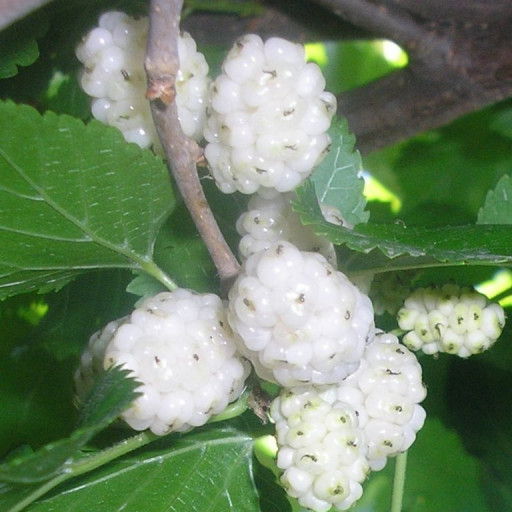
Plant Overview
Commonly known as the White Mulberry, this tree is a living piece of history that traveled the Silk Road from China to the rest of the world. While it was originally imported to fuel the silk industry, it has since become a familiar—and sometimes unruly—neighbor in urban and suburban landscapes. Known for its rapid growth and incredibly sweet fruit, it’s a tree that invites a lot of bird activity to any backyard.
🔍 How to Identify
- 🍃 Shape-Shifting Leaves: One of the most confusing traits for beginners is the leaf shape; a single branch can have "mitten-shaped" lobed leaves and simple oval leaves right next to each other. They are typically glossy green with serrated edges.
- 🍇 Clustered Fruit: The berries look similar to blackberries but are more elongated. Despite the name "White Mulberry," the fruit can ripen to be white, pink, or even a deep reddish-purple.
- 🌳 Bark and Sap: The bark is orangey-brown when young, turning gray-brown with thick ridges as it ages. If you snap a leaf stem, you’ll notice a distinct milky white sap (latex) leaking out.
🏡 In Your Garden
- 🌱 The "Pioneer" Spirit: This tree is incredibly hardy and can grow almost anywhere, from cracks in the sidewalk to rich garden soil. It loves full sun and is highly resistant to drought and salt, making it a "tough-as-nails" choice for difficult spots.
- 🧹 The Mess Factor: Think carefully before planting this near a driveway or sidewalk. The fallen berries are soft and full of juice, which can easily stain concrete, cars, and even the paws of pets who wander through them.
- ✂️ Fast and Furious: Because it grows so quickly (up to 10 feet in a year when young), it requires regular pruning to keep its shape and prevent the wood from becoming brittle and prone to storm damage.
⚠️ Safety & Toxicity
- 🐾 Mildly Toxic: The milky sap found in the leaves and stems contains latex, which can cause skin irritation or "dermatitis" in sensitive individuals and pets.
- 👄 Unripe Fruit Warning: While fully ripe berries are delicious and edible, unripe (green) berries and the leaves contain hallucinogenic properties and can cause severe stomach upset, bloating, and nausea if ingested.
- 🐕 Pet Safety: While the ripe fruit is generally safe for dogs in small amounts, the fallen, fermenting fruit can cause digestive issues or drunkenness if consumed in large quantities.
✨ Fun Fact
🐛 The Silkworm’s Sole Diet: The White Mulberry is the only food source for the larvae of the silkworm moth (Bombyx mori). Without these specific leaves, the global silk industry wouldn't exist!

Detailed Care Instructions
| Color | Yellowish Green |
| Soil Ph | Adaptable |
| Humidity | Normal |
| Lighting | Part Sun |
| Toxicity | Poisonous |
| Soil Type | Rich, Moist, Well-Drained Soil |
| Bloom Time | Early Spring |
| Difficulty | Easy |
| Plant Type | Deciduous Tree |
| Hibernation | Cold Period |
| Mature Size | 30-50 Ft. Tall, 30-50 Ft. Wide |
| Native Area | China |
| Temperature | 20°C - 28°C |
| Sun Exposure | Full Sun To Part Shade |
| Hardiness Zones | 4-8 |
To grow a Morus alba plant, also known as the white mulberry plant, you can follow these steps:
- Choose the right location: Find a spot in your garden or yard that receives full sun, where the plant can thrive. Ensure that the soil is well-draining.
- Prepare the soil: Loosen the soil in the area where you want to plant the Morus alba. Remove any weeds, rocks, or debris. If the soil is not well-draining, amend it with organic matter such as compost to improve its structure and drainage.
- Select healthy young plant: Visit a local nursery or garden center to get a Morus alba sapling. Choose a healthy plant with a strong stem and vibrant leaves.
- Planting the sapling: Dig a hole that is larger than the root ball of the sapling. Place the plant in the hole and backfill it with soil, gently firming it around the roots. Ensure that the plant is planted at the same depth it was grown in the nursery.
- Watering: After planting, water the Morus alba thoroughly to settle the soil and encourage root growth. Water regularly to keep the soil moist but not waterlogged. Increase watering during dry spells or hot summer months.
- Mulching: Apply a layer of organic mulch around the base of the plant to help retain moisture, suppress weeds, and regulate soil temperature. Leave a small space between the mulch and the stem to avoid rotting.
- Pruning: Morus alba plants benefit from regular pruning to maintain their shape and promote new growth. Prune in late winter or early spring before new growth begins. Remove dead, damaged, or crossing branches to improve airflow and reduce the risk of diseases.
- Fertilizing: Apply a balanced fertilizer, such as a 10-10-10 formulation, in early spring to provide the Morus alba plant with essential nutrients. Follow the manufacturer's instructions for application rates.
- Harvesting: Morus alba plants produce white or light-colored sweet berries in late spring or early summer. As the berries ripen, you can harvest them by hand, or lay a sheet under the tree and gently shake the branches to collect the fallen fruit.
Remember to monitor the plant for any signs of pests or diseases, and take appropriate action if necessary. With proper care and maintenance, your Morus alba plant should grow well and provide you with a bountiful harvest.

Place in a bright room that is sun drenched almost all day. Or directly in a south-facing window.

Morus Alba is a plant that requires regular watering to maintain its health. When watering the plant, it is important to thoroughly soak the soil around its roots. This can be done by slowly pouring water around the base of the plant until it has penetrated at least 6 inches below the surface.
It is important to avoid overwatering the plant, as this can lead to root rot and other issues. To determine when to water the plant, check the soil moisture level by sticking a finger into the soil up to the first knuckle. If the soil feels dry at this depth, it is time to water.
During hot and dry weather, Morus Alba may require more frequent watering. As with all plants, it is important to pay attention to its individual needs and adjust watering accordingly.
In addition to watering, it is important to provide Morus Alba with appropriate amounts of sunlight, nutrients, and care to ensure its optimal growth and health.
To fertilize this plant, you should apply a balanced fertilizer that contains equal amounts of nitrogen, phosphorus, and potassium. Apply the fertilizer at the beginning of the growing season and again midway through the season. Be sure to water the plant well before and after applying fertilizer. Avoid over-fertilizing, as this can cause damage to the plant.
The best soil to use for Morus Alba plants should be well-draining and fertile. It is recommended to use a soil mixture consisting of equal parts of sand, loam, and peat moss. The soil pH for Morus Alba plants should be slightly acidic between 5.5 and 6.5. This plant prefers slightly moist soil, but it cannot tolerate standing water or soil that is waterlogged. Thus, it is essential to ensure adequate drainage in the soil. Additionally, it is necessary to ensure that the soil is rich in nutrients, especially nitrogen, phosphorus, and potassium, as these are vital for the plant's growth and development. A well-balanced fertilizer can be added to the soil during the growing season to provide adequate nourishment for the plant.
To propagate this plant, take cuttings about 6 inches long from a healthy parent plant. Remove the leaves from the lower half of the stem, leaving only a few leaves at the top. Dip the cut end of the stem into rooting hormone powder and plant it in a pot filled with well-draining soil. Keep the soil moist and place the pot in a warm, bright area but out of direct sunlight. In a few weeks, roots should start to form. Once the roots have fully developed, transplant the young plant to a bigger pot or directly to a well-prepared garden bed.
Common pests of the mulberry include Scale insect, mealybugs, spider mites, thrips. Make a habit of checking your mulberry frequently for pests so that any infestations can be caught and managed early.








