Plant Overview
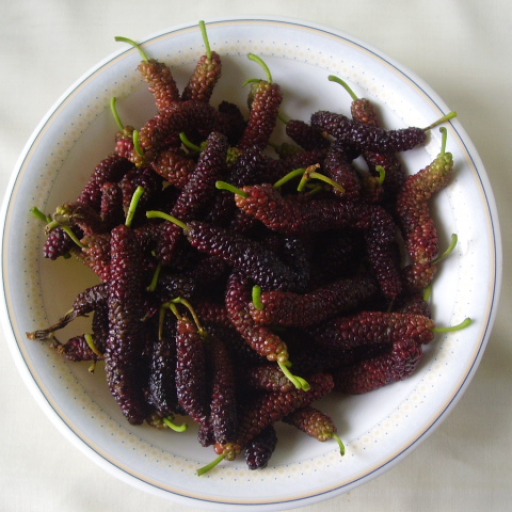
Known as the King White Mulberry or the Himalayan Mulberry, this tree is the "gentle giant" of the berry world. Originating from the high-altitude forests of the Himalayas and Tibet, it is prized for producing incredibly long, honey-sweet fruits that look more like slender caterpillars than traditional berries. It is a favorite among rare-fruit collectors for its exotic appearance and candy-like flavor.
🔍 How to Identify
- 🍓 The Fruit: Unlike the round berries of common mulberries, these fruits grow up to 4 or 5 inches long. They transition from green to creamy white or deep purple-red when ripe.
- 🍃 The Foliage: Large, heart-shaped leaves with finely serrated edges. The leaves are lush and vibrant green, often used in Asia to feed silkworms.
- 🌳 Growth Habit: A fast-growing deciduous tree that develops a broad, spreading canopy. In the wild, it can reach impressive heights, but in a garden, it is often kept as a manageable, weeping-style tree.
🏡 In Your Garden
- 🌱 Root Sensitivity: This tree develops a deep taproot quickly. It is famous for "hating" being moved, so it is crucial to choose its forever home in your garden carefully to avoid transplant shock.
- ☀️ Sun & Space: While it is tough and drought-tolerant once established, it needs full sun to develop the sugars in its fruit. Give it plenty of elbow room, as its canopy can cast significant shade.
- ✂️ Pruning Strategy: Because the fruit grows on new wood, light pruning in late winter helps encourage a massive harvest the following summer.
⚠️ Safety & Toxicity
- ✅ Status: Generally safe and non-toxic. The ripe fruit is highly edible and sought after for its intense sweetness.
- 🧪 The Sap: Like many members of the Moraceae family, the stems and unripe fruit contain a milky white latex (sap). This can cause mild skin irritation for some gardeners or an upset stomach if pets ingest the leaves in large quantities.
- 🐦 Wildlife Warning: Birds love the fruit! While not a safety risk to the tree, be prepared for some "colorful" visits to your yard during fruiting season.
✨ Fun Fact
The Morus macroura is often called the "Shahtoot" in its native regions. The fruit is so sweet that it is frequently dried and eaten like gummy candy, earning it the nickname "Nature’s Candy Stick."

Detailed Care Instructions
To grow the Morus Macroura plant, also known as the Tibetan Mulberry, you can follow these steps:
- Choose the right location: Find a sunny spot in your garden or patio where the plant can receive at least 6-8 hours of direct sunlight.
- Prepare the soil: The Morus Macroura plant prefers well-draining soil with good organic matter. Amend the soil by adding compost or well-rotted manure to improve its fertility and drainage.
- Planting: Plant your Morus Macroura plant in the spring season when the soil has warmed up. Dig a hole that is slightly larger than the root ball of the plant. Place the plant in the hole, making sure the crown is level with the soil surface. Backfill the hole with soil and gently firm it around the plant.
- Watering: Water the plant thoroughly after planting and regularly afterward to keep the soil consistently moist but not waterlogged. Mulching around the plant helps retain soil moisture.
- Fertilization: Apply a balanced slow-release fertilizer in spring and mid-summer to provide essential nutrients. Follow the instructions on the fertilizer package for proper application rates.
- Pruning: Prune the plant in late winter or early spring to remove dead, damaged, or diseased branches. Trimming back the plant encourages new growth and helps maintain a compact shape.
- Pests and diseases: Monitor the plant regularly for any signs of pests like aphids, caterpillars, or whiteflies. Use organic insecticides or pest control methods to manage these issues. Also, keep an eye out for common diseases like leaf spot or powdery mildew, which can be treated with fungicides if necessary.
- Harvesting: The Morus Macroura plant produces sweet and flavorful fruits. Harvest the berries when they are fully ripe, usually in late summer or early fall. You can eat them fresh or use them for making jams, jellies, or baked goods.
Remember to also research the specific growing conditions and temperature requirements for your region, as they may vary slightly.

Place in a bright room that is sun drenched almost all day. Or directly in a south-facing window.

To water this particular type of plant, it is important to understand its specific watering needs. When you water, make sure to water deeply and thoroughly, giving enough water to saturate the soil. Avoid frequent, shallow watering, as this can lead to root rot.
The best way to determine when your plant needs water is to check the soil moisture level. Stick your finger into the soil up to the second knuckle, and if it feels dry, it's time to water. It's best to water in the morning or evening when temperatures are cooler, as this will allow the water to penetrate the soil without evaporating too quickly.
When watering, make sure to water at the base of the plant, avoiding getting water on the leaves or flowers. This can lead to fungal diseases and other issues. Use a watering can or hose with a nozzle attachment to control the flow of water.
Overall, it's important to find a balance between not overwatering and not underwatering your Morus Macroura plant, as both can lead to problems. With the right care and attention, your plant can thrive and produce healthy, delicious fruit.
To properly fertilize a Morus Macroura plant, apply a slow-release, balanced fertilizer in early spring, just as new growth is beginning. Use a fertilizer with a ratio of approximately 10-10-10 or 20-20-20 to ensure all necessary nutrients are provided. Spread the fertilizer evenly around the base of the plant, avoiding contact with the trunk or stem. Water thoroughly after applying the fertilizer to help it penetrate the root system. Apply another round of fertilizer in early summer to promote healthy growth throughout the growing season. Avoid over-fertilizing, as this can lead to excessive growth and weaken the plant's overall health.
The ideal soil for the Morus Macroura plant should have good drainage but also be able to retain moisture. It should have a pH level between 6 and 7.5, which is slightly acidic to neutral. The soil should be rich in organic matter and nutrients, such as nitrogen, phosphorous, and potassium. It is also recommended to mix in some sand or perlite to improve the texture and increase drainage. Additionally, the plant prefers soil that is well-aerated and loose, which allows for good root development and water absorption. Finally, it is important to avoid using soils that are too heavy or clay-like, as they tend to hold onto water and may suffocate the roots.
To propagate this plant, you first need to identify a healthy parent plant. Take stem cuttings from the parent plant, ensuring that each cutting has at least two nodes. Remove the bottom leaves from the stem cutting and dip the cut end in rooting hormone. Plant the stem cutting in a pot filled with well-draining soil and water thoroughly. Keep the soil moist but not waterlogged and make sure the cutting is in a warm and bright location, but not in direct sunlight. After a few weeks, the cutting should start to grow roots and new leaves. Once the new plant has established roots, it can be transplanted into a larger pot or directly into the garden.








