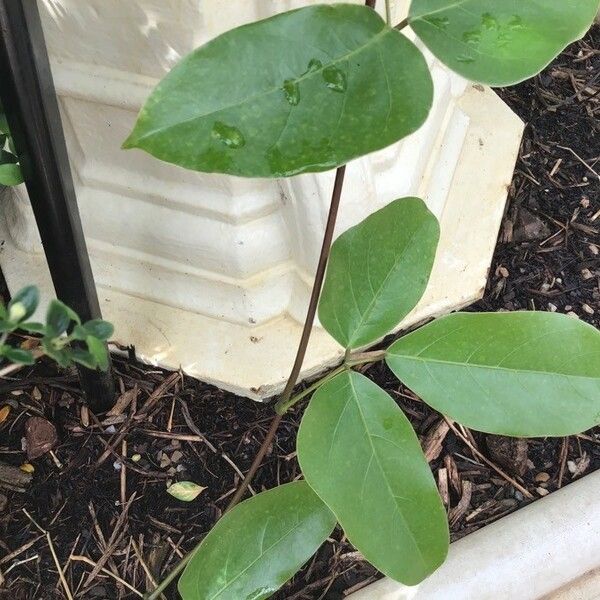
Plant Overview
Known as the Evergreen Mucuna or the "Dragon-Claw Bean," this plant is a titan among climbers. Originating from the misty forests of China and the Himalayas, it is a massive, woody vine (liana) that looks like it belongs in a prehistoric jungle. In many Asian cultures, its striking, dark-hued flowers are likened to the claws of a dragon, symbolizing power and longevity.
🔍 How to Identify
- 🐉 The Flowers: Hanging in thick, pendulous clusters, the flowers are a deep, somber maroon or brownish-purple. They have a distinct "beak" shape that resembles a bird or a claw.
- 🍃 The Foliage: It features large, glossy, trifoliate leaves (sets of three) that remain a vibrant dark green throughout the year, even in colder months.
- 🪵 The Vine: The stems are exceptionally thick and woody, often growing as thick as a human arm in old specimens, winding aggressively around any available support.
🏡 In Your Garden
- 🏗️ Support is Key: Because this vine is heavy and vigorous, it will easily collapse a flimsy wooden trellis. It requires a heavy-duty pergola, a sturdy stone wall, or a large, established tree to climb.
- ✂️ Space Management: This plant is not for small spaces. It grows with incredible speed and can quickly overwhelm neighboring plants if not pruned back hard after the flowering season.
- 👃 Scent Note: Be aware that while the flowers are visually stunning, they have a heavy, musky, or "meaty" scent designed to attract specific pollinators like bats and wasps.
⚠️ Safety & Toxicity
- 🧤 Skin Irritation: The large, woody seed pods are often covered in fine, velvety hairs. In many Mucuna species, these hairs can cause intense skin itching or irritation, so it is best to wear gloves when handling the pods.
- 🐾 Pet Safety: While not specifically listed as deadly, the seeds contain high levels of L-dopa. Ingesting the raw beans can cause digestive distress or neurological symptoms in pets and children.
✨ Fun Fact
In its native habitat, the Evergreen Mucuna has a "secret handshake" with nature. Its flowers are so tough and thick that they are often pollinated by bats and civets, who are strong enough to pry the petals apart to reach the nectar inside!

Detailed Care Instructions
To grow Mucuna Sempervirens (also known as the perennial climbing vine), you can follow these steps:
- Climate and location: Ensure you live in a suitable climate zone for the plant, preferably a warm and tropical region. Find a location with well-draining soil and is exposed to partial or full sunlight.
- Propagation: Mucuna Sempervirens can be propagated from seeds or cuttings. If using seeds, soak them in water for 24 hours before planting to enhance germination. You can also scarify the seeds by gently scraping the hard outer shell with sandpaper to further improve germination rates.
- Soil preparation: Prepare the soil by loosening it and removing any weeds or debris. Add organic matter such as compost or well-rotted manure to improve soil fertility and drainage.
- Planting: Dig a hole twice the size of the root ball or seed, ensuring the plant will be at the same level as it was in the container. Place the plant or seed in the hole, fill it with soil, and gently pat it down to remove air pockets.
- Watering: Keep the soil consistently moist while the plant is establishing itself. Water deeply once or twice a week, depending on the weather conditions. Avoid overwatering, as soggy soil can lead to root rot.
- Support structure: Mucuna Sempervirens is a prolific climber and needs a support structure, such as a trellis, fence, or arbors to grow properly. Ensure the structure is sturdy enough to support the vigorous growth of the vine.
- Pruning: Regular pruning is essential to keep the plant neat and to encourage bushier growth. Prune any dead or damaged branches and trim back excessive growth to maintain the desired shape and size.
- Fertilization: Provide regular feeding by using a balanced organic fertilizer designed for flowering vines. Follow the manufacturer's instructions regarding dosage and frequency.
- Pest and disease control: Monitor the plant for any signs of pests or diseases, such as aphids or powdery mildew. Use organic insecticides or fungicides if necessary, following the recommended application instructions.
- Harvesting: Mucuna Sempervirens produces vibrant orange or red flowers followed by large seed pods. Harvest the seeds when they turn brown and become hard. Dry the seeds for a few weeks before planting or storing them for future use.
With proper care and attention, your Mucuna Sempervirens plant should grow and flourish, adding beauty to your garden or landscape.

Place in a bright room that is sun drenched almost all day. Or directly in a south-facing window.

Mucuna Sempervirens is a tropical plant that requires consistent watering to thrive, especially in warm and dry weather conditions. It is important to water this plant deeply and regularly, ensuring that the soil stays moist but not waterlogged.
When watering the plant, it is best to use room temperature or slightly warm water, as cold water can shock the roots and cause damage. The soil should be watered evenly, ensuring that all parts of the soil are moistened without letting the water pool on the surface.
To prevent overwatering, it is recommended to allow the topsoil to dry out slightly between watering sessions. This can be done by inserting a finger into the soil up to the first knuckle to assess the moisture level. If the soil feels moist, wait a few more days before watering again.
During the winter months, the plant may require less watering, as the cooler temperatures and reduced sunlight affect its growth and water needs. It is important to monitor the soil moisture levels and adjust the watering schedule accordingly.
In summary, watering Mucuna Sempervirens requires consistent attention and careful monitoring of soil moisture levels to maintain its health and promote growth.
To fertilize this plant, use a balanced slow-release fertilizer with equal parts of nitrogen, phosphorus, and potassium. Apply the fertilizer every three months during the growing season, from spring to fall. To avoid fertilizer burn, make sure to water the plant before and after applying the fertilizer. Alternatively, you can use an organic fertilizer such as compost or well-aged manure. Apply a thin layer of organic fertilizer around the base of the plant and gently work it into the soil. Water thoroughly after fertilizing.
Mucuna Sempervirens plant requires a loose, well-draining soil mix that is rich in organic matter. The soil should be slightly acidic to neutral, with a pH range of 6.0 to 7.0. A sandy loam soil with added compost or peat moss is ideal. The soil should be kept moist but not waterlogged, and the plant should be allowed to dry out slightly between watering. It is important to avoid using heavy, clay soils that can compact and restrict root growth. Additionally, adding a layer of mulch around the plant can help to retain moisture and protect the roots.
Propagation of this plant can be done through cutting or seed propagation. For cutting propagation, select healthy stem shoots and cut them at a length of about 4 inches. Remove the bottom leaves and dip the stem in rooting hormone powder. Plant the cutting in a well-draining potting mix and keep it moist in a humid environment. Rooting can take up to 4-6 weeks.
For seed propagation, remove the seeds from the mature pods and soak them in water for 24 hours. Sow the seeds in a well-draining potting mix, covering them with a shallow layer of soil. Keep the soil moist and place the pot in a warm, bright location. Germination can take up to 3-4 weeks.
To ensure successful propagation, provide adequate moisture and avoid overwatering. Fertilize the plant with a balanced fertilizer once every two weeks during the growing season. Once the plant reaches maturity, it will produce beautiful flowers and pods containing additional seeds for further propagation.








