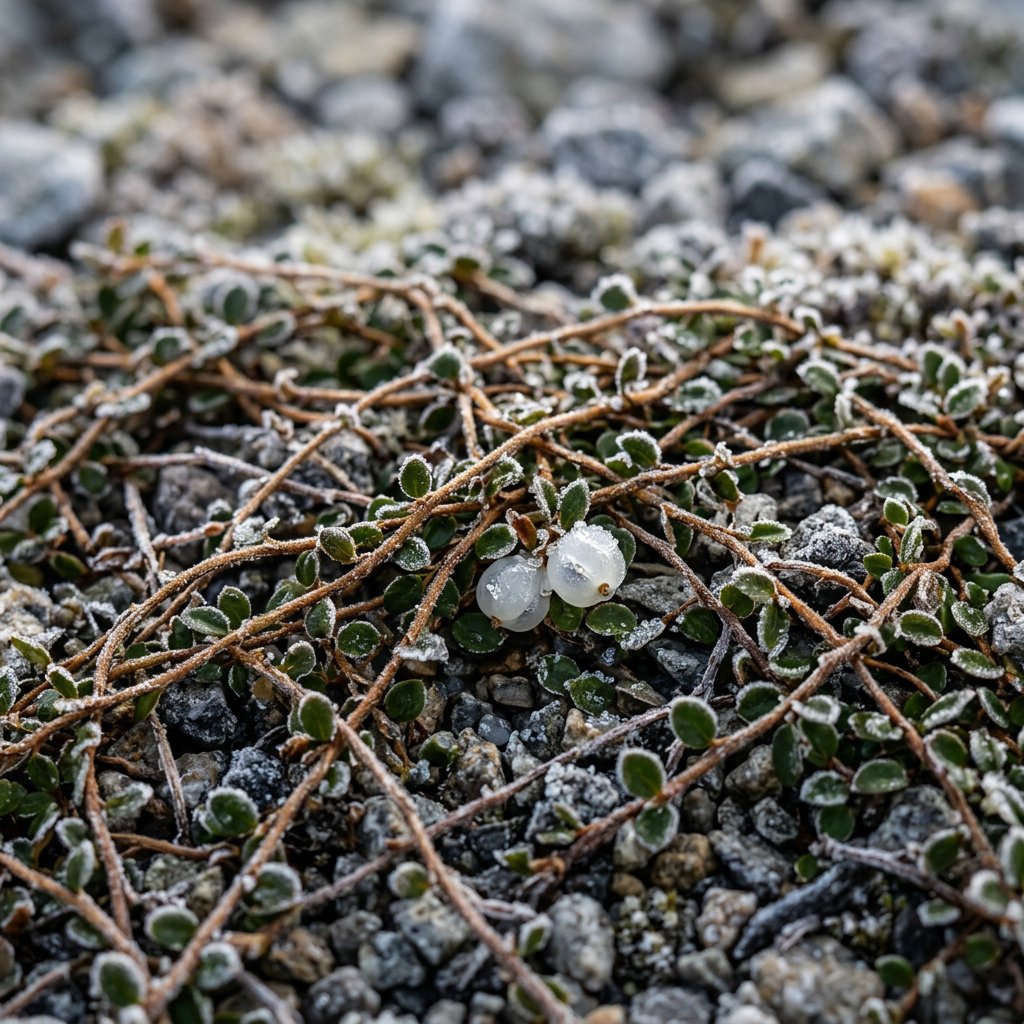
Plant Overview
Often called the Creeping Wire Vine or Matted Lignum, this New Zealand native is a master of texture and resilience. With its signature charcoal-colored, thread-like stems and tiny, glossy leaves, it looks like a delicate piece of botanical jewelry spilled across the ground. It is a favorite for rock gardens, fairy gardens, and "living rugs" due to its whimsical, tangled growth habit.
🔍 How to Identify
- 🌿 The Foliage: Tiny, round, or heart-shaped leaves that look like shiny green sequins scattered along the stems. They often take on a bronzy hue in colder weather.
- 🕸️ The Stems: Exceptionally thin, dark brown or ebony-colored stems that feel remarkably strong and "wire-like" to the touch.
- ⚪ The Fruit: In late summer, the plant may produce tiny, translucent white fruits with a black seed visible inside, resembling miniature frosted glass beads.
🏡 In Your Garden
- 🧗 Versatile Spreading: This plant loves to scramble over rocks or spill elegantly out of hanging baskets. Because it is a "creeper," it can be used as a dense groundcover to suppress weeds, but it requires occasional "haircuts" to keep it from wandering into neighbor plants.
- 🌬️ Rugged Endurance: Despite its dainty appearance, it is incredibly tough. It handles wind, salt spray, and even light foot traffic with ease, making it an excellent "steppable" plant for garden paths or between paving stones.
⚠️ Safety & Toxicity
- ✅ Safe Status: Muehlenbeckia axillaris is generally considered non-toxic to humans and common household pets like cats and dogs.
- 🐾 Pet Friendly: It is a "worry-free" choice for pet-accessible landscapes. However, because it grows in such a thick, matted carpet, it can occasionally hide small garden critters or insects that curious pets might try to investigate.
✨ Fun Fact
The stems are so famously tough and flexible that they were historically used by indigenous peoples in its native range for binding and weaving, almost like a natural form of twine.

Detailed Care Instructions
The bright leaves are evergreen in warm climates.
Is creeping wire vine invasive?
Because it grows so vigorously, care should be taken about where it's positioned, as it can sprawl into other plants territory quickly. The fast-spreading underground root system can be an advantage, however, when looking to keep weeds under control.
Where is creeping wire vine native to?
It is native to Australia and New Zealand.
| Color | White |
| Soil Ph | Not Particular |
| Lighting | Full Sun |
| Soil Type | Tolerates A Variety, But Must Be Well-Drained |
| Bloom Time | Late Spring |
| Plant Type | Prostrate Evergreen Shrub |
| Mature Size | Up To 6 Inches |
| Native Area | New Zealand And Australia |
| Sun Exposure | Full Sun/ Partial Shade |
| Hardiness Zones | 5 To 9 |
To grow Muehlenbeckia Axillaris, also known as Creeping Wire Vine, follow these steps:
- Choose the right location: Muehlenbeckia Axillaris thrives in full sun or partial shade, so select a spot that receives at least 4-6 hours of direct sunlight. It can tolerate a wide range of soil types but prefers well-draining soil.
- Prepare the soil: Amend the soil with organic matter, such as compost or well-rotted manure, to improve its fertility and drainage. Remove any weeds or rocks from the planting area.
- Planting: Dig a hole slightly larger than the root ball of the plant. Place the plant in the hole, ensuring that the crown is level with or slightly above the soil surface. Backfill the hole with soil, gently firming it around the plant.
- Watering: Water the plant thoroughly after planting to settle the soil and provide initial hydration. Afterward, water the plant regularly, keeping the soil moist but not waterlogged. Avoid overwatering as it can lead to root rot.
- Mulching: Apply a layer of organic mulch, such as wood chips or bark, around the plant to help retain moisture, suppress weed growth, and regulate soil temperature.
- Pruning: Muehlenbeckia Axillaris benefits from regular pruning to maintain its shape and prevent it from spreading excessively. Prune back any unruly or dead branches in late winter or early spring before new growth appears.
- Fertilizing: Apply a balanced, slow-release fertilizer in spring to provide essential nutrients for growth. Follow the instructions on the fertilizer packaging for proper dosage and application.
- Pests and diseases: Muehlenbeckia Axillaris is generally resistant to pests and diseases. However, keep an eye out for aphids or spider mites, which can occasionally infest the plant. If necessary, treat with insecticidal soap or horticultural oil according to package instructions.
- Propagation: Muehlenbeckia Axillaris can be propagated through cuttings. Take a stem cutting in spring or summer, dip the cut end in rooting hormone, and plant it in a well-draining potting mix. Keep the cutting consistently moist until roots develop.
By following these guidelines, you can successfully grow and care for Muehlenbeckia Axillaris plants.

Place in a window with dappled sun or a spot in the middle of a room. Or directly in a window facing west or east.

Muehlenbeckia axillaris plant requires regular and consistent watering to thrive. It is best to water the plant deeply once a week rather than frequent shallow watering. Make sure the soil is moist and well-drained, as overwatering can lead to root rot. Use a watering can or hose with a gentle flow to avoid damaging the plant. Water the base of the plant and avoid getting water on the leaves as this can cause diseases. It is important to adjust the frequency of watering depending on the weather and environmental conditions. During hot and dry periods, the plant may require more frequent watering, while during cooler periods, less watering may be necessary.
To fertilize this plant, apply a balanced fertilizer with equal parts nitrogen, phosphorus, and potassium. Apply the fertilizer in early spring, before new growth appears. Water the plant thoroughly before applying the fertilizer to prevent fertilizer burn. Follow package instructions for the proper amount of fertilizer to use based on the size of your plant. Avoid over-fertilizing, as this can damage the plant or encourage excessive growth. For best results, fertilize the plant once every six months.
When planting Muehlenbeckia Axillaris, it is important to use a soil that is well-draining and not too heavy or compacted. A mixture of sand, organic compost, and loam is recommended, with a pH level between 6.0 and 7.0. The soil should also be rich in nutrients, as this plant benefits from regular fertilization. It is also important to ensure proper drainage to prevent waterlogging, which can cause root rot and other issues. Regular watering is necessary to help the plant establish and thrive, but care should be taken not to overwater, as this can also lead to problems.
To propagate this plant, you can take stem cuttings from a healthy and mature plant during the growing season. The cuttings should be about 4-6 inches long and have at least 2-3 nodes on them. Remove the leaves from the bottom half of the cutting, leaving a few leaves at the top. Dip the cut end of the stem into rooting hormone powder and then plant it in a well-draining potting mix. Water the cutting thoroughly and cover it with a plastic bag to create a mini greenhouse. Keep the cutting in a warm and bright location but out of direct sunlight. Check the cutting regularly and keep the soil moist, but not waterlogged. After a few weeks, the cutting should start to form roots. Once the cutting has established roots and has started to grow new leaves, it can be transplanted into a larger pot or planted directly into the garden if the weather is suitable.
Common pests of the creeping muelenbeckia include Mealybugs, spider mites, aphids. Make a habit of checking your creeping muelenbeckia frequently for pests so that any infestations can be caught and managed early.








