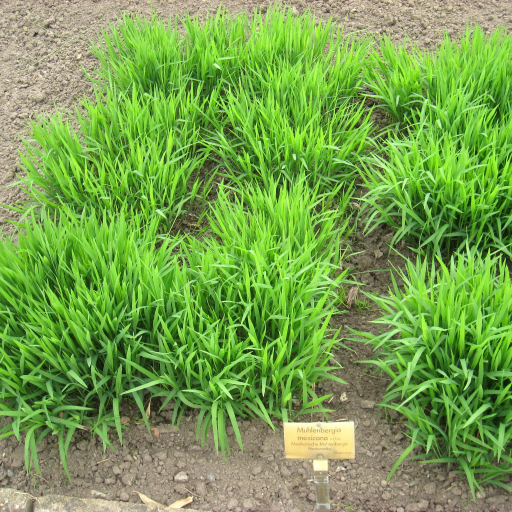
Plant Overview
Despite its name, Muhlenbergia mexicana—commonly known as Mexican Muhly or Wirestem Muhly—is actually a hardy native to a vast stretch of North America, ranging from the breezy coasts of Canada down through the United States. This airy, fine-textured grass is a secret weapon for gardeners looking to add a touch of "softness" to shaded corners where other ornamental grasses might fail. It creates a misty, cloud-like effect when planted in masses, swaying gently with the slightest garden breeze.
🔍 How to Identify
- 🌿 Growth Habit: This is a clumping perennial grass that tends to sprawl or lean as it grows, usually reaching a height of 2 to 3 feet with a similar spread.
- 🌾 The "Flowers": Unlike the showy pink plumes of its famous cousin, the Pink Muhly, this species produces narrow, compact green or purplish flower spikes (panicles) that often peek out shyly from the leaf sheaths.
- 🎋 Stem Structure: True to its "Wirestem" nickname, the stems are thin, tough, and frequently branch out from the middle and upper nodes, giving the plant a bushy, intricate silhouette.
🏡 In Your Garden
- 🌑 The Shade Specialist: While most ornamental grasses are sun-worshippers, Mexican Muhly is a "woodland edge" specialist. It thrives in dappled sunlight or part-shade and can handle damp, heavier soils that would cause other grasses to rot.
- 🌱 Natural Stabilizer: It spreads via scaly underground stems called rhizomes. This makes it an excellent choice for erosion control on slopes or for filling in gaps between larger shrubs where you want a "living mulch" look.
⚠️ Safety & Toxicity
- ✅ Non-Toxic Status: This plant is generally considered safe and non-toxic for both humans and household pets like dogs and cats.
- 🧤 Mechanical Irritation: While not chemically toxic, the long, thin leaves can have very fine serrations. If you are doing heavy pruning or clearing, wearing gloves is a good idea to prevent minor "grass cuts" or skin itching.
✨ Fun Fact
- 🎓 A Geographic Oopsie: The species was named by the famous botanist Linnaeus based on a specimen he mistakenly believed originated in Mexico. In reality, the plant he was looking at was a native of the northeastern United States!

Detailed Care Instructions
To grow Muhlenbergia mexicana, also known as Mexican muhly grass, you can follow these steps:
- Climate and Location: Mexican muhly grass thrives in full sun to light shade and prefers warm, arid climates. Make sure to select a location that receives at least 6-8 hours of direct sunlight per day, and where the soil is well-draining.
- Soil Preparation: Prepare the soil by removing any weeds, rocks, or debris. Mexican muhly grass prefers sandy or loamy soil with good drainage. If your soil is heavy clay or compacted, consider adding organic matter, such as compost or well-rotted manure, to improve the soil structure and drainage.
- Planting: Mexican muhly grass can be propagated from seeds or divisions. If using seeds, sow them in late winter or early spring in trays or pots filled with well-draining soil. Keep the soil moist until germination occurs, which may take up to a month. Transplant the seedlings outdoors when they reach about 2 inches (5 cm) in height.
If using divisions, dig up a mature clump of the grass and separate it into smaller sections with roots attached. Plant these divisions directly into the prepared soil.
- Watering: Initially, water the newly planted Mexican muhly grass regularly to help establish the roots. Once established, it is a drought-tolerant plant and does not require frequent watering. Water deeply, but infrequently, allowing the soil to dry out slightly between waterings.
- Fertilizing: Mexican muhly grass typically does not require heavy fertilization. However, you can apply a slow-release, balanced fertilizer in the spring to promote healthy growth. Follow the package instructions for the correct dosage.
- Maintenance: Mexican muhly grass is a low-maintenance plant. However, you may want to remove any dead or damaged foliage in the early spring before new growth appears. This will help keep the plant tidy and encourage new growth.
- Pruning: Every few years, you can consider cutting Mexican muhly grass back to about 6 inches (15 cm) above the ground level to rejuvenate the plant. This is usually done in late winter or early spring before new growth emerges.
By following these steps, you should be able to successfully grow and care for Muhlenbergia mexicana in your garden or landscape area.

Place in a bright room that is sun drenched almost all day. Or directly in a south-facing window.

To water this plant, you should ensure that the soil is consistently moist but not waterlogged. It is important to allow the soil to dry slightly between watering intervals. When watering, slowly pour water onto the soil around the base of the plant, rather than directly onto the leaves. It is advisable to use room temperature water to prevent shock to the plant. Adjust the watering frequency depending on environmental conditions, such as temperature and humidity.
To fertilize this plant, use a balanced fertilizer with equal amounts of nitrogen, phosphorus, and potassium. Apply the fertilizer in early spring, before new growth appears, and then again in midsummer. Mix the fertilizer with water according to the package instructions, and water the plant thoroughly with the mixture. Avoid getting fertilizer on the leaves or stems, and make sure the soil is moist but not waterlogged before fertilizing.
The recommended soil for growing Muhlenbergia Mexicana plant is well-draining soil with a pH range of 6.5-7.5. The soil should be loose, fertile, and have the ability to retain moisture without getting waterlogged. A potting mix containing compost, perlite, and peat moss would be a good choice. It is important to avoid heavy or clay soils, which can lead to waterlogging and root rot. Additionally, the plant prefers a soil with a good amount of nutrients, so adding a slow-release fertilizer to the soil would be beneficial. It is also important to ensure that the soil is not too compacted as this can restrict root growth and lead to poor overall plant health.
Muhlenbergia Mexicana is a perennial grass native to North and Central America that can be propagated through seed or division. To propagate Muhlenbergia Mexicana through seed, the seeds should be collected in late fall and stored in a cool, dry place until spring. In the spring, the seeds can be sown directly into the soil or started indoors and transplanted outdoors later.
To propagate Muhlenbergia Mexicana through division, the plant can be dug up in the fall or spring, and the clump can be divided into smaller sections. Each section should have several shoots and roots. These smaller sections can be replanted in their own locations.
Regardless of the method used, Muhlenbergia Mexicana prefers well-drained soil and full sun. It is a drought-tolerant plant that can handle poor soil conditions once it is established.








