Plant Overview
Often called the Naked-stem Dewflower or Doveweed, this low-growing traveler is a resilient member of the Spiderwort family. While many homeowners recognize it as a persistent guest in their lawns, it possesses a delicate, understated beauty that reveals itself upon closer inspection. Originally hailing from the tropical regions of Asia, it has successfully trekked across the globe, thriving in warm, moist environments.
🔍 How to Identify
- 🍃 Foliage: The leaves are narrow, lance-shaped, and slightly fleshy, closely resembling a thick blade of grass. They wrap around the stem at the base, a classic trait of its family.
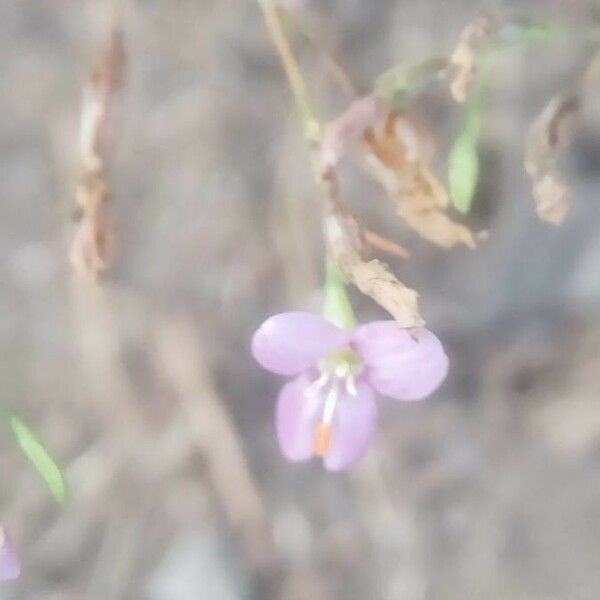
- 🌸 The Bloom: It produces tiny, three-petaled flowers that appear in small clusters. These blooms are usually a soft lilac, bright purple, or occasionally blue, and they typically open only for a few hours in the morning.
- 🌱 Growth Habit: This is a "prostrate" plant, meaning it creeps along the ground. It is a master of expansion, as its stems can sprout new roots wherever a joint (node) touches moist soil.
🏡 In Your Garden
- 💧 The Moisture Marker: In a garden or lawn setting, the presence of Doveweed is often a sign of "wet feet." It thrives in areas with poor drainage or over-saturated soil, making it a natural indicator of where your landscape might be holding too much water.
- ✂️ Persistence is Key: Because the plant can regenerate from even a tiny fragment of a stem, it is famously difficult to remove by hand. If you are trying to clear it, ensure you bag every piece, as leaving a single node behind is often like "planting" a new colony.
⚠️ Safety & Toxicity
- 🐕 Mildly Irritating: While not considered a "poisonous" plant in terms of ingestion, Doveweed is a common culprit for contact dermatitis in domestic animals.
- 🐾 Pet Watch: Dogs that frequently run or roll in patches of Murdannia nudiflora may develop red, itchy rashes on their paws or underbellies. If your pet is scratching after a walk, check the lawn for these purple-flowered creepers.
✨ Fun Fact
The seeds of the Doveweed are surprisingly heavy and oil-rich, making them a high-energy favorite for ground-feeding birds like mourning doves—hence its most popular common name!

Detailed Care Instructions
To grow Murdannia Nudiflora (also known as Asian Spiderwort or Purple-Heart), follow these steps:
- Choose a suitable location: This plant prefers partial shade to full sun. Select an area in your garden or indoors with bright, indirect light.
- Soil preparation: Murdannia Nudiflora thrives in well-draining soil. Prepare the soil by adding compost or organic matter to improve fertility and drainage.
- Planting: If starting from seeds, sow them directly into the soil at a depth of about 1/4 inch. Space the seeds about 6 inches apart. If starting from cuttings, simply plant the cuttings in the prepared soil.
- Watering: Keep the soil consistently moist, but not soggy. Water the plants regularly, especially during dry spells or when grown indoors. Avoid overwatering as it can lead to root rot.
- Fertilizing: Feed the plant every 4-6 weeks during the growing season using a balanced, all-purpose fertilizer. Follow the instructions on the fertilizer packaging for mixing and applying.
- Pruning: Regularly trim back any dead or damaged foliage to encourage new growth and maintain a neat appearance. Murdannia Nudiflora tends to grow back quite quickly after pruning.
- Overwintering: In colder climates, Murdannia Nudiflora can be brought indoors during winter or treated as an annual. If kept indoors, place the plant in a spot that receives bright, indirect light.
- Pests and diseases: This plant is generally resistant to pests and diseases. However, watch out for aphids, mealybugs, or spider mites. If pests are present, treat them with appropriate insecticides or insecticidal soap.
Remember to check the specific care requirements of Murdannia Nudiflora as they may vary slightly depending on your location and growing conditions.

Place in a bright room that is sun drenched almost all day. Or directly in a south-facing window.

First, it is important to note that proper watering is essential for the health and growth of this plant. To water it, start by checking the soil moisture level by sticking your finger into the soil. If the soil feels dry about an inch down, then it is time to water.
When watering the plant, make sure to use room temperature water, as cold water can shock the roots. Slowly pour water onto the soil, taking care not to let the water splash onto the leaves or flowers, as this can cause damage.
Water the plant until the soil is well-moistened, but not waterlogged. Make sure to drain any excess water from the saucer or pot to prevent the roots from sitting in standing water.
It is also important to consider the environmental factors when watering the plant. In warmer temperatures and dry climates, the plant may require more frequent watering. In cooler temperatures or high humidity, the plant may need less water.
Overall, monitor the plant's soil moisture level and adjust watering accordingly to keep the plant healthy and thriving.
To fertilize this plant, use a balanced fertilizer once every two weeks during the growing season. Dilute the fertilizer to half strength before applying it to the soil around the plant. Be careful not to over-fertilize, as it can lead to chemical burn and damage the roots. During winter or dormant periods, cut back on fertilizing to once a month or stop fertilizing altogether. Water the plant well after fertilizing to ensure even distribution of the nutrients.
Murdannia Nudiflora plant belongs to the family of Commelinaceae. This plant prefers well-draining soil that is rich in organic matter. The ideal soil for this plant should be a mixture of peat moss, sand, and perlite. The pH level of the soil should be slightly acidic with a pH range of 6.0 to 6.5. This plant also requires moderate levels of moisture, so it is essential to ensure that the soil is always moist but not waterlogged. Overwatering can lead to root rot or fungal disease, which can harm the plant's health. It is also recommended to fertilize once a month during the growing season to promote healthy growth. Before planting, it is advisable to loosen the soil and mix in organic matter or compost to provide additional nutrients to the soil.
To propagate this plant, first select a healthy parent plant with mature and well-established stems. Cut a section of stem about 4-6 inches long, making sure to select a section with several leaves. Remove the lower leaves of the stem, leaving only a few at the top. Dip the end of the stem in a rooting hormone powder, and plant it in a pot filled with a moist, well-draining soil mix. Water the new cutting lightly and cover with a plastic bag to retain humidity. Place the pot in a bright, warm area but avoid direct sunlight. After a few weeks, you should see signs of new growth and roots forming. Once the new cutting has established roots, you can move it to a permanent pot or outdoor garden bed.








